Support WBUR
What happened to shame in politics?
This rebroadcast originally aired February 2, 2026.
Shame is a powerful feeling that can keep behavior in check. So what happens when political leaders feel no shame at all?
Guest
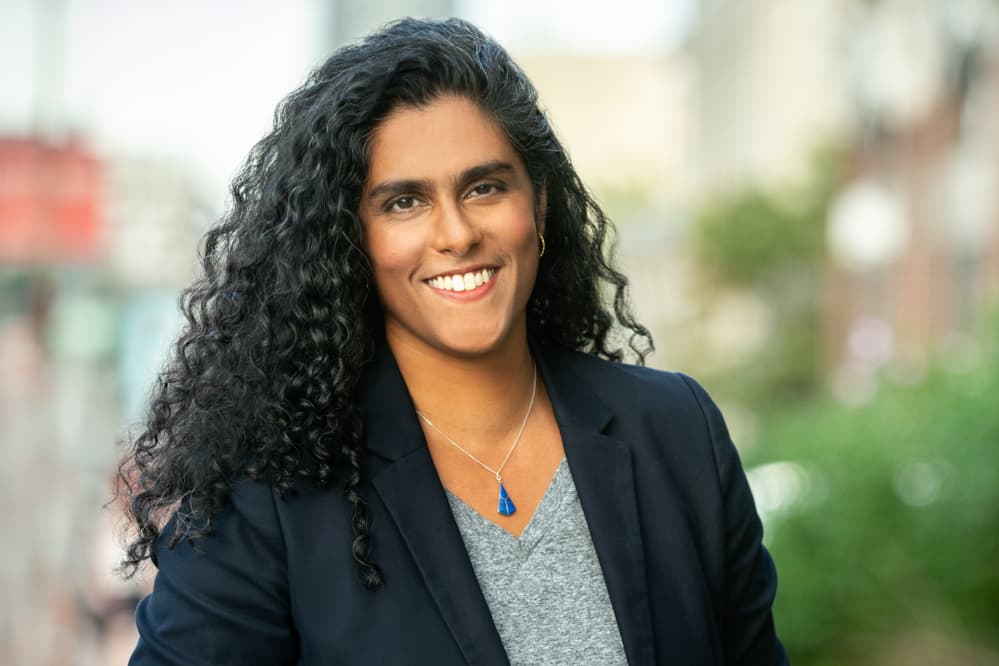
Carolyn Long, Professor in Civic Education and Public Civility and associate professor in the School of Politics, Philosophy and Public Affairs at Washington State University- Vancouver.
Also Featured
Shinobu Kitayama, professor of psychology at the University of Michigan.
The version of our broadcast available at the top of this page and via podcast apps is a condensed version of the full show. You can listen to the full, unedited broadcast here:
Transcript
Part I
MEGHNA CHAKRABARTI: In 1950, Wisconsin Republican Senator Joseph McCarthy grabbed the public's attention with his allegations that hundreds of communists had infiltrated the State Department and other federal agencies. By 1953, McCarthy had become chairman of the Senate Subcommittee on Investigations, where he shifted the committee's focus from investigating fraud and waste to hunting for communists. He held scores of hearings and ruined thousands of lives.
By mid 1953, the panel's three Democrats resigned and Republican senators stopped attending because so many of McCarthy's hearings were called on short notice or held away from Washington. That left McCarthy and his chief counsel Roy Cohn to run the hearings largely by themselves, and they were relentless and cruel to their witnesses. Erwin Griswold, then-dean of the Harvard Law School, described McCarthy as, quote, "judge, jury, prosecutor, castigator, and press agent, all in one."
And by the way, as an aside, Roy Cohn later became a mob attorney and represented Donald Trump for years before he became president. He said that he considered Trump to be his best friend.
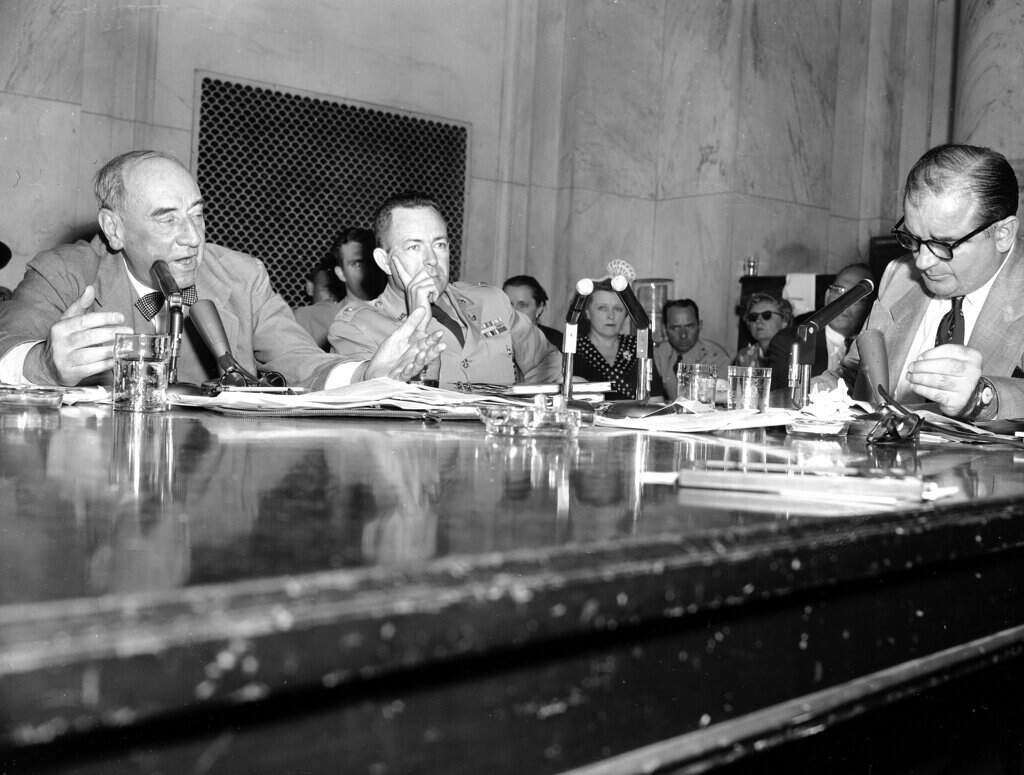
Now all of this serves as a critical backdrop to understand the events of June 9, 1954. McCarthy had decided to take on the United States Army, claiming that there was lax security at a top-secret military facility. What followed was a three-month televised event known as the Army-McCarthy hearings.
The Army hired Boston lawyer Joseph Welch. And on June 9, McCarthy decided to attack a member of Welch's law firm. He accused Frederick G. Fisher of being a communist because Fisher had once been a member of the National Lawyers Guild. The guild was the nation's first racially integrated bar association. At this point, Welch could take no more. And he uttered words that would bring McCarthy's career to an end.
JOSEPH WELCH [Tape:] Senator, may we not drop this? We know he belonged to the lawyers guild. And Mr. Cohn nodded his head at me. I did You I think. No personal injury, Mr. Cohn? No, sir. I meant to do you no Personal injury. And if I did, I beg your pardon. Let us not assassinate this lad further. Senator, you've done enough. Have you no sense of decency, sir? At long last, have you left no sense of decency?
CHAKRABARTI: No sense of decency.
Well, Carolyn Long, welcome to On Point. And first of all, tell me what is it about those words? No sense of decency that has earned this moment a permanent place in American history.
CAROLYN LONG: Well, hello, Meghna. Thank you for having me. I'm so happy to be here.
There was so much happening at that time with attention on the hearings. And it was a rare moment where there were millions of people who were watching it, mainly housewives who were at home because they were televised over years, they were televised over the months.
And many people had seen these cruel exchanges and they were getting very intolerant of McCarthy's tactics. So it was a prime opportunity for Welch to really call him to account for his misbehavior. And sort of the words and the tone that Welch used really, I think, reflected the thoughts that many were starting to feel about McCarthy, really just going too far.
CHAKRABARTI: So, by the way, I should say that Carolyn Long is an associate professor in the School of Politics, Philosophy and Public Affairs at Washington State University-Vancouver and she recently gave a talk at the nonprofit Washington Humanities Group. And the talk is titled, Have You No Sense of Decency? Shame in American Politics.
And that's really why we're excited to have you here today, professor Long, because this idea of shame in American politics, I think deserves a lot more scrutiny.
LONG: Absolutely.
CHAKRABARTI: So, but I wanna stick with the McCarthy era for a moment because you were saying that these, the Army-McCarthy hearings, were televised, so a lot of people were seeing them in their own homes, which at the time was quite a big deal.
LONG: Mm-hmm.
CHAKRABARTI: Many mothers watching, et cetera. And this particular use of the word decency, I feel like if you had used any other word, it may not have landed the way it did. But like, what is it about calling out someone for lacking decency in America in the 1950s that you think resonated?
LONG: Well, first of all, I think the use of the word decency rather than shame, if it was intentional, was actually a pretty good idea. Because I hope we'll speak about how when you try to shame people, there are some ill effects to that. But I think that, at this time, you have 20 million people watching for a period of weeks.
They saw that lack of decency on a daily basis. They saw that cruelty and the bullying that they saw McCarthy doing. And even if they didn't know what was happening behind the scenes, when Republican senators were moving away from him, they were able to connect what he was doing with something that they weren't in favor of.
And there's other things happening as well. You know, you had Edward Murrow talking about him at the time. He was exposing McCarthy's lies. He was pointing out how he was behaving unethically. And so, you know, the combination of seeing it firsthand, listening to a trusted news source thinking about this and calling him to account, I think culminated in people sort of connecting the dots for the first time on this moment, which of course everybody remembers.
CHAKRABARTI: You know, throughout American history, there have been people whom the government has gone after and people who lack trust in the government, et cetera. I'm not saying that there was ever a moment in our collective political history where all Americans looked upon the federal government as, you know, as an example of the most decent behavior. I wanna be a realist about that.
But I wonder if there was less cynicism kind of on average in the 1950s about the federal government than we see in politics today?
LONG: Oh, absolutely. And I think that there's that less cynicism and there's less media coverage of the government. So there's sort of a different problem, which is we're inundated with criticism on a daily basis because of what we're watching, what we're hearing, who we're talking to. And back then it wasn't so prevalent. And so I think part of it is there wasn't as much noise, and so that makes a difference in whether or not we can conclude that this was effective back in the 1950s, but would not be effective today.
CHAKRABARTI: Mm. Okay. So that, I mean, I think it's really important backdrop because there's some moments in American history where — and Welch wasn't even a politician himself, right? He was a lawyer, he was a private citizen representing the Army. But when people utter particular words that just become unforgettable, right? I mean, we have Dr. King, we've got Abraham Lincoln, et cetera. But the Welch one lies in a specific category.
So what got you interested though in more broadly the concept of shame and its role in our politics? When did you first kind of start paying attention to that?
LONG: Yeah, so I ran for Congress in Washington's 3rd Congressional District in 2018 and 2020. And when you do that, you're sort of exposed to the realities of politics on a very personal level. And there were, there were two things that resonated with me.
The first, as a high profile race, they can get really potentially toxic. And there were occasions when my opponent frequently discussed my husband who is working in pharmaceutical sales as somebody who would control my thoughts about healthcare policy. And also that he was somewhat responsible for the high cost of drugs. And she did it multiple times. And at one point spoke about my daughter who was in eighth grade, and I remember being a little bit stunned about it because, you know, there used to be a maxim in politics that you don't go after one's family.
I had been doing work on civility and how to engage in thoughtful exchanges of ideas prior to running for office, so I was really disappointed in that and I started to think about why an opponent might decide to do something like that.
The second is a little bit more reflective of my background. I had read Arlie Hochschild's book, Strangers in Their Own Land and she spoke quite a bit about how people in Louisiana and rural areas felt disrespected for a variety of reasons. And I reflected upon my own childhood growing up in rural communities, which I love.
And what I liked about that was I could go into my district, which has a traditional urban-rural split that you see in many states in the west. I'd hold town halls listening to people, and I started to sense that some didn't even wanna speak with me. They would, you know, fold their hands over their chest when I extended my hand. They would look at me suspiciously. And I was shocked by this because this was sort of, I would think, "These are my people." And I started to think quite a bit as to why they were so suspicious of individuals like me and what that meant about our ability to have these, you know, difficult conversations with people who are coming from different places and are bringing a lot of emotions to those conversations that we might not understand.
So it was really both of those things that I took with me from the campaign. And then I started to think about shame and also how shame is being weaponized by people in politics. So I'd say that was probably what drew me to the topic. But it also didn't really happen for a couple of months after my races, I was sitting and reflecting upon it.
CHAKRABARTI: Mm-hmm.
LONG: And this is what I came to.
CHAKRABARTI: So I promise you that a little later in the show, we're going to be talking about the failures of when people try to enforce a sense of shame in others because that's obviously a part that we have to discuss in this conversation, especially in American politics.
But for the first part of the show, I actually want to take a look at it from the other point of view, from the other side of that question, which is why we started with the McCarthy and Welch moment. Did that experience running for Congress give you any insight as to why it seems like there's just a less sense of shame in people who are seeking political power in the United States today?
LONG: Oh, absolutely. I mean, you really reveal yourself on a campaign trail and you see others reveal themselves. And we are increasingly seeing politicians who seem as if they are shameless and that we're living in a post-shame era, where they aren't thinking about the implications of what they say or what they do as reflective of who they are as human beings. When I think to many, we look at this type of behavior and we're like, you know, "Have you no shame? Have you no decency?"
Part II
CHAKRABARTI: So professor Long, I wanna lean a little bit more on your two experiences running for Congress in 2018 and 2020. I'm wondering if you could give us an any insight about what is it about an American political campaign these days that might seem to either select for people who are more shameless than the median or produce — whether genuine or just, or manufactured — a sense of like, you have to be shameless in order to survive on the campaign trail?
LONG: Right. Well, I think that there's these perverse incentives to acting shameless in our system. So when somebody does act badly, it gets a tremendous amount of attention. And so, when you have attention in politics, that really translates into free media and it helps you get eyeballs on your race, allows you an opportunity to reach a broader audience. And I think that's really important because you are, some are, incentivized to try to get that attention. So that's one thing that's happening here.
The other that we've seen, candidates are able to act really shamelessly and get a lot of resources from the people who they want to represent. So it's used for fundraising. I mean, I think you see from Joe Wilson yelling, "You lie" at President Obama's State of the Union address, to what's happened with politicians like Marjorie Taylor Greene, that they act shamelessly and they're able to send out fundraising notes and letters and it ends up helping their campaign.
CHAKRABARTI: Mm.
LONG: So I'm not so sure that that attracts people who are like, "Hey, I'm going to act like a shameless politician." But certainly they've been able to leverage their behavior to financial support for campaigns and that has helped them.
CHAKRABARTI: Okay. This is the first point and probably of many points where we should mention the standard now that President Donald Trump has set for shamelessness, not only in this administration but his previous one. In fact, I would say from the first moment he burst onto the national political stage back in 2015. So more than 10 years now.
And here's one example. Back on May 30, 2024, folks might remember that Trump was actually convicted on 34 felony counts in that hush money trial that he underwent in New York. And after that conviction came down, he spoke to reporters at Trump Tower, but Trump vowed to fight the conviction. No surprise there, but what's relevant to this conversation is that he expressed defiance about the conviction. He said it was a "hoax" and a "scam trial."
But then he said, Trump said, he was honored to take on the conviction. And here he is.
PRESIDENT DONALD TRUMP [Tape:] It's a very sad thing that's happening in our country, and it's a, it's a thing that I'm honored in a way I'm honored. It's not that it's pleasant. It's very bad for family. It's very bad for friends and businesses. But I'm honored to be involved in it because somebody has to do it and I might as well keep going and be the one. But I'm very honored to be involved because we're fighting for our Constitution.
CHAKRABARTI: So Professor Long, the reason why we brought this particular example up is that Trump hadn't been convicted on one count or two counts, it was 34 counts. 34 felony accounts. And he walks away from that and looks into the cameras and says, "I'm honored. I'm a martyr here," essentially, is how I translate it. And this like actually increased his popularity significantly.
LONG: Yes, absolutely. I mean, that's a key example of him doubling down and leaning into what would be behavior that somebody who's averse to shame would never do. And he's very good about saying that this is what he's doing, obviously for his own campaign, but he also argues that he is doing it for his supporters. So he is also, he's combining his quest for office with his respect for the people who love him and who will stay for him. And so by doubling down, he's also telling his supporters that they need to do the same.
So it's not just what Trump is doing for himself, it's him seeing himself as a mouthpiece for his supporters and fighting for them. And to people who believe they've been ignored, left behind, that is really powerful, because it's a way to have a personal connection, with those supporters.
CHAKRABARTI: Mm.
LONG: But this has traditionally been his, you know, his strategy and it works for him. The danger, of course, is if it starts to work for everyone, where are we at at that point?
CHAKRABARTI: Yeah. By the way, I should have asked you this earlier, but it's important and you make a distinction between shame and shamelessness. So why don't we take a moment to give me your definitions of the two?
LONG: Sure. So one of the things that happens with the definition of shame is people often conflate it with the definition of guilt. And I think that that's a little bit mistaken because there are differences. And then I'll talk about shamelessness in a moment.
So, you know, with guilt, we define it as an emotion somebody feels when they've done something wrong. It's usually a response to an act. Maybe you cheated on your spouse, maybe you cheated on your taxes, but with guilt, the idea is that you're focusing on the bad act and not the person.
With shame, it's a little bit more difficult and toxic. And there are various definitions, but I think Brené Brown has the best one, which she talks about it as this intensely painful feeling or experience of believing that we're flawed and unworthy of love or belonging. So she talks about how shame can be very toxic to you. It's the painful emotion can even, you know, physical reaction to it, you know, your arms slump, your face gets red. But that it can be a really dangerous emotion and tricky for somebody to handle.
Now, shamelessness is obviously somebody who's acting with the absence of shame. And so what they are they're doing is they're not reacting, which might be the guardrails to other people to behave in a way that people might see as as shameful. So with shamelessness, you see individuals who either don't have shame for what they're doing or they are hiding it for some other goal — to get the attention, to get the resources. Maybe they benefit from attacking norms like Trump.
And so they're very different. So one could argue that shame could be productive. You know, I question that, whereas others will argue yes, it depends on the context, but it can go too far. And that's that weaponization of shame that we'll probably talk about.
CHAKRABARTI: Mm-hmm. Okay. So that's shame. And then shamelessness, I don't know if you have any more to add to that, but shamelessness is kind of like a behavior that we see, a political behavior?
LONG: Yeah, and it's a political behavior because either people don't have the capacity to feel shame or they are deciding that it's okay to use a certain approach or a certain tactic in politics because the advantages outweigh the disadvantages.
CHAKRABARTI: Okay. So back to your experience running for Congress twice. I mean, I don't know if you ever felt like you were put in a position on the campaign trail where I don't know, did somebody accuse you of something and they demanded an apology for it? And if so, like how did you handle that moment?
LONG: Mm. Great question. I didn't ever experience a moment where I felt like I had — I didn't feel like I did something that needed an apology, but I didn't experience a moment where somebody called out something that I did or said to the point where it would need an apology. And I was out in the district a lot. I mean, my campaigns were defined by me being out there talking to people in dozens of town halls. And it didn't really happen.
But what did happen is the what I said at the top of the hour, which is that there was a point, I think when my opponent was trying to shame me through my husband to make a policy point. And I felt that that was not only inappropriate, but I felt I had to respond.
So the only time I really addressed it was in the second campaign in 2020, we had a short commercial where we showed my opponent talking about my husband and my child. And then I ended it by, you know, then the camera came to me and I was like, you know, "Don't talk about my family, let's talk about the issues. Let's speak about what's best for members of the 3rd Congressional District."
So I think that was the moment where this idea of shame and shaming people came in because it was maybe even shaming my spouse, right? And I didn't like that.
CHAKRABARTI: Right. Well, what's interesting is that your opponent is the one, just to be clear, who said these things not only about your spouse but your child, right?
LONG: Yeah. It was that she didn't live with me, that I — yeah, there was a whole story there.
CHAKRABARTI: Okay. So there was kind of a rule, I mean, not a formal rule, but a cultural rule in the past that you didn't go after people's children, right?
LONG: Correct. Yes.
CHAKRABARTI: And what's what's interesting to me is that, I mean, you didn't win either of those races.
LONG: Right.
CHAKRABARTI: So doing the shameless thing of attacking an opponent's child didn't seem to cost your opponent anything.
LONG: No, no. And I will say that — because I've reflected on this after I was invited to speak to you, why I did it — and I don't believe that I was doing it to try to shame my opponent because I would argue that it, you, it's really difficult to shame somebody into changing their behavior today. I did it more to call attention to, "This is the type of candidate who I'm running against. Somebody who's willing to do this."
CHAKRABARTI: I guess what my point is is that type of person, that type of candidate, that shameless act on their part didn't come with a political consequence.
LONG: Correct. I mean, there's a lot of reasons why somebody loses, but I don't think it really resonated with people in the district.
CHAKRABARTI: It didn't resonate. Okay. So that leads me to this other question in terms of sort of, is part of the — and this isn't just recent to Trump, I mean, I think Trump is the natural maximizing outcome of a longer trend we've had of shamelessness in politics. Right? And I wonder if our cultural expectations of the kind of decency that Welch had demanded of McCarthy has just kind of faded away. What do you think?
LONG: Absolutely. And it's been accelerating, so it's getting even worse. I think people now watching politics expect to see this. I think that they don't like what they're seeing. It leads to tremendous distrust in the process in politicians. So it really has gotten exponentially worse for a number of reasons. And so I don't even know if it connects with voters that this is sort of what's happening. That they're shaming and being shamed.
CHAKRABARTI: Yeah. I wanna give an example of something that we almost never hear anymore. And it has to do with President Bill Clinton because as people will remember, he was accused, well, actually, he had inappropriate, an inappropriate relationship, if we can put it mildly with then White House intern Monica Lewinsky.
And on January 26, 1998, President Clinton gave some televised remarks, I believe it was in the Rose Garden, or no, it was at the White House, and he infamously ended his statement with this phrase.
PRESIDENT BILL CLINTON [Tape:] I did not have sexual relations with that woman, Miss Lewinsky. I never told anybody to lie. Not a single time. Never. These allegations are false and I need to go back to work for the American people.
CHAKRABARTI: All right, so that is President Clinton there. Now, he ended up, he got impeached, as people will remember. And actually he eventually apologized for his previous statement.
CLINTON: What I want the American people to know, what I want the Congress to know is that I am profoundly sorry for all I have done wrong in words and deeds. I never should have misled the country, the Congress, my friends or my family. Quite simply, I gave into my shame.
CHAKRABARTI: Gave into his shame. How does that land with you now, professor Long?
LONG: I wish we'd hear more of that. You know, when you look at political scandals and examples where that politician is up on the dais and they've got their long-suffering spouse at their side and they provide an apology, I think that's important. Because they're recognizing their misbehavior, hopefully they're recognizing how it contributes to toxic politics. And unless it's performative, we find that that, uh, people and voters have a tendency to forgive politicians when they take that responsibility.
You don't have that forgiveness when you don't have that taking of responsibility. And that's what we're increasingly seeing in politics today.
CHAKRABARTI: So the idea that also people are, have become sort of, let's say less, they've become less accustomed to politicians apologizing for their shamelessness — let me put it in a clearer way. Sorry. They've been accustomed to the lack of apology and the lack of contrition, I mean in American politics these days, it seems extraordinarily rare if not, you know, completely an endangered moment when a politician stands up and is actually contrite about something he or she has done.
I'm wondering what you think the dangers are of that, of the rest of us getting used to politicians never apologizing?
LONG: Oh. As to whether or not we will start never apologizing to a friend or a peer for something? Or..?
CHAKRABARTI: Or just what it does to American politics in general if we don't, if politicians have created, or we collectively have created, an environment where politicians never have to feel that they need to apologize to the people who elected at them.
LONG: Right. Well, I will say that there was a study that a political scientist did in Texas who showed that politicians were something like 25% more likely to survive a scandal today compared to a generation ago. So what we're seeing people not apologizing, we've been able to show empirically that that's the case.
But in terms of what it does to us and how we think about politics, we don't trust our politicians, we don't trust our political institutions, we become less civically engaged. And it can be really dangerous to the point that people can abuse their power. Because if people aren't being held to account, if politicians aren't being held to account, because they are doubling down, they're not apologizing, you are going to have them engage in this behavior in --- it's more likely for them to continue misbehaving, right?
So we lose that check on their behavior because there are no costs. And as I said earlier, there may be actually some benefits, you know, falling prey to shame as an emotion.
CHAKRABARTI: Well, you keep your job is one of the benefits. (LAUGHS)
And also something that almost never happens anymore is resignations. And here's one more example before we head into our break. Because back in 2008, then New York Governor Elliot Spitzer resigned actually. He resigned after it was discovered that he had an involvement in a prostitution scandal — you said long-suffering wife, well, his long-suffering wife stood at Spitzer's side when he announced his resignation.
ELIOT SPITZER [Tape:] The remorse I feel will always be with me. Words cannot describe how grateful I am for the love and compassion they have shown me. From those to whom much is given, much is expected. I have been given much: the love of my family, the faith and trust of the people of New York, and the chance to lead the state. I'm deeply sorry that I did not live up to what was expected of me.
CHAKRABARTI: So professor Long, we just have about 30 seconds before our next break. It sounds like there's this kind of self-fulfilling prophecy going on with a culture that doesn't expect accountability from shameless politicians, so then they ramp up their shameless, not in terms of their personalities, but even the policies that they pursue.
LONG: Absolutely. And I think it's going to continue because of what's happening in society with polarization, and how we are sort of treating one another in our interactions on a daily basis.
Part III
CHAKRABARTI: Professor Long, I wonder if you might just listen along with me. Because as we were producing this show, I started thinking that the conversation for, you know, understandable reasons was just so strongly rooted in not just Western culture, but American culture. And that got me thinking of how obviously in different places around the world, shame is considered differently. And so we decided to turn our attention for a few moments to Japan.
Now, American anthropologist Ruth Benedict back in 1946 published a book called The Chrysanthemum and the Sword. It was commissioned by the U.S. Office of War Information during the Second World War, and it was intended to explain the difference between U.S. and Japanese culture to Americans.
And Benedict described Japan as, quote, "a shame culture." And America as, quote, "a guilt culture." Well, Shinobu Kitayama is a cultural psychologist with the University of Michigan, and he studies how the human mind, emotions and cognition are shaped by cultural environments.
And Kitayama says that despite the fact that it's slightly misleading to use a single emotion to describe an entire country, he says there is some validity to what Ruth Benedict observed.
SHINOBU KITAYAMA: It's fair to say that something like shame that is this understanding that public life and social appraisal, those things are really important and carries a real significance in your daily life, this idea really created Japanese culture to a far greater extent than might be true in the United States.
CHAKRABARTI: Professor Kitayama says U.S. culture is fundamentally different than Japan in several ways. But one major one: a way in which that negates the effective use of shame in American minds.
KITAYAMA: So one aspect of this is individualism. So, you know, Americans endorse individualism, and one core of individualism is a belief that each self, each person is independent. Independent from society, independent from the surrounding, and you have to have your own judgment, and you have to have your own values. And, you know, just the pressure from the outside is not a good thing. And in fact, you, if you are open to outside influences that may be seen as your weakness or even moral deficit.
CHAKRABARTI: Well, individualism is far less emphasized in Japan. He says instead, community and society as a whole carry much greater import and value.
KITAYAMA: Japan is different. I think shame is perceived to be bad enough, but surely shameless is even worse. It's a moral character to be able to experience shame. You know, that indicate that you are sensitive enough to, you know, public opinions, public consensus. And that sensitivity may be a sign of weakness or even moral liability within individualism, but Japanese culture really has not endorsed individualism at the heart.
CHAKRABARTI: Professor Kitayama says American individualism cannot be separated from the American form of capitalism. He says the U.S. free market economy places extra value on how much money an individual has made or how much wealth they've amassed. You know, that ideal of the self-made man, it's uniquely American.
And Kitayama believes that increasing wealth inequality over the last few decades in this country has only made things worse for most people. But ironically, for those at the top, those with money and power, it's left no room for shame.
KITAYAMA: Within this cultural climate, really power or some perceived competence is really crucial. And as a result of this, and especially this is becoming even more pronounced in the recent decade, I have to say, even in the last several years, some leaders insisting on their power and their strength and business prowess and so on. And in this context seemed to me that the shame may have become a liability rather than a sign of decency.
CHAKRABARTI: Professor Long, just wanna get your quick responses to that.
LONG: Well, it's a great observation and I'm really thankful that he spoke about the individualism that you see in America versus the importance of community in Japan, because that does, our own political culture does play into how we think about shame.
I would add that if you look at American politics, um, we've had periods where, um, we were more like a shame culture. So early on, in the colonial days when community was not only important, but was necessary for our survival, there were many instances where, uh, people who had violated norms or behaved badly were actually shamed. And then it started to decline over decades, where we saw this individual pursuit of oneself, sort of this classical liberalism approach to one's life.
And then it sort of faded from view. And then we were more about guilt. But then I argue, and I would hope that he would agree, we're sort of moving in back to a bit of a shame culture because of the tribalism that exists with politics and the importance of not the community, but your community.
CHAKRABARTI: Right. And so, by the way, in the colonial times, you're talking about, you know, having to wear a scarlet letter or being put in the pillory and having tomatoes thrown at you, that kind of thing.
LONG: Exactly. Yeah stocks and pillories.
CHAKRABARTI: Stocks and pillories. Okay. So, but what you just said was really interesting that maybe we're moving back into a shame culture that instead is much more based on tribal identities.
But at the same time, I mean — and I know you've been wanting to talk about this, so let's get to it now — in that same American context though, it doesn't work, right? The more one group tries to shame another — and we have an infinite number of examples — the more that other group simply digs into the perspective that's found to be so objectionable.
LONG: Yes. And this was sort of a thing that both concerned me and I was sort of unaware of, which is that it doesn't work. And because it doesn't work, people end up digging in, as you mentioned, they become more unlikely to change their perspectives.
You know, part of what I came to in this talk was letting people think about how trying to shame somebody can not only be ineffective, there can actually be a tremendous backlash because it doesn't work. And that's the findings of psychologists and sociologists, that if you're trying to shame somebody to change their behavior, it's exactly the opposite of what you should do.
CHAKRABARTI: Hmm. Okay. So you said something very interesting in another interview that you gave. That you wanna talk about bringing some things together about how shame could be used strategically as a tool against sort of, as you've said, abhorrent political behavior, but in a way that doesn't weaponize it against each other in various communities.
LONG: Yeah. You know, we're hearing a lot of from people like David Keen and others who are studying this about shame management, meaning, is there a way that you can strategically use shame in certain circumstances and maybe get the intended result, which is people reconsidering their positions on issues or treating each other more effectively.
And so what Keen and others talk about is having people ask themselves before they engage in this behavior of shaming somebody, whether or not it'll work. Because there are examples in the past where it has, of course we've talked about the Welch-McCarthy exchange, but there is evidence that in countries that are engaged in human rights abuses, having international organizations and other countries sort of say, "This is not a good thing," could be effective.
And then there are, you know, examples of how somebody may gently use shame in a way that doesn't try to diminish the person as an individual. So I think shame management is possible, but it depends on who you are shaming and how you go about it.
CHAKRABARTI: Okay. So to that point, it brings me back to you raised an issue earlier about what do you do if a person has no capacity for shame?
LONG: Right. You can't, if you are shameless, and you have no capacity for shame, then shaming somebody, shaming that person will be absolutely ineffective. So I think that's one problem. You can't shame somebody who's shameless, it won't work.
The other problem is maybe somebody isn't shameless, but they see the advantages to their behavior. So shame doesn't work on them because the advantages of their behavior outweigh the disadvantages. But, you know, there are still some who think that it can be used effectively. And I think what I would say is you have to be very, very cautious about using it. And you have to ask yourself why you're using it and whether or not you will get the intended result. And in most cases, the answer is no.
CHAKRABARTI: (LAUGHS) And I don't mean to laugh, but it's like, okay, and so then what do we do?
LONG: Yeah, that's bad. Ah, democracy has failed. Where do we go from here? Well, what I would do, and what I did actually, is instead of trying to shame the person, you talk about what they've done.
CHAKRABARTI: Mm.
LONG: So you can feel some satisfaction, some schadenfreude, when you call somebody a racist or a bigot. But instead of doing that, maybe talk about what it was that they said or did, which you found insensitive. So there are ways in which you can get to the underlying issues or perspectives one has and talk about that without attacking them as a human being.
CHAKRABARTI: Yeah.
LONG: Because when you do that, there's that intense shame and the painful effects of it.
CHAKRABARTI: So let me, there's two questions that come to mind with that.
First of all, I think we've established that when groups that like levels of power, right? So I'm just talking about citizenry and or people who have particular political points of view but aren't in office, when they try to shame each other, we know that that doesn't work. Again, as we said, it just makes people more — hold on harder to the beliefs which supposedly are supposed to be shameful.
But I think you do mention that shame can be used as a force when punching up.
LONG: Yes. Cathy O'Neil had this great book recently called The Shame Machine, and she, you know, talks about shame, not necessarily only in politics. But she made this, you know, sort of conclusion at the end where if you use shame to attack somebody for something that they have no control over, for a variety of reasons, it's not going to be effective. Because usually they're people who are not only vulnerable to shame, but it can be very toxic for them.
But if you punch up, meaning you go after institutions, you know, you go after Purdue Pharma or you go after people in power, like an elected official, that there might be that opportunity where it will make a difference because you are attacking somebody who has a great deal of authority and a responsibility to behave effectively and responsibly.
So there could be those instances of punching up to institutions, governments, or people in power to hold them to account that could be effective. But I think that as we're seeing shame not be effective, we should, you know, be cautious of ever using it. So I've mixed feelings about it, but it's a great observation.
CHAKRABARTI: Yeah. Okay. So there was an article in The Atlantic not long ago that talked about this same issue. And there's a line in there where the writer says, in the past, shame actually did work, basically because we all had mostly a shared reality, right? And in the country had mostly shared values.
And so, he writes, shame worked because "there was a shared if hierarchical moral universe in which judgment had weight. And that's being lost," or has been been lost today because, you know, we've been talking about shame and shamelessness on an individual level, right, particular politicians, for example.
But I mean, I think we're now in a world where the current federal government is acting with shamelessness. It's not just Trump. It's everyone he surrounded himself with, right? I mean, they're openly defying court orders. We did a show just last week about how the government is telling just bald-faced lies and dangerous ones about individual Americans. They're punching down as hard as they can with no shame.
And so I wonder when the institutions themselves are beginning to adopt this attitude of shamelessness, that seems an order greater than what we've been talking about.
LONG: Oh, absolutely. It's toxic to our politics. And that's why if you look at, you know, whether or not it works and you find out that it doesn't, it's because, you know, people have become, I think I mentioned earlier, more tribal in their perspectives about politics.
And so somebody acts shamelessly at their politician because they know that their supporters, their constituents are gonna cheer them on because they see that politician, and we've been speaking a little bit about Trump, as sort of a mouthpiece for their own feelings about how they've been left behind.
So the person becomes inextricably linked to their supporters. And so they become immunized from shame because of that, whereas the people who are on the other side are really frustrated because they're throwing up their hands saying, you know, "Have you no sense of decency?" And they're shocked that it doesn't work.
CHAKRABARTI: I feel like this is the exact environment in which authoritarian governments, fascism even can deep, can deeply root when there's no collective sense of what is decent.
LONG: Exactly. And again, that speaks to the polarization, the tribalism, but also sort of the media ecosystems that we live in, where there is rarely that opportunity to have those shared understandings. Because we have different perspectives based on what we're hearing and reading.
CHAKRABARTI: Right. Hearing, reading, doomscrolling. Right? I mean, social media and the internet has only sort of like vastly amplified, first of all the prevalence of ineffective shame. But then also it's completely squashed any sort of common ground I think we could, we could stand on to come up with, you know, shared ethical and moral values.
We have 45 seconds left, professor Long, and I don't wanna end on that note. (LAUGHS)
Is there, I mean, maybe just start from neighbor to neighbor, but what could people do like today to sort of get closer to a place where shamelessness is not tolerated as much as it is today?
LONG: Yeah. So I'm gonna quote Augustine and then Ice T. So stay with me here. (LAUGHS)
CHAKRABARTI: (LAUGHS) You got 30 seconds, okay?
LONG: Okay. Augustine said, "Hate the sin, but love the sinner." Which I think says to us we should focus on what somebody has done, not who somebody is. And then Ice T once said, you know, "Don't hate the playa. Hate the game." Meaning understand that people are acting shamelessly because they think that they have to in order to win.
CHAKRABARTI: Well, then you gotta change the game.
LONG: (LAUGHS) Exactly.
CHAKRABARTI: Professor Carolyn Long at Washington State University- Vancouver. She gave a talk called Have You No Sense of Decency? Shame in American Politics. Thank you so much.
The first draft of this transcript was created by Descript, an AI transcription tool. An On Point producer then thoroughly reviewed, corrected, and reformatted the transcript before publication. The use of this AI tool creates the capacity to provide these transcripts.
This program aired on April 10, 2026.