Support WBUR
How women are breaking records in ultramarathons

Rachel Entrekin just won one of the hardest ultramarathon races in the world. She ran 253 miles across Arizona, breaking the previous course record by more than two hours. But she's no outlier. At ultra-distances, more and more women are taking the crown.
Guests
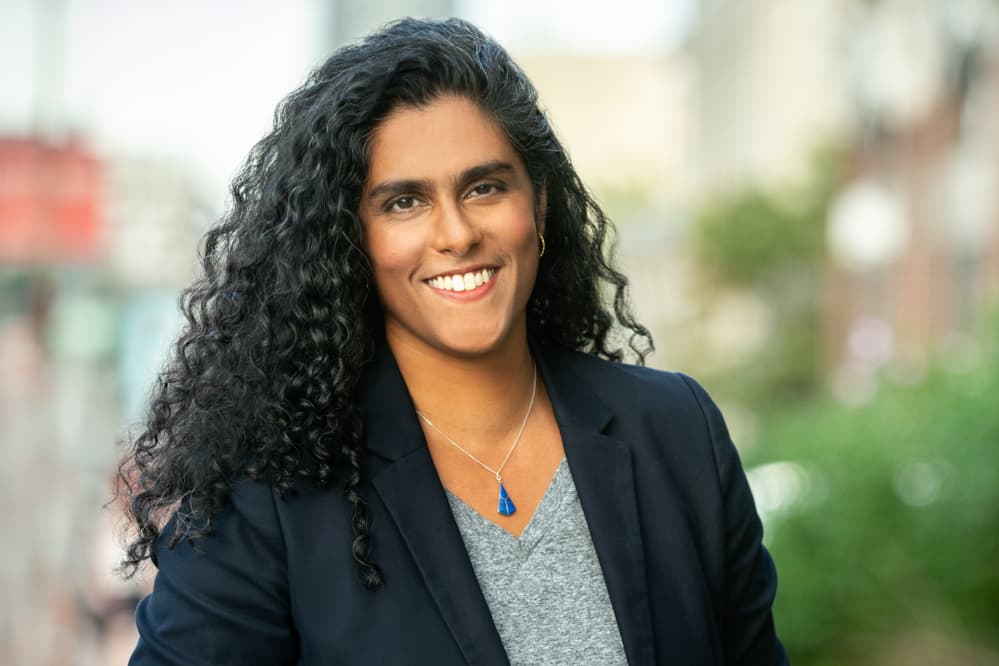
Lily Canter, freelance journalist specializing in running. Ultramarathon runner who's completed about 25 races. Co-author of “Ultra Women: The Trailblazers Defying Sexism in Sport.”
Also Featured
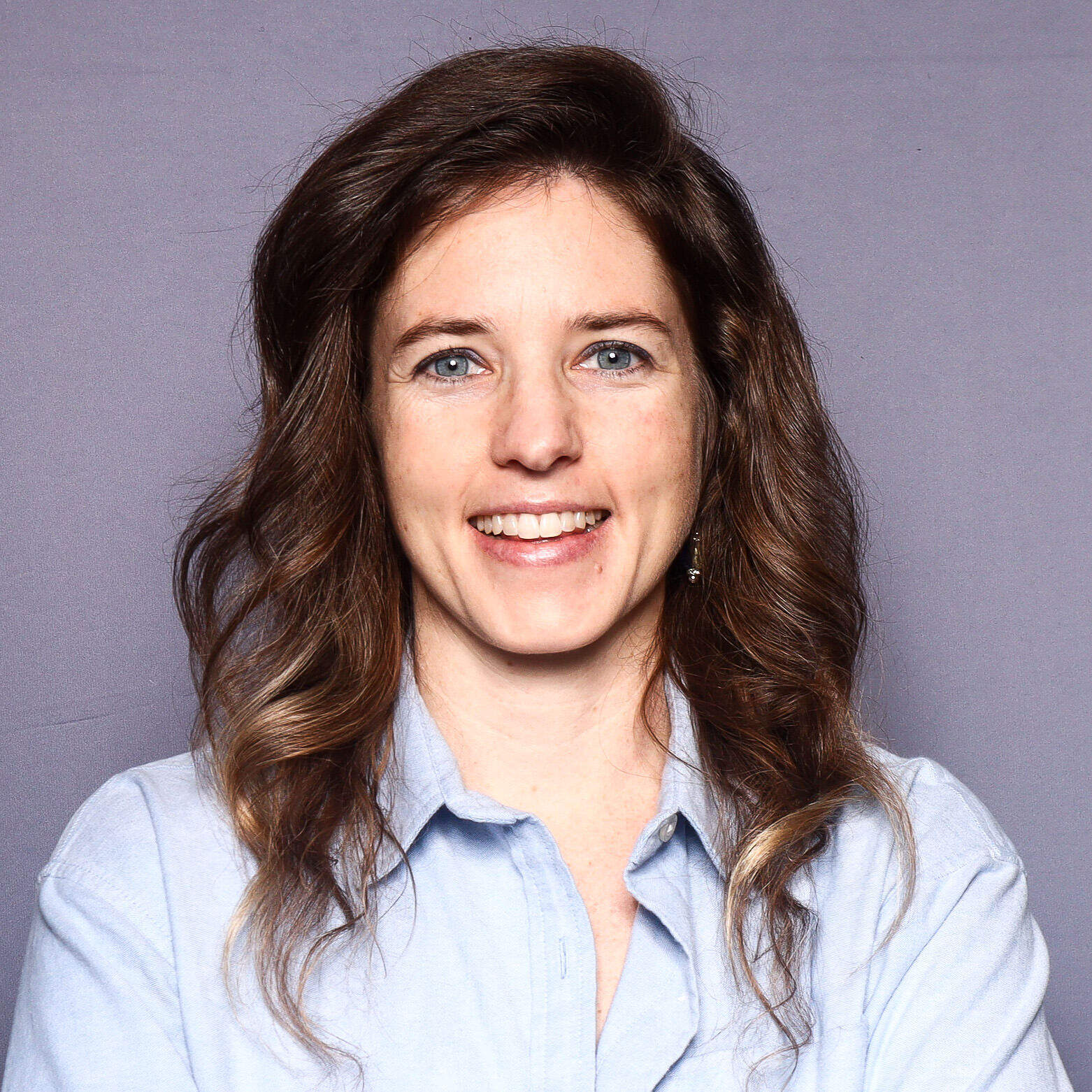
Rachel Entrekin, professional ultramarathoner and first woman to win the Cocodona 250 outright.
Sandra Hunter, exercise physiologist at the University of Michigan.
Transcript of Full Broadcast
The version of our broadcast available at the top of this page and via podcast apps is a condensed version of the full show. You can listen to the full, unedited broadcast here:
Part I
MEGHNA CHAKRABARTI: The Cocodona 250 is the ultra of ultramarathons. It's a 253-mile race through Arizona. The course has deserts, canyons, valleys and mountains, extreme temperature changes, and 38,000 feet of elevation gain.
Well, Rachel Entrekin has run it three times, and this year she had some pretty aggressive goals in mind for the May 4 race.
RAHCEL ENTREKIN: I used my spreadsheet from last year, which my time last year was a little under 64 hours. And I looked at that spreadsheet and I said, "Okay, my goal this year was to try to get closer to sub-60."
CHAKRABARTI: Okay, that's sub-60 hours — running 253 miles across the desert basically in two and a half days. And that also meant cutting her previous time by four hours.
ENTREKIN: You know, I'm sitting there and I'm slashing my pace times in my Excel sheet, and I'm slashing my aid station times. Like, I'm going from 30 minutes at an aid station to three. Like, it, it is aggressive. And I only can figure out how to get myself to a 61:30.
And I remember I sent that to my crew and I was like, "Hey, listen, I don't know how we're gonna do this. I don't know how we're gonna get to sub-60, but that's what I want and I can't mathematically make it work. We're just gonna have to wait for some race day magic."
CHAKRABARTI: Well, that race day magic arrived at around mile 60 when Rachel took the lead of the Cocodona 250.
ENTREKIN: There was a Rage Against the Machine song that kind of popped into my head. But yeah, I think in the, it's the bridge that says, "It has to start somewhere. It has to start sometime. What better place than here and what better time than now?"
(MUSIC)
CHAKRABARTI: That's Rage Against the Machine's "Guerrilla Radio."
The Cocodona 250 was launched in 2021. No woman has ever won the race outright, which includes beating the men.
ENTREKIN: It gave me a lot of anxiety to be like, well, who are you? Who are you that you think you can hold onto this lead? We still have another 190 miles left. And like, I got really wrapped up in possible negative outcomes.
Like, what if I take the lead now and then I blow up later? Like what if I'm starting out too fast? And what if I'm making a mistake? And it made me honestly want to slow down and catch back up to the men who were behind me that I'd been running with.
CHAKRABARTI: But then "Guerrilla Radio" popped back into her head.
ENTREKIN: "Wait a second. Like you have won the women's race two years in a row. You got fourth overall last year. You have so much more experience now than you did last year. If somebody has to lead the race, there's no real reason why it can't be you. So why don't you just believe that it could be you?"
COMMENTATOR 1 [Tape]: She is quickly approaching Heritage Square and what we like to call Cocodona Alley. You can see the amount of people. It's getting deeper and deeper as she goes around and turns the corner, this is your Cocodona 250 winner, Rachel Entrekin. Amazing.
COMMENTATOR 2: 56.09 and change unofficially. New overall course record by over two and a half hours. Just incredible.
CHAKRABARTI: And yes, Rachel Entrekin won. She beat all the women and all the men. And she did it while also smashing the course record, as you heard just a second ago. I'm gonna repeat what he said. Just incredible.
Now, Entrekin trains hard. She is a professional ultramarathoner with sponsors, and by the way, when we did our show a couple of weeks ago about the first ever sub two-hour regular marathon, winner Sabastian Sawe is also professional with sponsors, and he had a team of the world's best sports trainers, shoe designers, and nutritionists.
Entrekin runs 80 to 100 miles a week, and normally climbs 15 to 20,000 feet a week, but she will be the first to tell you that it took years to get here.
ENTREKIN: I was never a runner growing up. I hated running. I did not even make my high school's cross-country team because I was not good enough. I decided that that's what I wanted to do, and I developed the skills required to be excellent at it.
You know, it didn't happen overnight. It took a lot of time. I've been running for 15 years. You know, I didn't start off running marathons and just immediately win Boston. Like, I was not even placing in my age group when I first started. But you know, I found the niche of this area of running that I was really good at, and that was when I go for longer, I do better.
CHAKRABARTI: And as we mentioned, boy, does she ever do better, because this year, Rachel beat the record on the course by two hours. And she says that one reason why? She barely slept.
ENTREKIN: One of the things that I innately am good at with regards to running that could be considered a superpower is I don't need to sleep that much, and I can still function. I guess I would like to sleep more, but I don't need to. Especially in ultrarunning, it's a big skill that I'm happy I have.
CHAKRABARTI: During Rachel's 56-hour run, she slept only 19 minutes, which included five minutes where she sat and leaned on one of her pacers and two seven-minute dirt naps.
A dirt nap is just when ... you just find a comfy spot on the ground and just curl up, try to stay warm.
Rachel Entriken
ENTREKIN: A dirt nap is just when you curl up on the side of the trail out of the way, because you don't wanna — if somebody is trying to pass you, you don't wanna be in the middle of the trail. But yeah, you just find a comfy spot on the ground and just curl up, try to stay warm.
CHAKRABARTI: So the less she slept meant more time running. By the way, the second finisher in the Cocodona 250 slept for about an hour.
So Rachel also has another key thing. You can hear it in just the way she talks about her sport of running. She has this mental toughness. And when it comes to ultramarathons, that is crucial. The races are often described as "80% physical and 80% mental."
ENTREKIN: I can focus on the fact that my legs hurt and I still have 100 miles to go, or I can focus on the fact that I'm getting the opportunity to do this. I knew it was going to be challenging, and I can be grateful that it gets to be challenging now. And now I get to do the work that I came here for.
When something has never been done before, don't expect it to be easy.
I can focus on the fact that my legs hurt and I still have 100 miles to go, or I can focus on the fact that I'm getting the opportunity to do this.
Rachel Entriken
CHAKRABARTI: Rachel's pain tolerance is also pretty high, too. In fact, in her first Cocodona Race, she ran the last 27 miles with a broken rib.
Okay, so years of training, very, very little sleep, lots of fueling, and a strong mind and high pain tolerance delivered Rachel Entrekin to an incredible course record on a 253-mile race with 38,000 feet of elevation gain. All those things together make sense. But as always, when it comes to women doing the unthinkable, this still happens.
ENTREKIN: "Oh, well, she was only doing a 13:30." Like, "that's not even fast," implying that that, it, that it was not impressive.
And, like, I don't remember this happening last year when a man won or any other year when a man won. It's always just like, "Holy crap, that's amazing." And now that I've won, it's like, "Oh, well, that's not even fast." It's like, well, actually, that's the fastest anyone's ever done it. And, like, I don't wanna toot my own horn or anything, but, like, if, you know, if you think you can do better, please do better.
CHAKRABARTI: Rachel, you can toot your own horn all you want, and I'll wait at the finish line with you next year with some, like, a nice drink and sitting on some chairs as we wait and wait and wait and wait for the other finishers.
Now, here's the thing. Rachel's magnificent achievement isn't just a one-off. Recently, more and more women are beating the entire field in ultramarathons. Men still win more often, but women are rapidly shrinking that gap. There's something fundamental about women's bodies and minds that's making it possible. So that's what we're gonna talk about today, record-breaking female ultramarathoners.
And we'll talk about it with someone who literally wrote the book on it, Lily Canter. She's co-author of the book Ultra Women: The Trailblazers Defying Sexism in Sport. Also, she's an ultramarathoner herself with about 25 ultras under her belt, and she joins us from Leicester in the U.K.
Lily, welcome to On Point.
LILY CANTER: Hello. Thanks for having me.
CHAKRABARTI: I sit in awe of, first of all, anyone who runs an ultramarathon, and then let alone smash a course record by two hours. Just describe to me, you know, in your view what Rachel Entrekin's achievement really means.
CANTER: Yeah, it's absolutely incredible. And I think, you know, just being able to run that distance in the first place, any kind of speed, is incredible. I mean, I've never done anything longer than 80 miles, so the thought of doing that sort of over two and a half times, yeah, is awe-inspiring. So yeah, incredible to just complete that race, let alone, you know, do a course record, be first overall. It's absolutely phenomenal.
CHAKRABARTI: And when she said she had a 13-minute pace, which I suppose is the average over 256 miles, it still breaks my brain thinking about that.
Now, we have just about a minute or two before our first break, Lily, and we will spend the rest of the hour talking about women's physiology in particular, but I wanna just lean for another second on your experience as an ultramarathon runner yourself.
I mean, just tell me what, first of all, like what is the attraction of running these ultra distances?
CANTER: Yeah. I mean, I think it takes a certain type of person, but for me it's really about testing what your limits are. And the thing that appeals about ultramarathons is you never quite know what that limit is.
For me, it's really about testing what your limits are.
Lily Canter
And you'll do one race, and you'll, you'll kind of — it's a bit like giving birth, you know. At the time you're like, "Oh, this is really hard." And then, you know, within a few weeks, you wanna sign up for another one. And this time you're kind of thinking, "Oh, well, maybe I can go that little bit further or do a race that's a bit tougher." So yeah, it becomes quite addictive in terms of sort of trying to see what your limits are.
I think another big appeal is that ironically, it's not really about speed. It's about so many more things. There's obviously, as you've mentioned, there's the mental side of it, which is huge. There's the preparation, there's how you look after yourself. There's constant problem-solving. So it's a very different thing to, say, running a road marathon, which is really just about sticking to your pace and kind of just fueling as you go along.
CHAKRABARTI: Yeah, so you — Can I just jump in quickly? You mentioned the comparison between road marathons. So ultramarathons are generally trail runs?
CANTER: Yeah. I mean, they're not all trail. O
CHAKRABARTI: Okay.
CANTER: But yeah, the vast majority of them are off-road. And yeah, that's, again, a huge appeal is that you're, like, out in nature, quite often in the mountains or, you know, in the fields, in the forests. So you have a much closer connection with nature.
CHAKRABARTI: Got it.
Part II
CHAKRABARTI: So Lily, let's — talk to me about what you've been seeing over the past several years, you know, I keep mentioning it as shrinking the gap. I mean, what evidence is there? What other wins have women had that you think are notable?
CANTER: Yeah, I mean, I think a lot of this goes back to, well, Courtney Dauwalter won the Moab 240-mile race back in 2017. And she was sort of 10 hours behind the first male finisher. I think the one that really hit the headlines around the world though was --
CHAKRABARTI: Wait, wait, let me get. So the first male finisher was 10 hours behind her?
CANTER: Yeah.
CHAKRABARTI: Yeah. Okay.
CANTER: But I mean, I think that one's lesser known actually than Jasmin Paris in 2019, who won the Winter Spine Race in the U.K, which is a 268-mile race kind of right in the heart of winter. Very, very cold race. Incredibly hilly, a lot of elevation, and she was breastfeeding and pumping milk along the way, and yet she still managed to win the race and set a new course record at the time. And so that really kind of hit the headlines all over the world.
Jasmin Paris ... won the Winter Spine Race in the U.K, which is a 268-mile race in the heart of winter ... and she was breastfeeding and pumping milk along the way.
Lily Canter
And, you know, Barbra Streisand was, was tweeting about it and everyone was getting very excited. And I think that was really kind of what kickstarted our interest and led to us writing Ultra Women.
CHAKRABARTI: Yeah.
CANTER: Because suddenly, you know, it was like, "Oh, wow, women can actually win these races."
CHAKRABARTI: Well, actually, I note here that Jasmin Paris not only broke the course record when she won that race in 2019, but she broke it by 12 hours.
CANTER: Yeah.
CHAKRABARTI: It's just amazing.
CANTER: Yeah, yeah, yeah.
CHAKRABARTI: Now, we actually have a clip of her from an interview that she did right after the race where she talks about the fact that she was a breastfeeding mother, while also winning this ultramarathon just so spectacularly.
JASMIN PARIS: I was expressing milk during the race, and it was actually only really sort of a significant factor at the first checkpoint. After that, my production dropped quite dramatically, probably because my body was a little bit stressed. I left that final checkpoint having not really slept very much. It probably helped that my daughter's provided such good sleep deprivation training for the last 14 months.
CHAKRABARTI: Okay, Lily, tell me just really quickly, also you said it's why you, one of the reasons why you and your co-author decided to write the book. Did that also come from, or that desire come from, things that you had seen yourself while running ultramarathons, the differences between women and men?
CANTER: Yeah. I mean, certainly I think Emma and I, who are both ultra runners, had noticed that first of all, there just weren't very many women in the races that we were doing. There was maybe 10, 20% at most. But the women that were running seemed to be much further ahead in the pack, but more importantly, seemed to be in a much better state by the end of the race.
And Emma and I both kind of felt that, you know, in the later stage of the race, we are very much kind of middle of the pack runners, but we could see that the men around us were really struggling, and yet we still felt like we had energy. We could keep going. We felt fine when we finished.
In the later stage of the race ... we could see that the men around us were really struggling, and yet we still felt like we had energy. We could keep going.
Lily Canter
And we just thought, you know, there's something interesting here. Like, women seem to be very good at doing these super long distances, and yet we're not hearing their stories. We're not seeing them in these races. And so we really wanted to kind of unpack all of that.
CHAKRABARTI: Is one of the reasons why at that time you weren't seeing more women in races is that, well, even marathon running in the Olympics women weren't — there was no women's category in Olympic marathon running, so this is 26.2 miles, until the 1980s?
CANTER: Yeah. Yeah.
CHAKRABARTI: I can't believe I'm saying that out loud. It just seems so late. God.
CANTER: I know. Yeah, yeah. It is incredible. And women were kind of prevented from running any kind of distance yeah, sort of right through, really it was only, yeah, the '80s when the marathon distance was in the Olympics that women started running longer distances.
But even today, in the UK, in cross country races and competitions, women run shorter distances than men. Girls run shorter distances than boys. So this sort of sexism does actually still exist.
CHAKRABARTI: Why? What's the justification given in the UK?
CANTER: [INAUDIBLE] think there is a justification. I think it's tradition. And I think in some respects that it's just people have got used to the status quo. But the, you know, there has been campaigns to change it, but it just hasn't really shifted yet.
CHAKRABARTI: Yeah. Okay, one more sort of historical note here. For folks who follow marathon history, there's a very, very famous name — woman's name. Her name is Bobbi Gibb, and she was the first woman to run the Boston Marathon in 1966.
But because women were actually not allowed to enter the Boston Marathon at that time, Bobbi Gibb did it illegally. Here she is in an interview just last month with Boston's GBH.
BOBBI GIBB [Tape]: When I trained for two years, and I wrote for my application in 1966, and I got a letter from Will Cloney that said women are not physiologically able to run 26.2-mile marathons. Those were the rules of sports. That's what everybody thought.
Even women. Women coaches would tell their girls, "Now, dears, you know, don't run more than a mile and a half. It could damage your reproductive system," and this sort of thing. It was a widespread belief that women were not physically able to do this sort of thing.
CHAKRABARTI: I just have-- I cannot suppress my laughter at that. Oh my God. Okay. But Lily, so it seems as if that there's some data that shows that the more miles the race covers, that women are closing the gap in the ultra range of races and not closing the gap as fast in the regular marathon distances. Does that track as true to you?
CANTER: The evidence is quite mixed. I think the issue we have is there are not enough women doing these very extreme races, so it's not like marathon, you know, where we have millions of people running marathons. The numbers are much smaller. So it's quite difficult to really say how robust that data is.
There has been some studies that have looked at the data and suggested the further the distance, the smaller the gap. But then there are also other studies that show the opposite. So we have to be a little bit careful about kind of making that conclusion because the problem is we just don't know enough about women, and there aren't enough women in these races to get enough data.
CHAKRABARTI: Okay. That's fair, right? Because if your sample size isn't large enough, there's probably a lot of noise in that sample size.
But first, let me just highlight what some of the data seems to indicate at least, that at 5K, say, men tend to run to almost 18% faster than women. At marathon distances, some of the research shows that the difference shrinks to 11%. At 100-mile races, men are still running faster, but again, the data seems to indicate that they're just running .25% faster than the women. And at above 195 miles, again, this incomplete data, but shows that at 195 miles or above, women are actually .6 miles faster than men.
I just wanted to mark out that trend, Lily, with, again, the caveat that you put, that there just aren't enough women. There's like four times as many men who run distance races than as women?
CANTER: At least. If not more. I would say I think that's quite a generous calculation. I think in a lot of races it's still 80% male, maybe 90% in some of the more extreme races.
I think in a lot of races it's still 80% male, maybe 90% in some of the more extreme races.
Lily Canter
CHAKRABARTI: Okay. But nevertheless, when there's even sort of the possibility of a trend, it's worth taking a closer look at. And, you know, Lily and others are in fact doing exactly that. One of them is Sandra Hunter. She's an exercise physiologist and chair of the University of Michigan's Movement Science program, and she's been studying the physiology of female athletes for more than 30 years.
And Professor Hunter says that females typically have less muscle than males, but women's muscles actually fatigue less.
SANDRA HUNTER [Tape]: So males have more muscle, for instance, but the makeup of the muscle is it's what we call fast muscle. Those types of fibers in males, and both males and females have them, but males have a larger proportion of the fast ones. They're more fatigueable, so the females have a lot more fatigue-resistant muscle.
CHAKRABARTI: Which is clearly helpful in an ultra-long distance race. Now, Professor Hunter has also found that females are better at preserving carbohydrates while exercising.
HUNTER: And when you have a female and a male exercise at a moderate intensity, females utilize more of their fat, their lipids, and save carbohydrate and protein as a fuel more than males. So males are utilizing more of the carbohydrate.
CHAKRABARTI: Now, this is a metabolic advantage because not only is fat a slower burning fuel, but it also means that females can use the energy they already have, which requires less energy than consuming and breaking down ingested carbohydrates during a race.
Now, there's one last thing Professor Hunter discovered that gives female endurance runners an edge: They are more consistent at pacing.
HUNTER: And it started with a conversation that I had with another academic who said, "Oh, you know, males don't pace as well as females." I said, "What do you mean?" He said, "Well, they go out and they think they can rule the world, and they go out and they run really hard, and then they blow up." And I said, "Well, let's have a look at that." So we did, and he was right.
We took a, a marathon with, like, 100,000 people in it over several different years, and we found that the women paced more evenly between the first half of the marathon and the second half of the marathon, where males, there's a lot more catastrophic slowing.
CHAKRABARTI: A little later in the show, we'll return to her to talk about what her research shows regarding some of the disadvantages that female athletes face in endurance running. But Lily Canter, let me turn back to you. What's your response or added thoughts to some of these interesting physiological differences?
CANTER: Yeah. I mean, I think this is where the evidence is stronger that there has been a kind of number of studies that have looked at male and female muscle fatigue after, you know, long events like the UTMB, which is a 100-mile race in the mountains. And they found that, you know, after that kind of activity, the women's muscles were less tired than the men's.
And again, sort of anecdotally, that's kind of been my n- my experience as well that, you know, women seem to be in a better state shall we say, at the end of an ultramarathon, their fatigue is not as bad. And also that, yeah, about pacing as well, we see that all the time.
Just last year actually, again, the Spine Race in the UK, which is our, I guess, our sort of premium ultramarathon, was won by a 55-year-old woman who set off at the pace she wanted to stick at. There was a load of people tearing ahead of her, and slowly she was just kind of picking people off, got ahead of the male that was in the lead and just steadily made her way, you know, through the field.
CHAKRABARTI: So when you say pacing then, it sounds like, for people who aren't distance runners (LAUGHS), me included, are you talking about sort of like the strategic discipline or mental discipline to sort of know how fast to run at different parts of the race?
CANTER: Yeah. Yeah, so it's basically running at a speed that you can maintain. So rather than kind of, you know, going off as fast as you can and then kind of blowing up and having to perhaps walk for a bit or really slow down, you set off at a slow speed, but that speed you maintain. So the speed you start at is pretty much the speed that you're finishing at.
And having that consistency means that your energy is kind of more, I guess, more balanced and you can fuel more consistently and you're less likely to kind of run into problems because you're just too tired and have no energy left.
CHAKRABARTI: Well, we heard that tape earlier from Professor Hunter who said she looked at, what, over 100,000 people in various marathons and found statistical evidence that the women were better at pacing. But I'm not sure we understand why. Do you have any theories?
CANTER: Well, I think part of it is testosterone. Men just can't help it. You know, the testosterone kinda, particularly at the beginning of a race, kinda kicks in, and they have that kind of drive to go very fast. And women just don't have as much of that hormone. So they don't, you know, I guess have that kind of — it's kind of that, I guess, that desire to go off so fast. And it's just not innate in us in the same way that it is in men, and so that could be a real advantage in these super long races.
CHAKRABARTI: (LAUGHS) I'm only smiling because right now I'm just thinking of, like, how many, in how many different ways women's lives are marked by having to have a kind of mental endurance.
CANTER: Yeah.
CHAKRABARTI: So it makes perfect sense that that would map onto something like ultramarathon running. We have about a minute left before our second break, Lily. And also I'm wondering, a lot of these, like, just phenomenal female distance runners are also mothers. I mean, do you see any relationship there?
CANTER: Yeah, it's really interesting. I mean, it depends when they sorta come back to the sport. But I mean, within the first year after giving birth, you know, women's hearts are actually larger. So there's a lot of benefits that they can gain in that first year if they're fit and able to return to running. Because they actually have kind of more heart capacity, which is brilliant.
And also, the process of going through motherhood is such an endurance feat in itself. But in terms of, like, the metabolism of your body, it's off the scale. So in a way, we're kind of very much built to endure. And I think there's also those sort of societal factors that I guess mothers are — they are used to handling sleep deprivation, multitasking, having to plan very carefully. So those all come into it.
Mothers ... are used to handling sleep deprivation, multitasking, having to plan very carefully. So those all come into it.
Lily Canter
CHAKRABARTI: I'm starting to see the relationship there. Also, not only the heart, but women's, um, during pregnancy, their blood volume goes up significantly as well.
Part III
CHAKRABARTI: Today we're talking about women ultra-endurance athletes and why there may be something about women's bodies and minds that make them particularly capable when it comes to endurance feats, which I guess is technically described as extreme physical activity for six hours or more.
For example, women have long been known to be very, very good — and better than men — in ultra-long distance swimming. Different sport, different conditions, but today we're talking about ultramarathon running.
Lily, can we talk a little bit more about something that Rachel Entriken said to us at the beginning of the show? When there was a moment in the race where she was listening to Rage Against the Machine, but she just decided, like, "Why not me?" And so it sounds like there was this moment where she just said, "I can win this."
And that's a kind of mental toughness that I'm not saying the men don't have. Obviously anyone who undertakes an ultramarathon, regardless of their gender, has a kind of mental toughness. But how does that play out specifically for female runners?
CANTER: Yeah, it's really interesting when you start looking at kind of psychological differences between men and women, because actually there aren't any sort of sex differences in the brain, but men and women, you know, do respond to pressures and pain differently.
I think what we found was that women have to be really prepared when they do these races. They have less leisure time than men, and therefore, if they're gonna commit to something as big as an ultramarathon, they're gonna make sure that they've put in the work, they know exactly what they're gonna do on the day, and they're gonna be kind of really dogged in completing it. I think there is more of a tendency for some men to be underprepared and to feel, you know, "I'll just kind of wing it on the day." So yeah, there's definitely something in that in the sort of preparedness.
And then, you know, some studies have shown as well that mental toughness is not just about gritting it out, it's actually about how you look after yourself. And women do tend to have more self-compassion, where they can stop and reflect and be kind to themselves, fix problems, whereas men tend to kind of just plow on regardless. And in these kind of long races, you really can't afford to do that. You have to kind of stop and solve problems along the way, because otherwise something's, you know, gonna happen where if you're not feeling all right or you're not looking after your body, you're not sorting your feet out, you're not hydrating properly, then you can suddenly be out of the race.
CHAKRABARTI: Wow. Yeah, I can't imagine, like, just trying to wing a race that's so long. (LAUGHS)
CANTER: I've seen it.
CHAKRABARTI: You've seen it? Is that what you said?
CANTER: Oh, yeah, yeah. I've seen it many times. You know, men kind of rocking up to, I don't know, a three-day race in the mountains, saying, "Oh, you know, six months ago I did my first park run and ran 5K."
CHAKRABARTI: What? (LAUGHS) Oh my God.
CANTER: And they're destroyed by the end of it.
CHAKRABARTI: Wow. Okay. Let me turn back to physiologist Sandra Hunter. Because just like you said at the beginning of the show, Lily, really there just actually right now there isn't enough, there isn't a big enough body of data to make a hard conclusion that above certain distances, women are just, they're going to be faster runners. So more research is most definitely needed.
And thus far in Professor Hunter's research, she's also been able to measure some of the disadvantages that women have when it comes to endurance running. And in fact, Professor Hunter told us that the list of disadvantages is actually longer. A major one: Males are just born with more muscle power, period.
HUNTER: At the elite level, males can outperform females, like, by 40%, like almost being twice as strong and powerful as females. And the reason behind that is that males simply have larger muscles, and they have faster muscles. So we can do things like muscle biopsies. We can take samples of the muscle. We can examine it. We can look at the types of muscles. We can see that the fibers are much bigger in males, and it largely explains why males are stronger and more powerful.
CHAKRABARTI: And according to Professor Hunter's research, biologically, males also have better oxygen utilization.
HUNTER: That's around the fact that males have larger hearts. Each heartbeat, they can pump out more blood to the body, which means that the oxygen can be delivered to the muscles more quickly and at larger capacity. The actual blood in males has a greater oxygen-carrying capacity, which is really interesting because it has a greater amount of hemoglobin. So more blood can get to the muscles to utilize the oxygen, and then more can be extracted.
Males have larger hearts. Each heartbeat, they can pump out more blood to the body, which means that the oxygen can be delivered to the muscles more quickly.
Sandra Hunter
CHAKRABARTI: That means that men generally have a higher what's known as a VO2 max, so they can sustain physical activity longer, they can tire less, and recover faster. Obviously, really important things in ultra-distance running or any endurance sport.
And finally, Professor Hunter tells us that males are born with less essential fat. Because of the burdens of childbearing, women actually have an extra layer of fat to support pregnancy. And that requires more energy to carry around. So male bodies have larger hearts, more muscle, more oxygen capacity, and less fat, which Professor Hunter thinks gives them a bigger advantage when it comes to endurance sports.
HUNTER: So the fact that a female won this and broke the course record is outstanding. But it doesn't mean that females are suddenly going to outperform males. That's probably never gonna happen. Because physiologically, in most athletic events, that's not the case. The best male will always outperform the best female in many of these events that involve, you know, muscle strength, power, and endurance.
CHAKRABARTI: Professor Hunter took the top 10 ultramarathon men and women finishers in about 20 races, ranging from 45 kilometers to 160 kilometers, and the performance gap was about 10% in favor of the men.
So Professor Hunter doesn't think that physiologically women can outrun men regardless of the distance, but she still comes back to the fact that when it comes to the female body and ultra distances, there is so much yet to be learned.
HUNTER: I think we're starting to push the limits of the female physiology, similar to what we're doing in terms of the science for males. But it is a really good question of whether we've really explored it in the ultra distances. And I suspect we haven't. I really do suspect we haven't.
CHAKRABARTI: Lily Canter, your thoughts?
CANTER: Yeah, I think it's really interesting that, you know, she talks about that comparison, but, you know, the top end of what she was looking at would I would argue were actually relatively short races in the ultramarathon sphere. You know, the distance that Rachel was doing was 250 miles. And we have races that are even longer than that.
So we don't really know what happens when, you know, power and strength really kind of stops being the most important thing, and things like fueling and you know, sleep deprivation may be kind of key factors.
CHAKRABARTI: Let me just put a finer point on what you just said. So basically, the Cocodona 250 that Rachel Entrekin won was more than twice the length of the top and that Professor Hunter had studied. So I think your point is well taken.
CANTER: Yeah, exactly. And I think this is it. There's so many different variations in ultrarunning in terms of the distances, but also the terrain and the climate, that it's, there's so many variables that it's quite difficult to kind of nail down, you know, exactly what's going on. And I do think that women, there are more opportunities for women to win these kind of events.
I do think that women, there are more opportunities for women to win these kind of events.
Lily Canter
CHAKRABARTI: Win these kind of events. I'm seeing that I think you told Paige, our producer, who by the way is a phenomenal runner herself, thaT there are what? At least 2,000 races now where women have won them outright? Is that right?
CANTER: Yeah. So there's a sort of German database of ultramarathons around the world. It hasn't got every single race on there, but it's got the vast majority. And yeah, when we looked at the database kind of going back to the 1960s when they started logging the recordings of ultras, we found over 2,000 outright wins by females.
So, you know, these are not necessarily elite runners. A lot of these are small races, But it just goes to show that it's not that unusual.
CHAKRABARTI: Well, so just to kind of put an underline on one of the big conclusions of this hour is that women do seem to be closing the gap at longer and longer distances. But there's still a lot of research left to be done. And part of the reason why is because it was, I guess in, you know, in the history of medical research, it's only relatively recently that people have even thought that it's worth studying, you know, the bodies of female athletes. So there's a lot of catch-up that the scientific establishment has to do.
But Lily, I wonder if we can actually talk about something else regarding the phenomenal achievement that these women have made. It seems as if while lots of people celebrate them, there's also this immediate flush of coverage that says, "Well, you know, Rachel Entriken might have won the Cocodona 250 in record time, but the weather conditions were different." Or I know the runner that we were talking, talking about earlier, people were saying, "Well, her pacer helped her." But it's something like never just acknowledging that the woman won outright.
CANTER: Yeah, and this is something that has happened throughout history, you know, in ultrarunning and in any other endurance sport that, yeah, there's always kind of some explanation for why a woman may have won a race. Like you say, may have been better conditioned or they were helped in some way. And it's often the way that it's framed in the media as well.
Some of the coverage when Jasmin Paris became the first woman to finish the Barkley Marathon, some of the coverage was sort of saying that it was a gesture by one of the male competitors that clinched her finishing the race, i.e., she wouldn't have finished it if a man hadn't helped her. So that framing, yeah, is often very much through a male lens. And yeah, it's still a huge issue, and I think, you know, that's why our book's got the subtitle The Trailblazers Defying Sexism in Sport because there is still a huge amount of sexism in the way that these kind of races are covered.
CHAKRABARTI: There's some other examples that I have here in front of me. Lynne Cox, she became the fastest person to swim the English Channel, and a lot of people said, "Oh, it's just beginner's luck" in that case. And then someone named Jamie Aarons. Can you tell us about Jamie Aarons?
CANTER: Yeah. So Jamie did this amazing sort of multi-day — well, it was a month — of going up all the mountains in Scotland basically in one go. And her aim was always to try and beat the record which had been set by a man. But again, when she did break his record, it was very much framed as, you know, "how on earth could a woman beat a former Marine? What on earth, you know, was going on there?" Rather than just celebrating the fact that she had broken the record.
When she did break his record, it was very much framed as, "How on earth could a woman beat a former Marine?"
Lily Canter
CHAKRABARTI: I see. A "middle-aged social worker." How could this person possibly beat a former Marine? Well, she did. Right? She just did. So I think that — it seems like this is a really good place for us to turn towards the end of the conversation here is do you think that when women achieve these just stand-out victories, that we're not doing enough to celebrate that fact in and of itself?
CANTER: Yeah. I think one of the things is we tend to slip into this comparison with men. You know, we can't help this sort of tantalizing idea of "are women faster than men, the longer the distance?" And isn't it great when women, you know, beat the patriarchy?" But actually, what we're missing here is that we should be celebrating women in their own right. We should be celebrating female winners and male winners separately. We shouldn't be kind of lumping it together as an overall winner.
And I think that actually is more important that we separately acknowledge, you know, the women's race as an entity in its own right, so that we're giving equal coverage to men and women, because that's not happening at the moment.
CHAKRABARTI: Aha. I mean, even some things as simple as maybe announcing the women's winner first.
CANTER: Yeah.
CHAKRABARTI: That's interesting. Do you think — Oh, go ahead, sorry.
CANTER: No, I'm just saying and it comes down to, like, really little innocuous things that you don't notice it until you do, and then you can't stop noticing it. But things like when websites will list sports gear, and they'll have the male sizing and the female sizing — the male version, female version. It'll always be, and I'm, you know, I'm doing it myself, we always say male and female. Well, it's never female and then male. It's always men first. And we need to stop doing that.
CHAKRABARTI: Do you think that this will change over time? Because obviously, here in the United States, after Title IX, many, many more girls went into athletics, and now with the remarkable victories of women like Rachel Entriken, I mean, perhaps that's gonna inspire more women to do these very heavy endurance feats as well. So do you think that we might be sort of slowly changing that culture?
CANTER: Yeah. It's, it definitely is changing. I mean, if you look back, you know, even 10 years ago, there were definitely not as many women participating in these kind of events, and those numbers are kind of slowly creeping up. So yeah, we just kind of need to keep pushing really.
CHAKRABARTI: Well, Lily Canter is co-author of the book Ultra Women: The Trailblazers Defying Sexism in Sport. She's also an ultramarathon runner herself. Lily, thank you so much for joining us. It was really a great pleasure to speak with you.
CANTER: Thank you so much.
The first draft of this transcript was created by Descript, an AI transcription tool. An On Point producer then thoroughly reviewed, corrected, and reformatted the transcript before publication. The use of this AI tool creates the capacity to provide these transcripts.
This program aired on May 22, 2026.