Support WBUR
Why Mass. educators see promise in 'high dosage tutoring' for students

In Massachusetts, education has long been a major focus and point of pride. The state often ranks high on lists evaluating student achievements across America.
Still, educators and academics are constantly exploring new ways to improve student learning, especially as districts look for solutions to achievement setbacks born from the COVID-19 pandemic. Certain initiatives, like longer school days, shorter school weeks or summer school, have yielded mixed results.
But one approach called "high dosage tutoring" has gained attention as a promising new public education intervention.
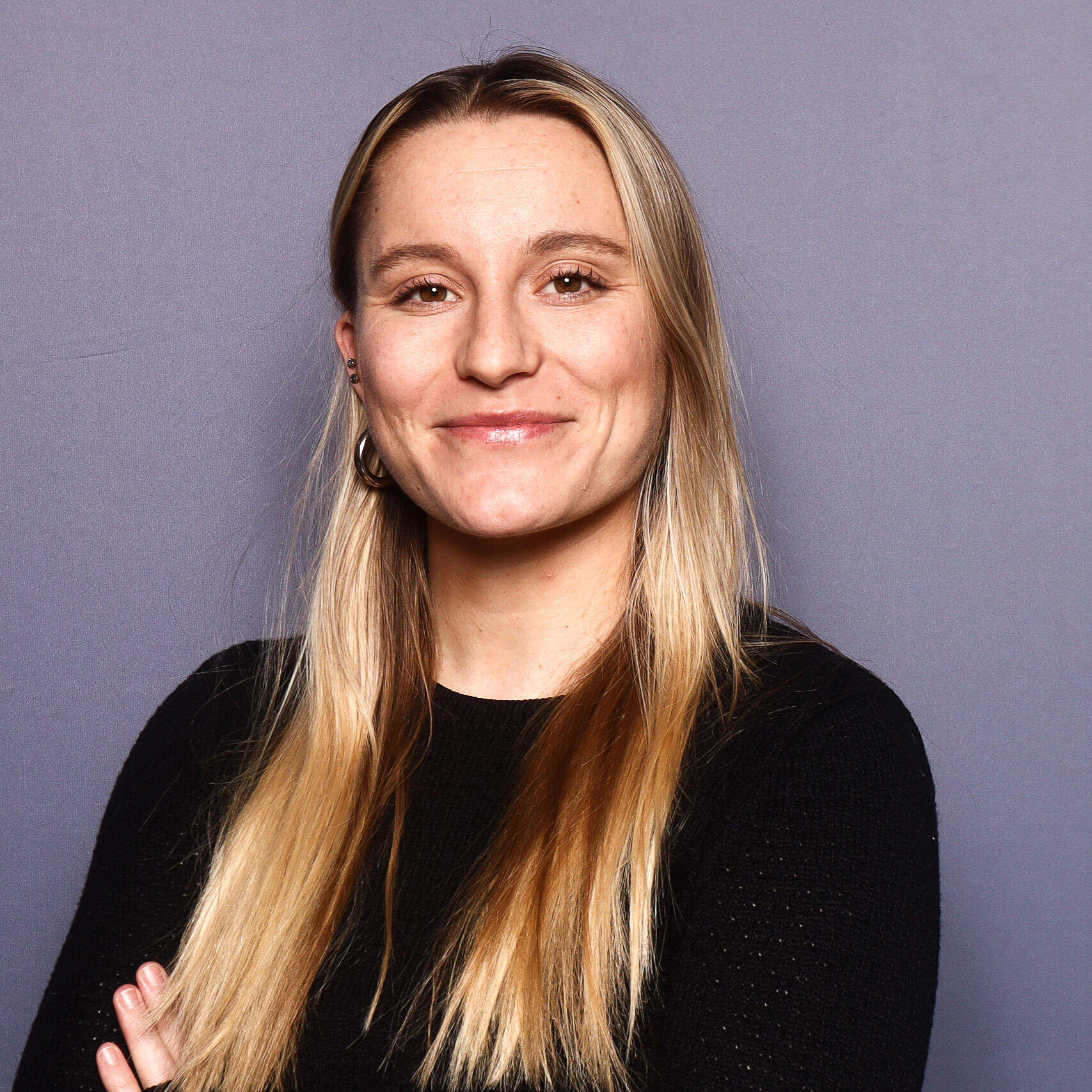
Erin McGrath, executive director of Boston Partners in Education, and Ashish Shah, a mentor with the nonprofit, joined Radio Boston to discuss how the tutoring method works and how its efficacy is being measured.
Below are highlights from the conversation, lightly edited for clarity.
Interview Highlights
On what high dosage tutoring is:
[McGrath:] "So high dosage tutoring is a program where we get folks who are either trained teachers or trained typically paid volunteers to support students in a subject that they need help in, typically three to five times a week for an average dosage of about 50 hours per semester. ...
"A big part of it is this idea of having the same small group or even one on one — so the same student and the same adult — for every session. So there's building a relationship that is a really important part of this work as well."
On why high dosage tutoring is effective:
[McGrath:] "Both high dosage tutoring and other forms, like academic mentoring, of direct support from a caring, engaged adult ... it's one of the number one things that I think makes a difference for young people. And I think that part of the success that you're seeing with those high dosage programs is this ability ... to see where are the students encountering barriers to their learning success, right? In a way that teachers do in their classrooms and at the same time they've got 25, 30 young people in front of them. That time to sit down for 50 minutes and really dig in and say, 'OK, where are you getting stuck?'
"Math is such a good example because young people often think, well, there's a right answer and a wrong answer. So if I got the wrong answer, I don't know how to do this problem. And a mentor or a tutor can sit down with that student and show them the steps and say, 'OK, here's what you got right. Here's where you made the mistake. Let's go back and and fix it.' And that's where you get those light bulb moments."
On a moment that Ashish Shah saw the impact mentors have on students:
[Shah:] "I've been doing one on one rather than a small group and primarily focused on math. And last year I had a student that was struggling in math with lack of confidence, lack of focus and I was really there for about 50 minutes a week to give her a little bit of safe space and another perspective to work with and just take her through some of the work and as far as she can get to support the teacher.
"... The revelation was the language in the math book and the problems that were written ... The question was, there's a parking attendant that keeps a log of the number of cars coming into the parking lot, and there was a table. And they would put questions that were put out to solve based on that table. The student got stuck. And I explained to her what it meant, where it was going. It wasn't really clicking, and then I asked her, what is the problem? And she said, I don't understand the problem. Point to the word. She pointed to the word log. And that was a light bulb. That simple word, which I took to mean a list, she did not understand or comprehend. She's bilingual, never encountered it. Once we got past that, she solved the problems very quickly. So very simply for me, even the language in the textbook starts to become a problem for these students, especially in elementary school."
On the challenges of broadly implementing high dosage tutoring:
[McGrath:] "It gets back, I think, deeply to the resource question. Who is going to be able to provide this? How much does it cost to do that? The Globe article and other pieces mention that a big piece that can get in the way is the stipending or the paying of the tutors. But there's another piece of this as well — which is making sure that that's all being managed well, right? Who's training folks? Who's supporting them if something gets difficult or they come into a challenge? Staffing is really important behind the scenes as well to make sure that these programs run smoothly. ...
"One of the key indicators of success of a match is consistency in the adult. Three to five days a week can be very difficult without I think some financial compensation as well. And I think that for me, what I love about our model is how flexible it is, that it is, based on the needs of the students and the needs of the teachers and the families — that they're telling us what they want. And so I like the flexibility that we have to work with small groups, to work with whole classrooms and to work one on one."
[Shah]: For me personally, if I was to look at that [high dosage tutoring], the biggest challenge I would face would be the need for more support in training such that I can look at some of those clues around the students that need help and different approaches. And so you would have to take me as a mentor, as a parent and transition me a little bit towards being a teacher and some of those tools that are available and be observant such that it can be applied. So I would see that as the biggest support that I would need.
For me, the high dosage model, is attractive in the sense that it is again, I would say spectrum of services that would be provided, but also get in there where students are also learning how to work with each other as well, rather than one on one. ... I just happen to have a one on one student relationship. There are many mentors doing one to many."
This article was originally published on November 14, 2024.
This segment aired on November 14, 2024.