Support WBUR
Commentary
An American (voter) in Paris
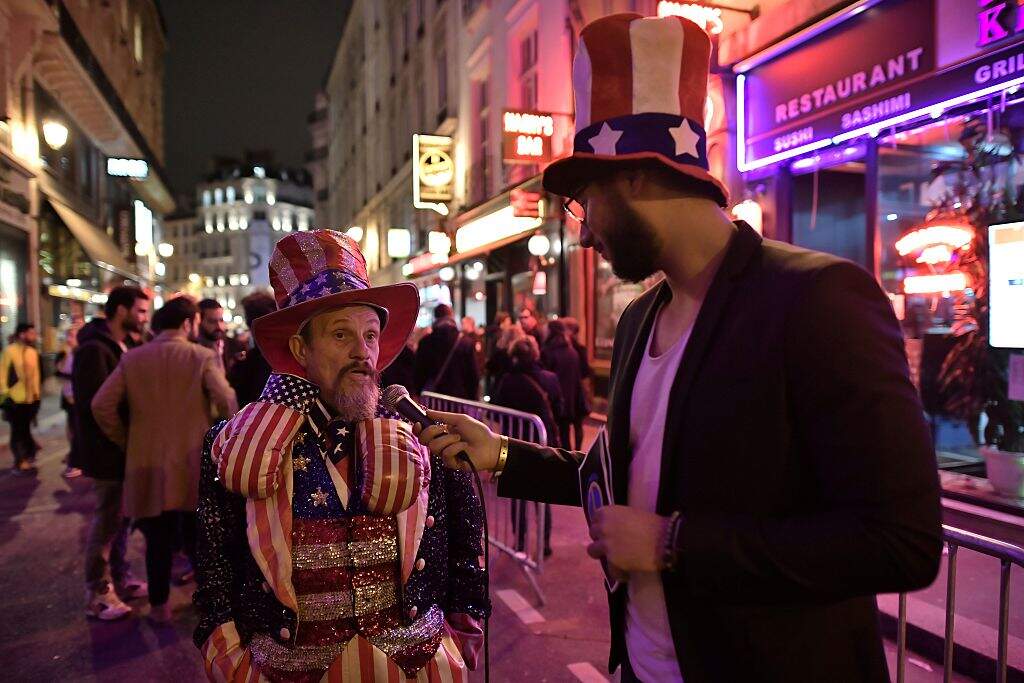
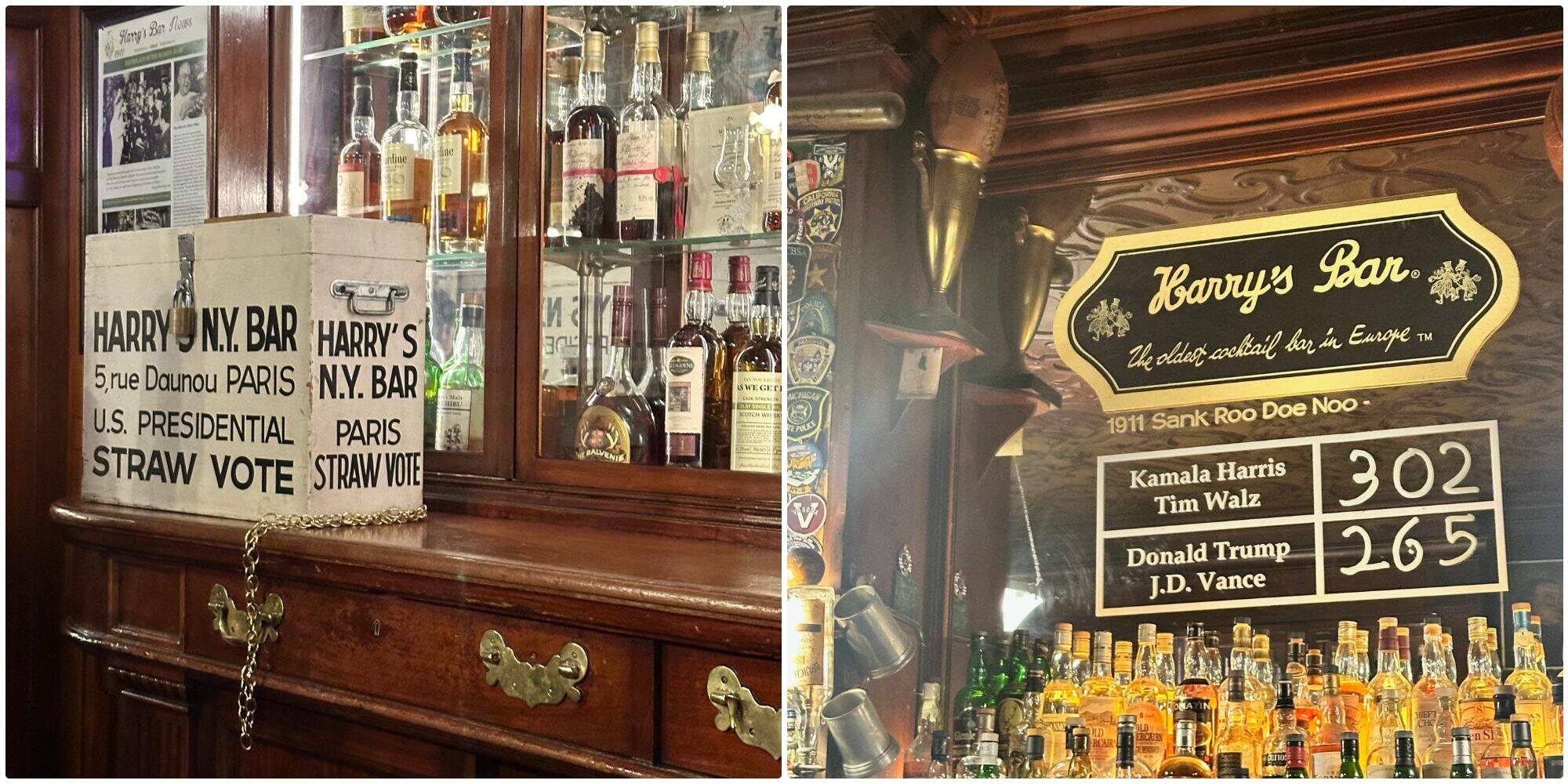
Near the opera house in central Paris, Harry’s New York Bar — adorned with Ivy League college pennants and dark wood trim — has been serving strong cocktails to expats since 1911. It’s fun to go there and pretend you’re Hemingway or a supporting character in a Fitzgerald novel. But come here during a U.S. election cycle and the attraction is a straw poll that has been a reasonably accurate predictor of American election results for 100 years. As much as I’ve tried to live in ignorant bliss while traveling during this election season (other than casting my overseas ballot, of course), I showed up on Monday night, ordered a Negroni and asked for a ballot.
The tally as of last week: 302 for Kamala Harris and 265 for Donald Trump. Time will tell.
I made a conscious decision to spend this election cycle far from home. It’s not my first time making an escape. In 2016, I heard the results of Trump’s win while drinking beers with a good friend on the banks of the Mekong River in Laos. I’m a journalist. Since 2004, I've covered four presidential election cycles and several midterms. This year, the majority of my work falls outside of political coverage and I took advantage of the flexibility of not being in a newsroom to spend some time outside of the country, reconnect with family and friends abroad, and get some perspective on both politics and the media away from my usual bubble.
But no matter how far you go, the U.S. is just too big, and the people you meet abroad — American or not — care just as much as your friends at home do about the outcome. Maybe even more.
Nearly 3 million Americans who live abroad are eligible to vote, and in a contest as competitive as this year’s, they could prove a critical constituency. One such voter is Sutanya Dacres, a writer and podcaster originally from New York City, who has lived in Paris for 11 years. She agreed to sit for a short interview. “I didn’t realize just how much American politics affects the entire world until I moved to Europe,” she told me. “From Ukraine to the Middle East, we all understand that if Mr. Trump becomes president again, it’s just going to go from bad to worse.”
Dacres is far from alone in her fears. U.S. election coverage is dominating the French news cycle. Cécile Prieur, the editor of Le Nouvel Obs, a weekly magazine (owned by the major French daily newspaper group Le Monde) wrote in special issue dedicated to the U.S. election:
The destiny of the greatest democracy in the world – and ours indirectly – belongs to a handful of voters whose priorities are domestic first. You only have to think about the catastrophic consequences of a Trump presidency on the war in Ukraine or the conflict in the Middle East to feel the vertigo of this grotesque situation.
Clearly, this election is not just about us.
On Tuesday, we’re being asked by our friends abroad to do something that’s really difficult for Americans: to think beyond ourselves.
When I was in Laos in 2016 I met a Swiss woman who summed up what it’s like for non-Americans to obsess over U.S. politics: “It is harder for us because we just have to watch — and we don’t get a say.” This really stuck with me. We’re electing the person who will look out for our interests at home, but also the person who represents all who are intimately tied to the U.S., economically, geopolitically, or through family and friends — and don’t get a voice in deciding their fates.
And while Americans abroad, for now, cast votes seamlessly under overseas and military voting guidelines (I faxed my downloaded ballot from London to California and had a confirmation it was counted within hours), that voting process is under scrutiny in several battleground states, including two GOP-led lawsuits in Michigan. It’s unconscionable that American citizens — and particularly active military serving our country abroad — with all the technology available to us today, might not have their votes counted.
The poll at Harry’s started because without email or fax or mail-in vote technology available in the early part of the 20th century, the bar’s owner wanted his fellow Americans to feel like they still had a say if they couldn’t return home to vote. Having a drink and writing in a paper slip is all fun and games — until it is all you can do.
These few months away have provided valuable perspective for me — on the information that filters outside our echo chambers and the communities of Americans that have chosen for a variety of reasons to spend their lives far from home — and the opportunities and consequences that come with those choices. “We’re taught that the U.S. is the greatest country in the world,” Dacres said. “But you move abroad and you understand where we’re lacking.
On Tuesday, we’re being asked by our friends abroad to do something that’s really difficult for Americans: to think beyond ourselves.
Follow Cognoscenti on Facebook and Instagram. And sign up for our weekly newsletter.