Support WBUR
Essay
Why 'history is more thrilling than any romance'
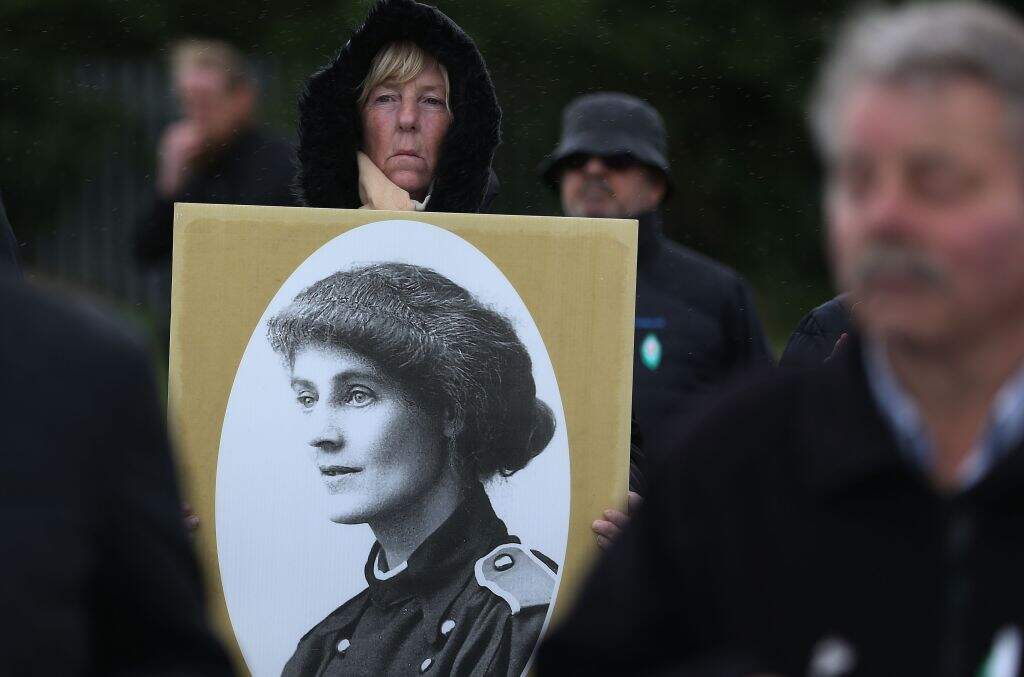
It sounded absurd: traveling to Ireland to learn about the owner of a desk. But this wasn’t any ordinary desk — or any ordinary owner.
I collect rare books on early America. It’s a hobby propelled by my love of history, but over time, I’ve become even more interested in the previous owners of the artifacts than the items themselves. I own a 18th-century Scottish explorer’s copy of Edward Gibbon’s “History of the Decline and Fall of the Roman Empire” and Harriet Beecher Stowe’s copy of Cotton Mather’s Magnalia Christi Americana. Collecting for provenance and association — the book world’s terms for collecting items that were owned by or associated with other consequential people — is now my abiding passion.
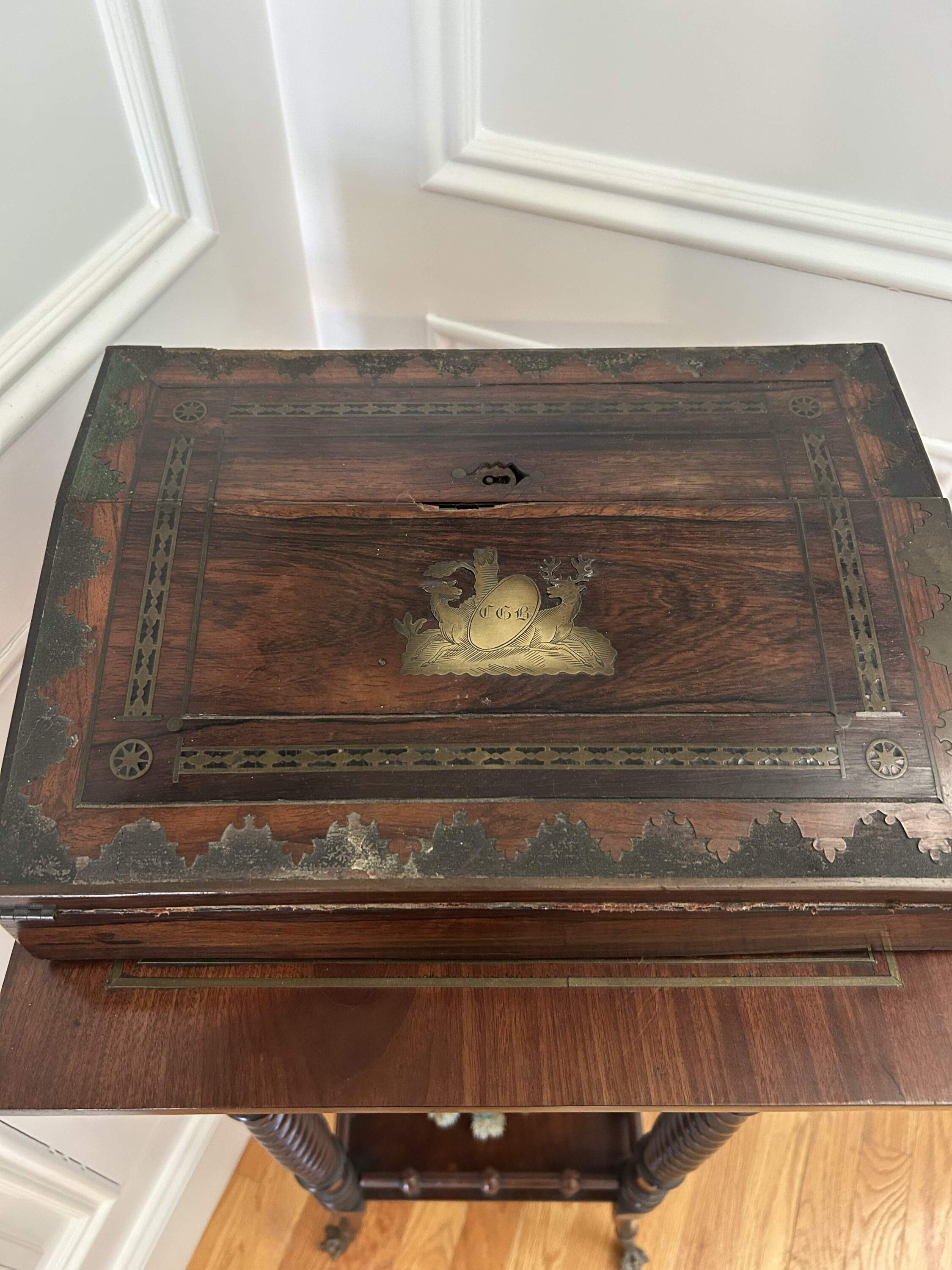
Which brings me to the desk. I saw a dealer’s listing that piqued my interest. It said: “Traveling writing desk of Irish Revolutionary Countess Markievicz (nee Gore-Booth).” The desk pictured in the listing was beautiful: rosewood with inlaid brass and ebony, a plate showing a stag and doe, and the initials “CGB” for Constance Gore-Booth. Who was this woman? I had to learn more.
Constance Markievicz was born in 1868 to a wealthy Anglo-Irish family in Ireland. She grew up on an estate called Lissadell House in County Sligo on the northwestern coast of Ireland.
Constance rejected her privileged upbringing, becoming a painter and joining the suffrage movement instead. She enlisted in the Irish Citizen’s Army and often appeared at rallies in military-style uniforms. In the 1916 Easter Uprising to end British rule, she led volunteers in six days of fierce resistance. She was captured and sentenced to death, spared only because of her sex.
After a year in prison, she was eventually given amnesty and released, but she didn’t rest. Constance became the first woman in Ireland to serve as a cabinet minister. At the time of her death in 1927, she was so beloved that 300,000 lined the streets to witness her funeral procession.
In my research, I learned that Constance had a special relationship with her sister Eva — a poet, suffragist and pacifist. While imprisoned, Constance wrote Eva over 100 tender letters, filled with hopes, joys, and disappointments.
One from 1919 begins: “Dearest Old Darling, your letter was most interesting. Thanks also for the books. History is more thrilling than any romance.”
I have to agree.
History has animated the course of my collecting.
My collecting has helped to keep me grounded and given me perspective on the societal strains of our time. The lessons of history are a great gift in times of struggle.
My wife Jen, the youngest of six children in an Irish family, shares a bond with her older sister, Amy, that reminds me of the bond between Constance and Eva. Jen and Amy lived together as young adults trying to find their way. Together, they process life’s incredible joys and overwhelming tragedies.
I decided to buy the desk as a Christmas gift to Jen. And I figured the desk would have more meaning if we experienced a little bit of this history together. So off to Ireland we went. We arrived in Dublin on April 17, 2025. Rain poured down as our guide, Eamon, grinned: “The rain never stops us in Ireland.”
He took us to Saint Stephen’s Green, the setting of the dramatic Easter Uprising battle. Constance led a team of over 100 volunteers there, building barricades and trenches, often coming under British fire. There is a bronze bust of her in the park, honoring this “valiant woman who fought for Ireland.”
Our next stop was Trinity College, which houses the 1916 Proclamation of the Irish Republic. It’s basically the Irish version of our Declaration of Independence, with one notable difference: it honors the rights of women.
We then headed to County Sligo, the location of Constance’s ancestral home. Though normally open to the public, Lissadell House was closed while we were visiting. I did talk to a family member on the phone, who shared all sorts of interesting history about Constance and her family.
I discovered that the desk had been in the family long before Constance. It was made by George Palmer, who served as a “Cutler & Dressing Case Manufacturer to His Majesty” from 1829-1835. This was around the time that Constance’s grandfather, Robert Gore-Booth, married his first wife, Caroline.
The desk may have been a wedding or anniversary gift to her. Caroline and Constance shared the same initials: CGB. Under one compartment lid, Caroline’s name was crossed out and replaced with Maeve, Constance’s daughter. Four generations had used it.
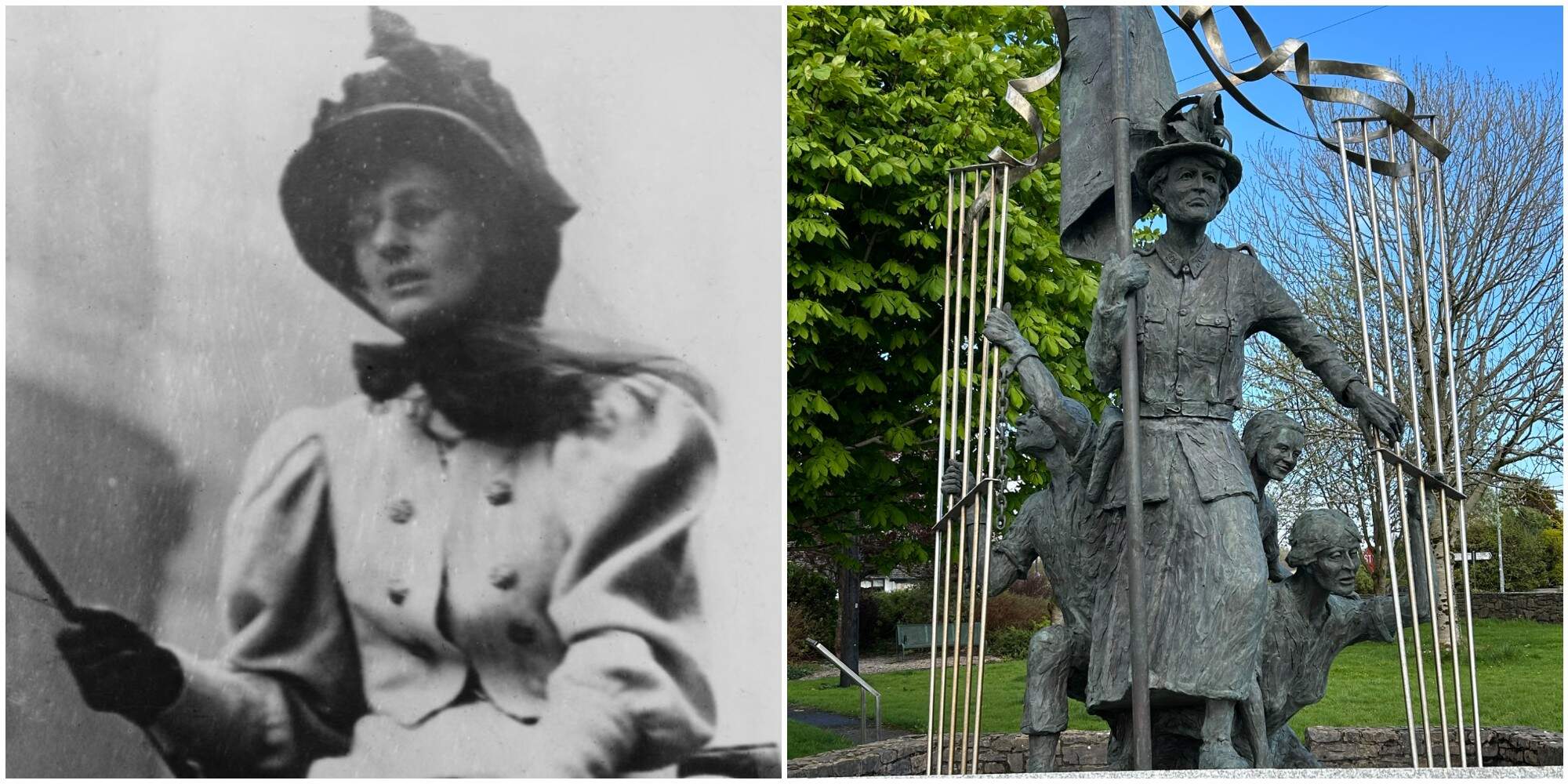
Lissadell is a beautiful Greek Revival country estate, with large windows that “open to the south,” as described by W. B. Yeats in a poem. We couldn’t get close enough to see the house, but we did get a surprise on the way there. In the village of Rathcormac, we found a striking multi-figure sculpture of Constance — as revolutionary, prisoner and advocate for the poor. It was one of the most moving sculptures I’ve ever seen.
As we continued around Ireland, I saw Constance everywhere — pubs, coffee shops, tourist sites. We left changed, inspired by how one woman could shape a nation. Maybe her passion and persistence is a lesson for all of us in our own troubled times.
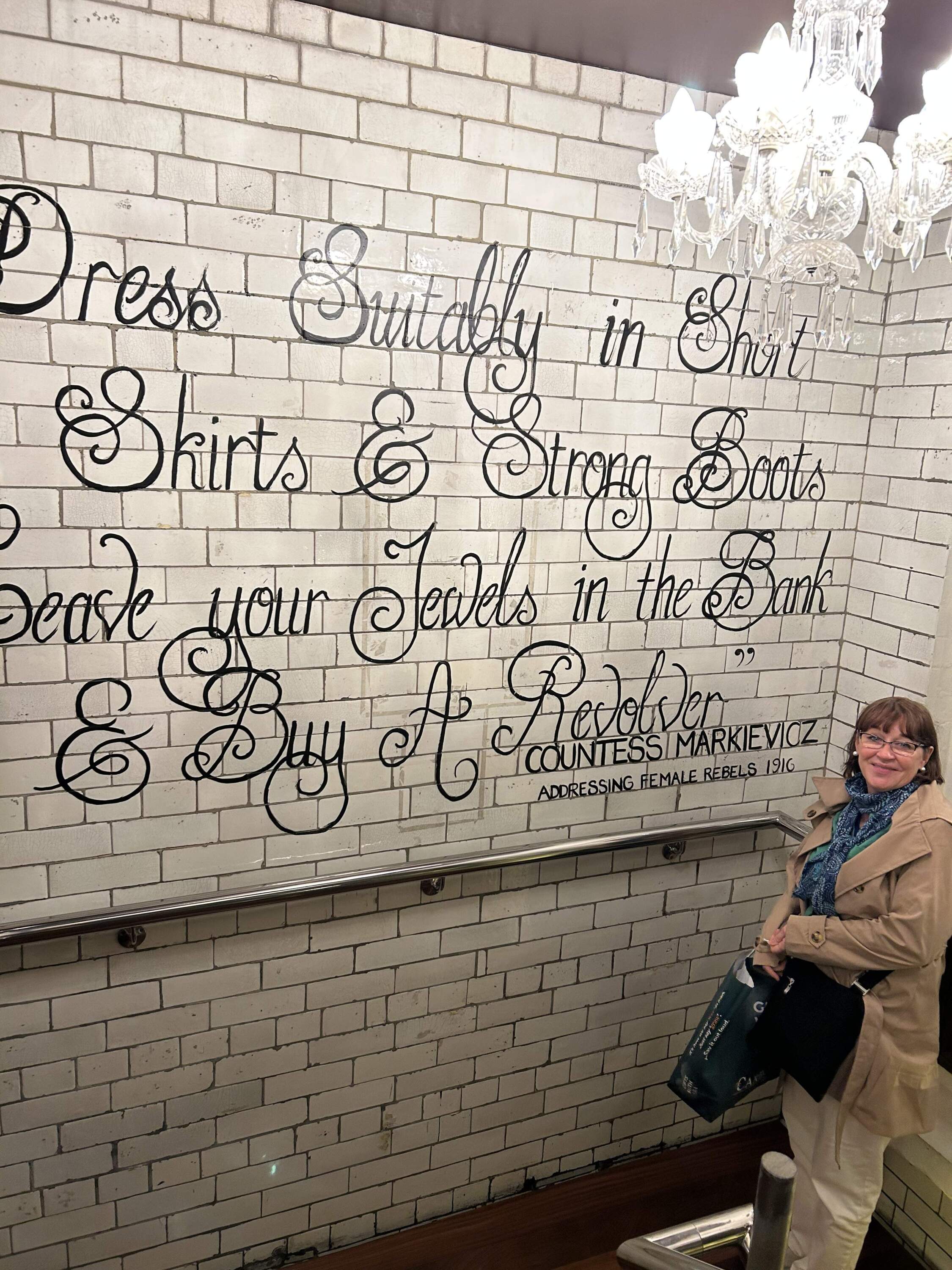
On our last evening, we dined at The College Green in Dublin. As we left, we noticed large painted words on the wall: “Dress Suitably in Short Skirts and Strong Boots. Leave your Jewels in the Bank and Buy a Revolver.”
It was Constance, addressing female rebels in 1916.
Back home, the desk sits in our foyer, resting comfortably after its many travels. Where will it go next — back to Lissadell, or to our daughter, who shares a name and initials with its first owner? Whatever lucky hands hold it after ours, its provenance journey will continue — and, with luck, so too its power to inspire.