Support WBUR
Cog's Weekly Newsletter
What we believe
Editor's Note: This essay appeared in Cog's newsletter, sent every Sunday. We share stories that remind you we're all part of something bigger. Sign up here.
You may be surprised to learn that I am an aspiring witchy person. Not “witchy” as in Wiccan (though if that’s the religion you identify with, I mean no disrespect). I mean “witchy” in a way that keeps me open to the explanatory powers of astrology, the healing vibrations of sound baths and the potential energetic properties of rocks and crystals.
Do I occasionally wear opalite, rose quartz and aquamarine, with the hope that these stones might enhance my creativity and self-expression, whilst fortifying my courage and bringing me inner peace? I do. Does it have the desired effect? I have no idea, but I don’t think there’s any harm in trying.
I suppose part of why I try is because we all want to — need to — believe in something. January is a popular time of year for this sort of thing. Perhaps our need to believe grows when the world feels nonsensical, and leads us to seek answers or find comfort in things that are also beyond logical comprehension. That was the case for Alissa Quart, who wrote for Cog this week about forging an unexpected relationship with the occult after her mom received a bad health diagnosis. “Tarot was one of many coping mechanisms I turned to as a harmless distraction that also offered the promise of occasional wisdom,” she writes.
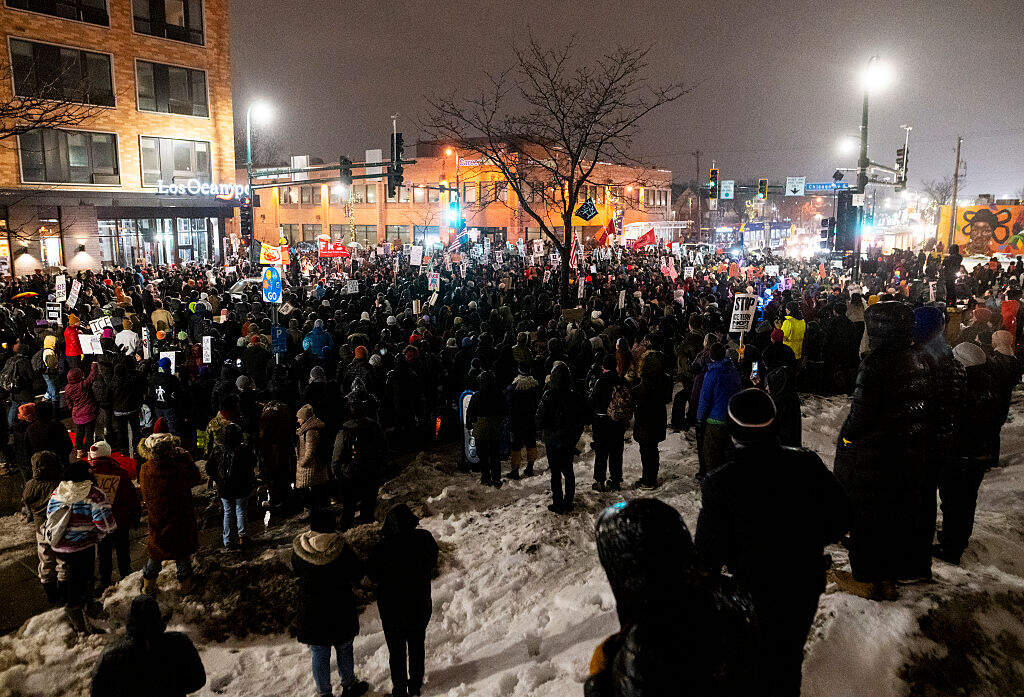
The first week of 2026 was jammed with many “is this really happening?” news stories. The U.S. Delta Force assault on Venezuela to apprehend Nicolás Maduro and remove him from power; the fifth anniversary of the Jan. 6 insurrection and President Trump’s ongoing efforts to re-write the history of that day; the shooting and killing of 37-year-old Renee Good by an ICE agent in Minneapolis.
Any mental health professional will tell you that human consciousness differentiates between beliefs and thoughts. Thoughts are transient; we have hundreds, thousands of them every day. Beliefs are sturdier, offering the lens through which we interpret the world around us. Because beliefs vary so widely among individuals, interpretations of the same event can be completely different.
-- The strike on Venezuela can be considered a demonstration of American military dominance and prowess in service to ousting a dangerous, autocratic leader. Or it’s viewed as a brazen act of power that imperils the international legal order that’s been in place for 80 years, since the end of World War II.
-- Trump and his supporters argue the Jan. 6 protesters were “peaceful" and "orderly.” They say former Vice President Mike Pence was to blame for agreeing to certify the 2020 election, and it was Democrats and police who escalated tensions and violence. But journalists – and other first-hand witnesses, including police – return over and over to the record. This includes my colleagues at NPR, who tracked every Jan. 6 prosecution in a public database and created an account of the riot, based on thousands of hours of footage and years of reporting.
-- Mere hours after Renee Good was killed by an ICE agent in Minneapolis, Homeland Security Secretary Kristi Noem declared her a domestic terrorist and claimed Good was using her car as a weapon. But bystander videos, analyzed and verified by news organizations, show the ICE agent does not appear to be in the path of the victim’s car when he shot her at point-blank range. Many believe Good was murdered, in front of dozens of people, on camera. Your beliefs about ICE, and what it should or shouldn’t be doing, shape your perspective.
Brian Stelter, who writes the Reliable Sources newsletter for CNN, began his newsletter on Thursday morning with this: “‘Seeing is believing.’ That's what we used to think. But now the old adage, ‘What you see is what you believe,’ feels outdated. In this era, ‘What you believe is what you'll see.’”
He’s arguing that our current era, with its hyper-polarized politics, partisan media and algorithm-fueled social media bubbles, results in competing versions of reality. He writes: “If you believe the shooting was justified, you'll see an endless stream of content supporting that view. If you believe the authorities are lying, then you'll see that.”
The idea of people existing in multiple realities is chilling; a post-fact world does not bode well for the future. But it does put me back in touch with what I believe: about the importance of high-quality, fact-based journalism, the pursuit of truth, science, art and the power of awe. (And, fine, the occasional rock/crystal energy combo, too.)
Maribeth Romslo wrote a love letter to Minneapolis for Cog this week. Her community, rocked by the 2020 murder of George Floyd, saw even more trauma last year: a school shooting at a local elementary school and the assassination of House Speaker Rep. Melissa Hortman.
“The ache we feel now is cumulative,” Romslo writes. “And yet, our hearts keep breaking because they are not closed. We have not adopted indifference. We keep breaking, because we are still open to one another.”