Support WBUR
Essay
‘Frankenstein’ isn’t the only monster in Mary Shelley’s story
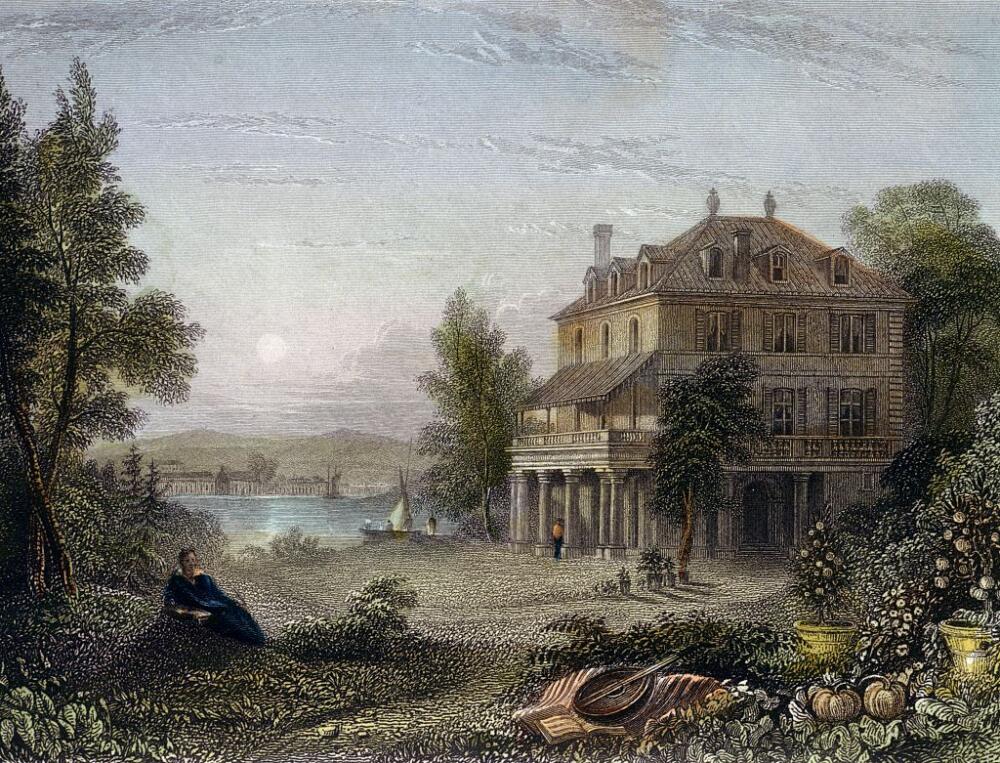
Years ago, I was intrigued by an op-ed by filmmaker Guillermo del Toro and writer Chuck Hogan about an unexpected writing retreat in 1816. In what came to be known as “The Year Without Summer,” as thick ash from a volcanic eruption blocked the sun, causing crop failures and food shortages, Lord Byron — as famous for his sexual pursuits as for his writing — gathered with fiery poet Percy Shelley and his fiancé Mary Godwin on the shores of Lake Geneva at the luxe Villa Diodati. The same summer that Mary wrote “Frankenstein” and Byron began “The Vampyre.” But del Toro and Hogan, along with so many people who’ve written about that infamous gathering and the art produced there, didn’t mention who else was in attendance that summer: the person responsible for bringing them all together.
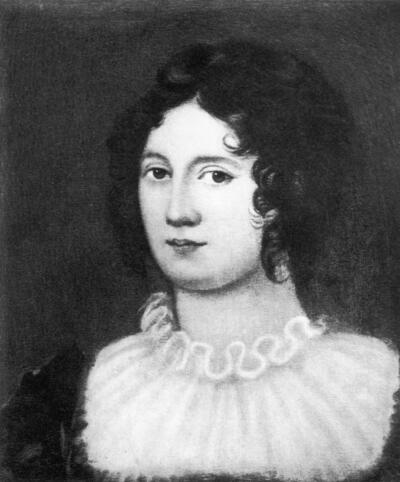
That person was Claire Clairmont, Mary Shelley’s stepsister, whose name I came upon quite easily in subsequent research. When I began “Love & Other Monsters,” a historical fiction novel inspired by these events, I knew a little about Claire: her wit, her relationship with Byron, her push-pull closeness with Mary. What I didn’t know was how much of Claire’s story from 200 years ago would resonate today.
The beginning of any novel writing process is, for me, a little bit of a love story. I know I want to spend years with a subject and characters when I can’t stop thinking about them. When I researched my novel The Lioness of Boston, I had to triangulate some of the primary sources — Isabella Stewart Gardner had not kept juicy journals and had burned most of her personal correspondence. But Clairmont left behind many brilliantly written journals and letters, as did Byron, both Shelleys and John Polidori, Byron’s personal physician who was paid handsomely that summer to report back to a London publisher on the gossip from those famous writers and their exploits.
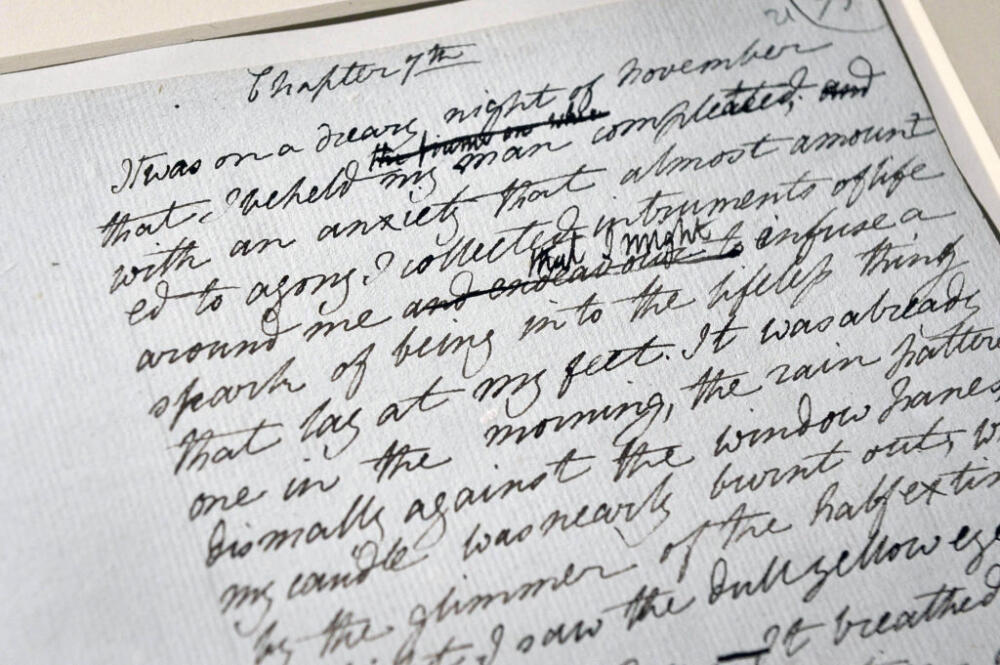
And yet, Claire’s journal from 1816 is missing. Curious, I kept digging. It was relatively easy to find evidence of Claire’s relationship with Byron — she wrote the older celebrity a fan letter; he answered; they became lovers. What took more unraveling was the close connection between Claire and Percy Shelley.
My earliest research told a tale that seemed straight out of Jane Austen: a smart, witty 17-year-old girl raised in an unusual household, entranced by two men, one of whom was her stepsister’s older fiancé. Claire was, in her own words, “on the edge of a precipice.” Two dashing, respected writers — one a famous scoundrel, one an up-and-coming virtue signaler. I’d thought I’d found a solid Austen plot all grounded in historical fact.
And just like that, I fell for the same story Claire had.
Because as I read Claire and Mary’s journals, I grew uncomfortable. Shelley paid young Claire an awful lot of attention. Kept her up late in conversation, had her accompany him on walks. Mary encouraged their closeness — in many ways, it freed her. To read. To write. Eventually, Mary and Shelley eloped... and brought Claire with them.
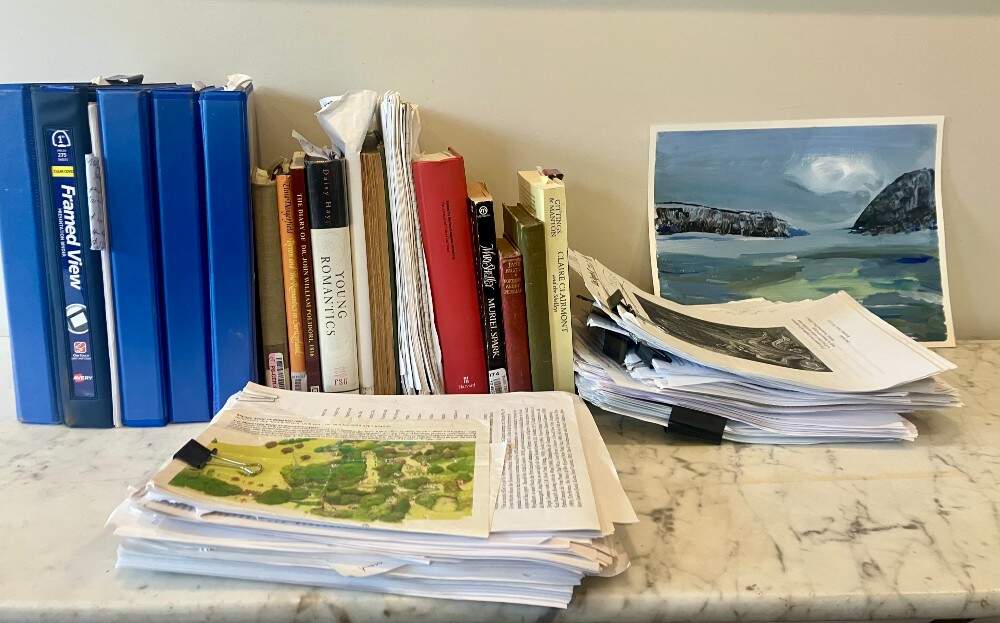
When I’m writing historical fiction, I research for years, until I feel I know the world and the time period’s details — fabrics and foods, political climate, cadence of speech. And somewhere in there, I begin to get a sense of the voices, the finer points of each character. At that point, the scales tip and the writing overtakes the research. I was just in that phase when those small warning flags grew larger, and the story grew darker.
There, in Claire’s journal, in Mary’s, even in Shelley’s were truths I could not — with my modern lens — ignore. Claire was 14, Shelley was 20. They talked late into the night, even when Mary would retire for the evening. Claire became, in many ways, a go-between in the elopement and marriage between Mary Godwin and Percy Shelley. The chilling point came for me with the documentation of the night terrors Claire began experiencing while on her sister’s honeymoon in 1814. Doctors were called in. Claire was deemed to be suffering from “being dramatic.” When Mary was tired or, later, deeply depressed following the death of her first baby, Mary again pushed Claire towards Shelley. All three lived together until Mary grew frustrated, jealous of Claire and Shelley’s closeness, and sent her sister away.
Claire wrote to her stepsister, Fanny, about the relief she felt in living alone, but when Mary again fell pregnant and needed help with her new baby, Claire was brought back into the domestic situation. As I write in the novel, siblings are born into comparison, and during their years together, Mary continued to fashion Claire into everything she was not: witty, a non-writerly free spirit, amiable. Mary demanded Claire’s loyalty to her and encouraged attributes in Claire which allowed her to be vulnerable to Shelley’s predatory ways.
A modern day trauma-informed practitioner might say Claire then engaged in the relationship with Lord Byron to act out another version of what had been done to her by Shelley, hoping the results would be different. But Claire suffered at the hands of both men, and was deeply wounded and changed by her sister’s complicity and loyalty to Shelley.
And thus, a sister-monster was born. Mary resented — and was horrified by — the Claire she’d helped to create. Without giving too many spoilers, the summer of 1816 proved to be life-altering for Claire Clairmont. In “Love & Other Monsters,” I give voice to her experiences and, incorporating years of research, try to make sense of her role while those around her made art we still read today.
Claire’s journal from that summer was lost or destroyed — Byron, Shelley, Polidori and Mary all had reason to wish it erased. And Mary, in fact, did try to erase Claire from history. In her 1831 new preface to “Frankenstein,” Mary tells the origin story: How that dark summer Byron challenged them to write a scary ghost story. Only, when Mary listed who was present, she omitted Claire’s name. The same way she and Shelley had crossed Claire’s name out from the hotel registry where all three stayed in Chamonix in July of 1816. The same way many writers have neglected to mention Claire’s name when reporting on the famous folks putting pen to paper those long months. And the same way that del Toro and Hogan’s article — the very one which inspired me to write Claire’s story — never mentions her at all. They were focused on the mythical monsters.
Written off as dramatic or flirtatious, Claire’s sharp prose and keen wit was mocked at the time, the emotional and physical manipulation she suffered never fully understood. The fact that Claire’s name has all but disappeared from public knowledge is even more reason to provide space for her re-creation on the page.
The writer E.L. Doctorow wrote, “Historians will tell you what happened. Novelists will tell you what it felt like.” This is what I try to do, not only for readers, but for Claire — who loved and lived, and whose voice was forgotten. Writers all have their points of view — it’s impossible to separate ourselves completely on the page. So I also recognize that Claire Clairmont’s story is in some way my story. The story of what it’s like to be a girl. But that’s part of the point of historical fiction, too. Even two centuries later, things have not changed as much as we like to pretend they have. New generations continue to know the story of Frankenstein. But will they recognize the real monsters? Only time will tell.
Editor's note: Emily Franklin will be at Porter Square Books in Cambridge on April 7, and the Coolidge Corner Theater on April 8.