Support WBUR
Essay
Medical school made me numb to grief. Then I lost my grandfather
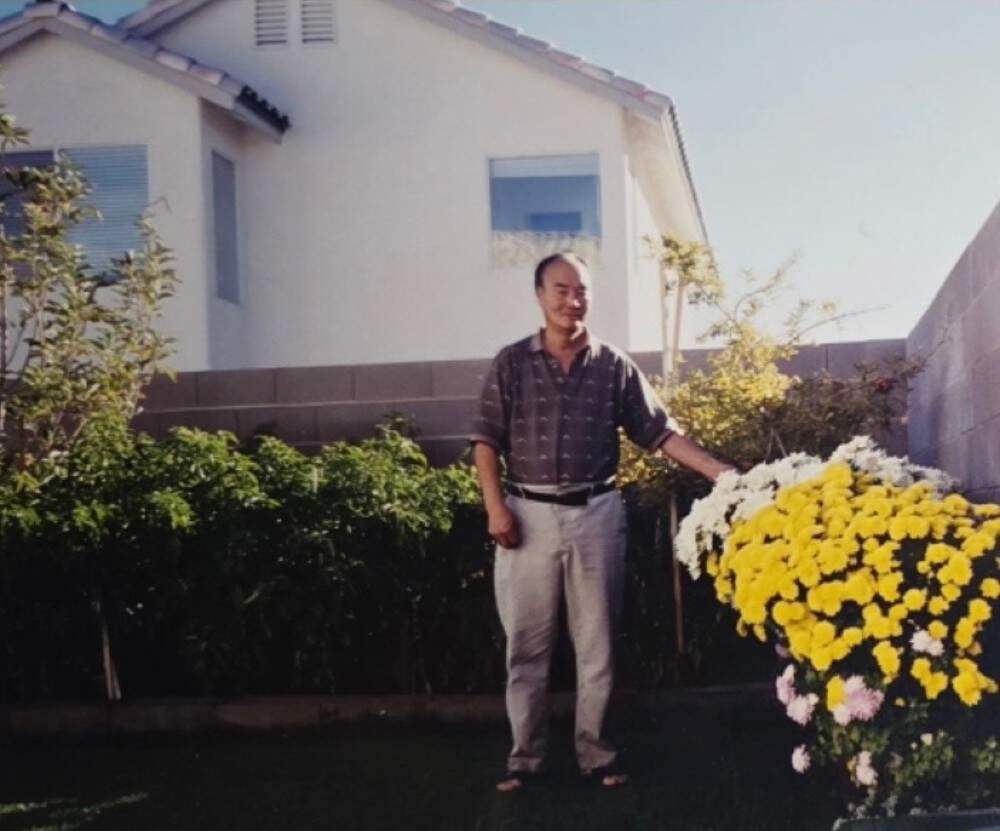
Even before my grandfather’s passing, I was familiar with death. Medicine had made it so. For two years as a medical student, most of my days were spent on the wards, contributing to morning rounds, running clinical tasks and guiding discussions with families.
Some days, we delivered and celebrated babies. On others, we had hard conversations. “I’m sorry,” I would say. “I wish things were different.” It didn’t take me long to recognize how easily a beginning could give way to an ending.
Following my first three months on the hospital floor, I forgot how to cry. I lost one patient unexpectedly, another predictably, and another soon after that. Each time, there were things to do: write notes, check labs, return pages. On the floor, a death meant a bed ready for the next admission. Within the hour, the bed sheets were changed, the room disinfected. Though the memory of a patient could still be vivid in my mind, whatever was left from before — belongings, the name on the dry-erase board — was cleared. At the very least, completing tasks provided routine, filling the time between one patient and the next. Because to slow down, to observe any of it, meant disrupting what carried me, and the hospital, to the day’s end.
Then my grandfather died, and I could not grieve. Correction: I did not know how.
At the cemetery, I walked through the blankets of grass, careful to avoid the ledger slabs. It was a Tuesday, already midday, and the sun hung high. Haesoo, Soojin, Young, Doo, Dongguk: Generations of names unfolded as I made my way to where the green ended beneath the canopy, where the rest of my family had gathered. They stood in the small, borrowed patch of shade, and I, too, joined them.
In front of us, my grandfather’s casket lay still despite the wind. It looked different here than it had in the chapel. I wanted to cover it. As the priest swung the thurible, I could find a word for everything except what lay before me. I could name the white carnations, the white incense and even the white pall. Yet, when his casket descended, this scene felt neither indelible nor mine.
At home, I did what I’d learned to do — lean into what was familiar. I folded the laundry, washed the floors, stored the groceries. If I willed myself, I could even flatten my grandfather’s last moments into clinical shorthand: x-year-old male with a past medical history of x, y and z, presenting with x.
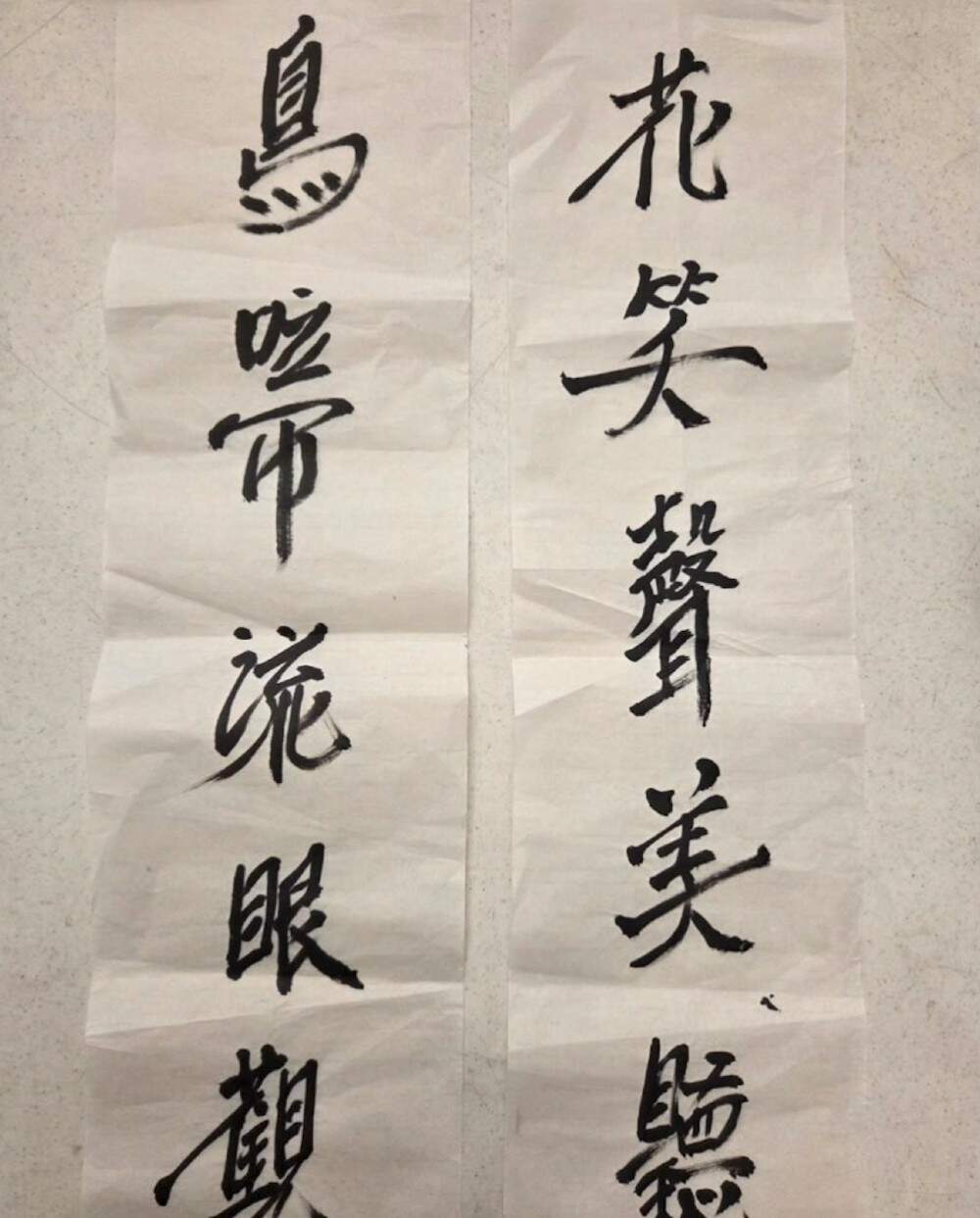
It was only later that I sat with his calligraphy, his seoye, the decades of handcraft cursive in bold brushworks and black frayed markings. They — these thinning hanji pages sprawled across my bedroom — were the only belongings I felt I could keep.
I sifted through his pages, their age apparent as they bent to the weight of my turning. When he was alive, I had barely touched them. I could not. Seoye was his way of being home, of remaining with a place left more than 40 years ago. They were one of his few prized possessions, and he held onto them with such gravity, I was afraid to disturb them.
I soon landed on a draft. The handwriting looked rushed, the Korean characters less legible than the others. It held an excerpt of Kim Sowol’s poem, “Jindallae Flower.” The last time I encountered it was nearly a decade earlier, packing my grandfather’s home of thirty years with wide windows facing the brick garden and pomegranate tree. His belongings and hanji, my late grandmother’s too, went into boxes. I had forgotten those lines, but somehow the poem — and inadvertently, my grandfather — had made its way to Boston with me.
Seoye was his way of being home, of remaining with a place left more than 40 years ago.
The night was cold. A draft entered the room, and I let it. I read Sowol’s words in silence: Once I am shaped— And then, out loud, tracing my grandfather’s brushstrokes. Pushing / you towards somewhere not here. And I was back in his house, cross-legged on the hwamunseok mat, the smell of stale coffee and barley tea, the small garden that somehow still grew perilla leaves in parched soil.
For a moment, I felt deliriously happy. Then, for the first time in over a year, I cried.
They were not easy tears, and they did not stop.
As I mouthed the words — on a hill where herbs grow in Yongbyon province — I remembered my grandfather and his calm yet furtive gaze when I saw him last, his easy voice in the last corridor room as he gently joked that he had lived long enough to see me become a clinician.
Jindallae flowers are blooming. I remembered, too, all the patients before him, their funerals and burials, the ones I could not attend. I thought of their families in the rooms and hallways after we parted ways, when I returned their inventoried belongings — a watch, a pair of reading glasses — or exchanged whatever words we could muster. And I thought of them at their homes, living with their partings, most caught unaware.
Sitting there, with my grandfather’s calligraphy before me, I traced his brushstrokes once more. They were made sometime and somewhere before, and I could not look away.
I imagined him and my patients before me, flowers in my hand.
Here, I say, I have brought an armful I plucked to scatter them before you—