Support WBUR
Opinion
In 2018, Americans recoiled at the idea of family separation. Now it's happening again
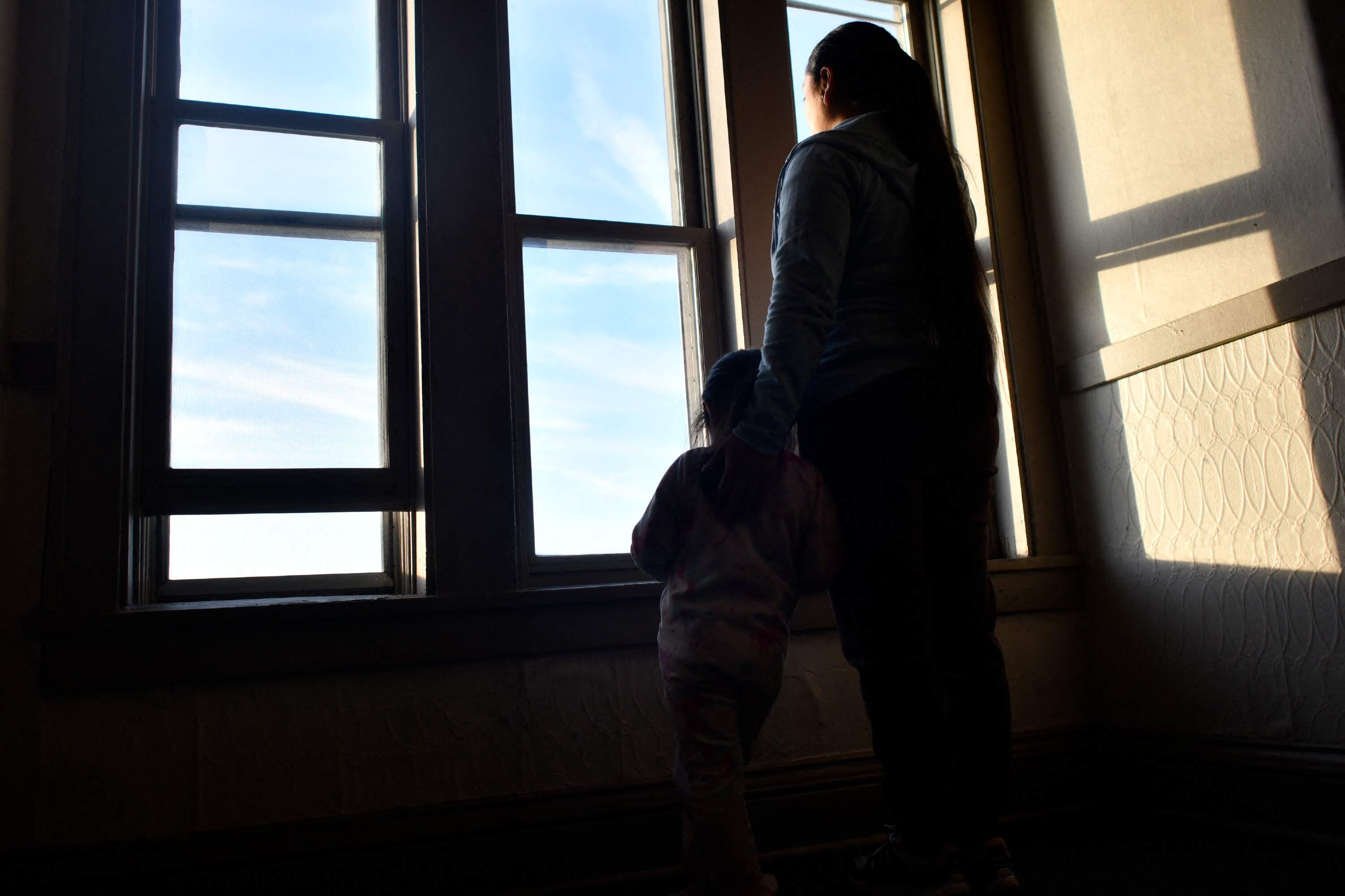
I remember the checkpoints. Not Eagle Pass or the other famous ones at the U.S.-Mexico border itself, but the ones farther inland on ordinary roads in the Rio Grande Valley, where armed agents stood in the Texas sun and families planned their days around the rhythms of enforcement. Surveillance helicopters passed overhead often enough that people stopped looking up when they heard the "wop-wop" of the blades.
It was 2018, and I was in McAllen, Texas, working with Catholic Charities. What I could not have anticipated was how thoroughly I would absorb the landscape's main lesson: that human beings have an almost infinite capacity to normalize what once would have stopped them cold. Refugee camps sat at the edges of American cities, close enough to see from the highway. But proximity had become its own form of distance. After enough years, Americans simply stopped seeing them
I have been thinking about those checkpoints and camps since reading a recent Brookings Institution report, which reports that the Trump administration has detained 400,000 immigrants. This report attempts to estimate how children have been affected. According to the report’s estimates, since January 2025, about 145,000 U.S. citizen children have experienced the detention of a parent in interior enforcement actions. Brookings' researchers suggest more than one-third are under the age of 6. And that more than 22,000 children have lost both co-resident parents as a result of federal enforcement action. Most have disappeared into informal arrangements, relatives, neighbors, community organizations that are already stretched thin because, as the researchers observe plainly, no governmental entity has assumed responsibility for the children that enforcement leaves behind.
These are American children. Citizens.
The Trump administration's position was straightforward in its logic and brutal in its application. Parents subject to deportation were offered a choice: take your children with you into removal, or leave them behind. Officials framed this as a parental agency. What it actually created was a forced election between two forms of devastation: uprooting a citizen child from the only country they have known, or becoming the instrument of your own child's orphaning. The administration offered no third option and built no infrastructure for the children left in either path's wake.
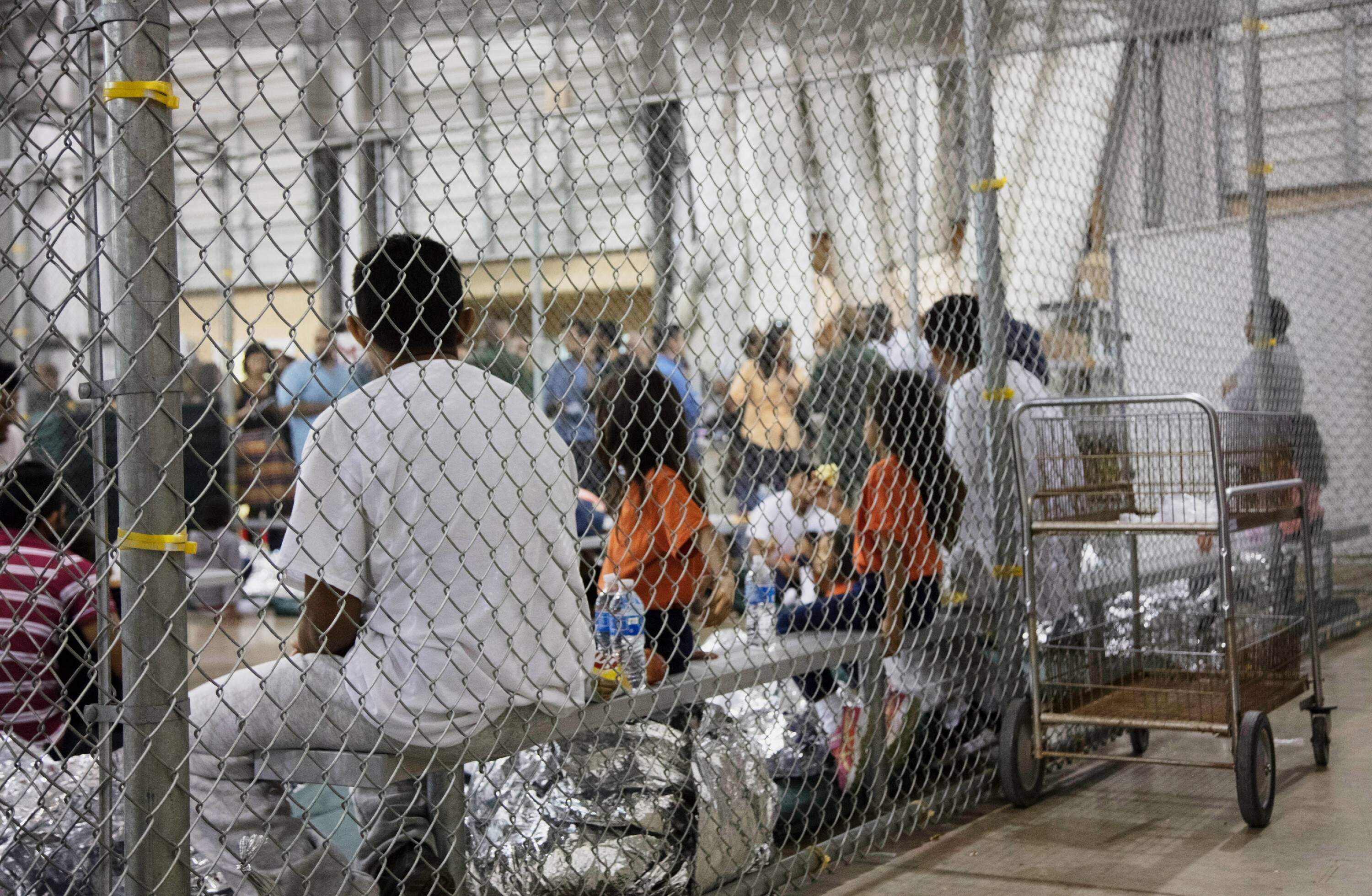
This is not without precedent in the administration's own history. During Trump's first term, the 2018 "zero tolerance" policy formally separated about 2,700 children from their parents before a federal court ordered the practice halted. Subsequent court-ordered reviews during the first Trump administration uncovered thousands of additional separations that had occurred before the policy was publicly announced, bringing the total number of known family separations from 2017 to 2019, to at least 4,300. What the Brookings data documents now is not a recurrence of that policy — it is something more diffuse and in some ways more durable: enforcement at scale that produces family dissolution as a byproduct rather than a stated goal, with no one assigned to count the children.
What my time in the Valley taught me is that this news will be absorbed and forgotten. Not because people are cruel, but because normalization is how systems sustain themselves. The checkpoints had not always been there. The helicopters had not always circled. At some point, both became ordinary — and once ordinary, invisible. Then permanent.
In 2018, photographs of children in chain-link enclosures produced a genuine moment of national recoil. Many Americans believed they were watching an aberration, a policy excess that would be corrected, a departure from the national character that would not hold. What they could not yet see was that the danger was never only in the specific policy. It was in the lesson the policy was teaching the country about what it could tolerate.
Each act of collective recoil that nonetheless ended in accommodation is not a rejection. It is a negotiation. The country was not deciding whether family separation was acceptable. It was deciding how much of it was.
The fragmentation of the data the Brookings researchers document is not incidental. The state possesses extraordinary power to separate families and has used it at scale. But it has built no corresponding system to track, support, or even count the children left behind. Immigration enforcement here. Child welfare there. Schools elsewhere. Healthcare somewhere else entirely. This is not administrative oversight. It is the architecture of a system organized around control, with consequences allocated to no one.
That fragmentation mirrors something larger. We build powerful enforcement systems and underinvest in everything that sustains human dignity around them, including healthcare, housing, legal support, community stability. We are very good at the infrastructure of separation. We are much less good at what comes after.
What I keep returning to is this: What happened in the Rio Grande Valley was not exceptional. It was early. What its residents learned to live with — the surveillance, the checkpoints, the children growing up understanding that their parents could be taken — was not a regional pathology. It was a preview.
The Brookings report notes that Texas and Washington, D.C. now have among the highest concentrations of citizen children affected by parental detention. The logic of the border has moved into our nation’s interior. Into workplaces and neighborhoods and school systems — and into the enrollment gaps, the missed appointments, the informal custody arrangements that no agency is required to track.
Borders, the Valley taught me, do not only organize territory. They organize consciousness. They teach societies whose suffering counts and whose can be absorbed. This is how a refugee camp becomes scenery. This is how a checkpoint becomes infrastructure. The violence doesn't have to be concealed. It simply has to be classified. Assigned to a category of expected hardship rather than preventable harm. Once that classification takes hold, proximity is no protection. You can drive past it every day and never see it, because the border has already told you what it is. They teach societies whose suffering counts and whose can be absorbed.
The Rio Grande came to us.
And the question I am left with, the one I could not answer in Texas and cannot answer now, is how much we will absorb before we stop. Before the normalization breaks. Before what we have learned not to see becomes, once again, impossible to look away from.