Support WBUR
Battles over environment slow down clean-energy projects
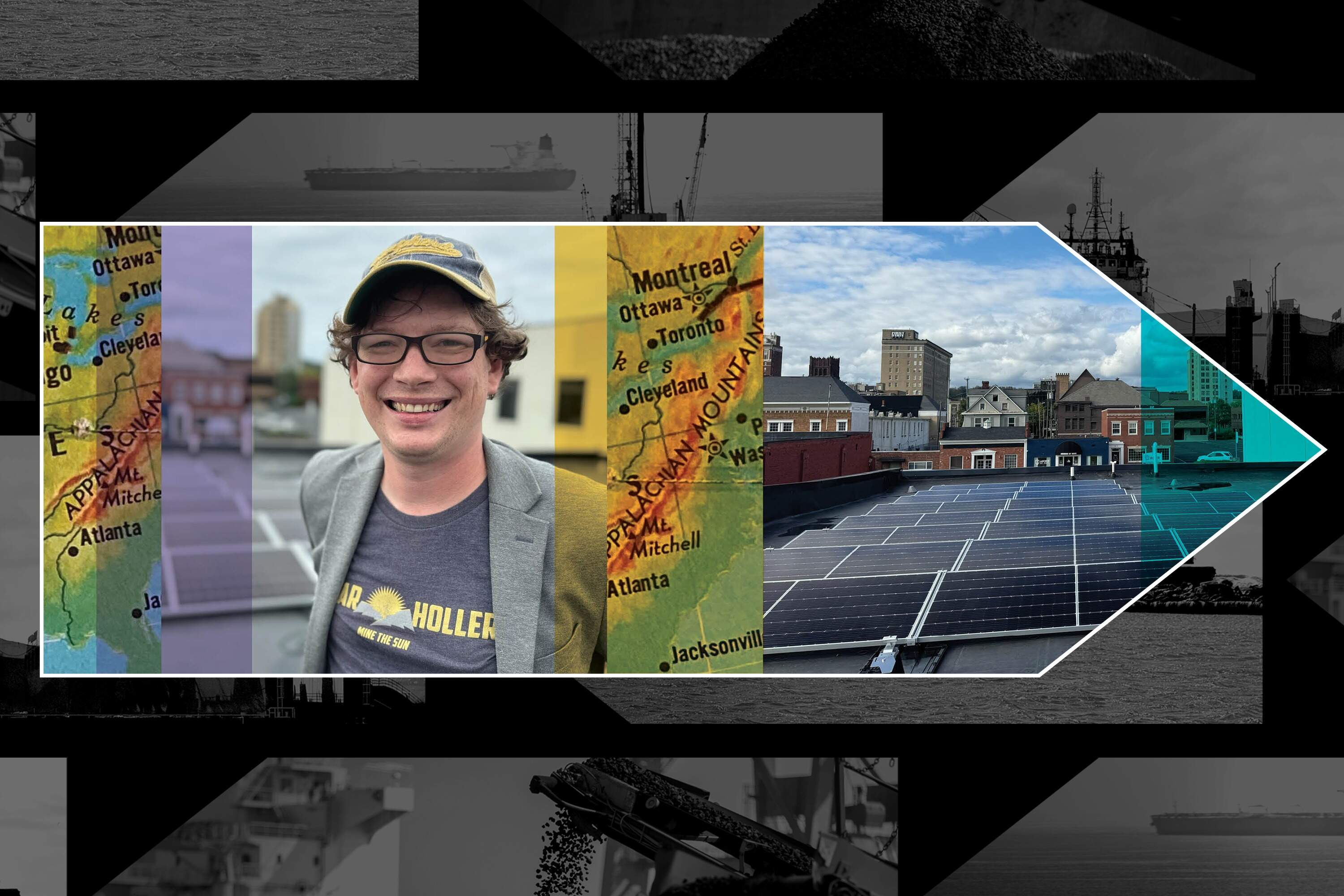
This week we've been looking at the role of renewable energy in the economy as we get more of it from clean sources like wind and solar.
As we heard from our climate series Reverse Course, new industrial-scale
projects can take many years to get off the ground.
Hunter Armistead is CEO of Pattern Energy, the company behind an $11 billion wind farm and power line project that's been in the works for 18 years in New Mexico and Arizona.
“Other parts, like in Europe, they're building many of these projects like this. In China, they're building tons of these projects like this,” Armistead says. “Here, we're just getting started.”
Clean energy projects have gotten a boost in recent years from the Biden administration, but there are still plenty of roadblocks. It often comes down to permitting delays and disputes over how to protect vast tracts of land that are required for big projects.
The Biden administration has a goal to produce 100% of the country's electricity from renewable sources by 2035 to align with the Paris Agreement’s goal of keeping global warming to no more than 2 degrees Celsius by mid-century. Right now, only about 40% of electricity in the U.S. comes from carbon-free sources, Los Angeles Times climate columnist Sammy Roth says.
6 questions with Sammy Roth
Have you seen a noticeable increase in the progress towards the goal in the past few years because of legislation like the Inflation Reduction Act?
“It's hard to say if the Inflation Reduction Act itself is having a huge impact as yet. I mean, that law was signed by President Biden two years ago. There's a lot of money for renewable energy in that law incentives, tax incentives, grant payments for solar, wind, advanced nuclear, green hydrogen.
“But most of that money is still sort of in the early stages of being rolled out. The big progress that's being made, and I'm sure you've seen this in your reporting, is that solar and wind in particular, and batteries increasingly as well. I mean, this is technology that's gone down really dramatically in cost over the last 5, 10, even 20 years, and technology that's being rolled out at an increasing rate on public lands, on rooftops, in the case of solar, big companies, big tech companies are rolling out to try to power their operations.
“Is it happening at the rate that's needed to get to 100% clean electricity by 2035? No, definitely not, but it's happening a lot faster, and that's moving the percentages up.”
One of the reasons it does take a long time is because environmental groups sometimes get in the way or protest or want changes. How common is that?
“It's increasingly very common. I mean, when you look at what are some of the near-term obstacles, it really is political and it really is, in a lot of cases, where do you build all of the solar farms, where do you build the wind farms, where do you put the transmission lines to get the solar and wind?
“It gets really challenging. It's environmentalists in some cases who want to protect landscapes and wildlife habitats and migration corridors. It's Native American tribes as well who want to protect places that are sacred to them. It's also rural communities in a lot of cases and farmers and ranchers as well who sort of have a lifestyle that in their mind would be infringed upon or intruded upon by these industrial energy facilities. And so as you see more of this stuff gets built, it's really becoming a story everywhere and that I think is becoming one of the bigger obstacles to a rapid energy transition.”
You wrote recently about the burrowing owl in California and the state's famous Joshua tree, both of which could suffer because of large-scale solar projects. What your thoughts are on this give and take between the value and the necessity of clean energy versus the value and the necessity of an iconic plant or a bird or a waterway?
“A lot of people want to make this an argument about what's feasible or not. So I frequently will hear from people who say, ‘Well, we don't need these big solar farms or we don't need these big wind farms because why can't we just put solar on rooftops and that'll solve the problem?’
“And at best, maybe you can do a quarter or third of society's energy needs that way, so you do get into these really difficult value judgments. Part of what needs to be in this conversation is that climate change is, scientists agree on this largely, by far the biggest threat to species and to landscapes around the world.
“We are dealing with this huge extinction crisis and climate change is such a big part of that. You don't just want to repeat the mistakes of the past. But how do you do that in a renewable energy, with renewable energy in a way that recognizes the fact that we're also in this huge time crunch that was created by decades of delay brought to us by climate denial by the fossil fuel industry. We haven't really, I don't think, dealt with anything like that before as a society and it's very, very challenging.”
Is there a way to approach renewable energy differently?
“I think you can certainly limit the need for the sort of big renewable energy infrastructure. The more you put on rooftops, the more solar you put on warehouses and on canals, the less of that you need, but it's difficult everywhere.
“I've spent 10 years writing about this and I've read lots of studies and I've been to lots of these communities and I mean, there's not really an easy way out. I mean, there's limited space on rooftops. You try to build on a toxic mine site and you start to get into all of these liability concerns. The reason solar companies aren't flocking to those sites is because they don't want to be stuck with the liability from the poison stuff that's left on those sites. You start looking at farmlands and there are some farmers who are very happy to sell out and give you their land if you pay them enough. There are other agricultural communities where this is incredibly controversial and a lot of farming landowners see this as a huge intrusion on their lifestyle and they're fighting like hell to keep the solar companies out.
“Pretty much everywhere you go, there's something or someone who's trying to stop this from happening or there are technical limitations or financial limitations. So it's easy for me sitting here, I live in Los Angeles, I'm on the receiving end of these power lines. It's easy for me to say, ‘Well, we need this for climate change and we're all kind of screwed if it doesn't happen.’ So I'm sympathetic to folks who are in these communities that are on the other ends of the power lines. That doesn't mean it doesn't need to happen.”
What are some of the other factors that are holding back large-scale renewable projects?
“There's all sorts of misinformation out there and there does get to be this like interesting and dangerous commingling of political factions and political forces that you might not normally see aligned where you have folks who are on the far left and folks who are on the far right whose talking points are unfortunately informed by all sorts of fake information.
“I'll go to communities where renewable energy is controversial and I'll be engaged in this really deep, thoughtful conversation with someone who's worried about what is the solar farm or the power line going to mean for my property values and what is it going to mean for my rural way of life and what is it going to mean for the owls or the Joshua trees or the desert tortoises? And then suddenly they're telling me that they think they're going to get cancer from the noise that's caused by the wind turbine. Not true. That's why I'm not saying other things that I've heard, because there are just so many pieces of just inanity out there that are in many cases spread by groups with ties to conservative donor networks or ties to the fossil fuel industry. Stuff like that just gets out into the ether and it just spreads so easily.”
How does all this change depending on the result of the presidential election?
“I think there's definitely a stark difference between the candidates. I think if Vice President [Kamala] Harris were to get elected, that doesn't magically solve everything.
“I mean, right now, I have been writing about the Biden administration attempting to kind of balance renewable energy development and conservation on public lands in the West. It's still not exactly satisfying a lot of conservationists who are on these landscapes either, but stuff is happening.
“On the other hand, if former President [Donald] Trump were to get elected … he’s spread all of these lies and misinformation about wind power in particular, which he really seems to hate. He's also pretty repeatedly denied that climate change is real or that it's a serious problem. That would certainly be a lot worse from a solving climate change standpoint.”
This interview has been lightly edited for clarity.
Kalyani Saxena produced and edited this interview for broadcast with Catherine Welch. Allison Hagan adapted it for the web.
This segment aired on October 31, 2024.