Support WBUR
Commentary
Reimagining public monuments
Editor's Note: This is an excerpt from WBUR's weekly arts and culture newsletter, The ARTery. If you like what you read and want it in your inbox, sign up here.
There are places and structures in my life that have felt as important as monuments to me.
My grandmother's house in Panama. I don't think there's a story of my childhood that I can tell without imagining the bungalow with the coral tiled roof looming large and warm in the background. In my mind, Christmas lights still shine ever present along the eaves no matter the season, the starfruit tree isn't cut down, but full of fruit and the herbs for tea are lush and green.
In my mind, my grandmother is waiting for me to come home from the airport with the air conditioning blasting because she knows I can't sleep if it isn't cold. That place holds a piece of my story.
As an immigrant, as a queer person and as a journalist who loves to write about history, memorialization and nostalgia feel like one and the same. Perhaps that's why so many monuments were once these large-scale romanticized pieces of stone. They were constructed as odes to figures that became legend, to histories that became myth. But no period in time is as simple as a monument makes it out to be. As Alexis Pauline Gumbs says in her book "Undrowned: Black Feminist Lessons from Marine Mammals," "What do we need to remember that will push back against the forgetting encouraged by consumer culture and linear time? What can we remember that will surround us in oceans of history and potential? And how?"
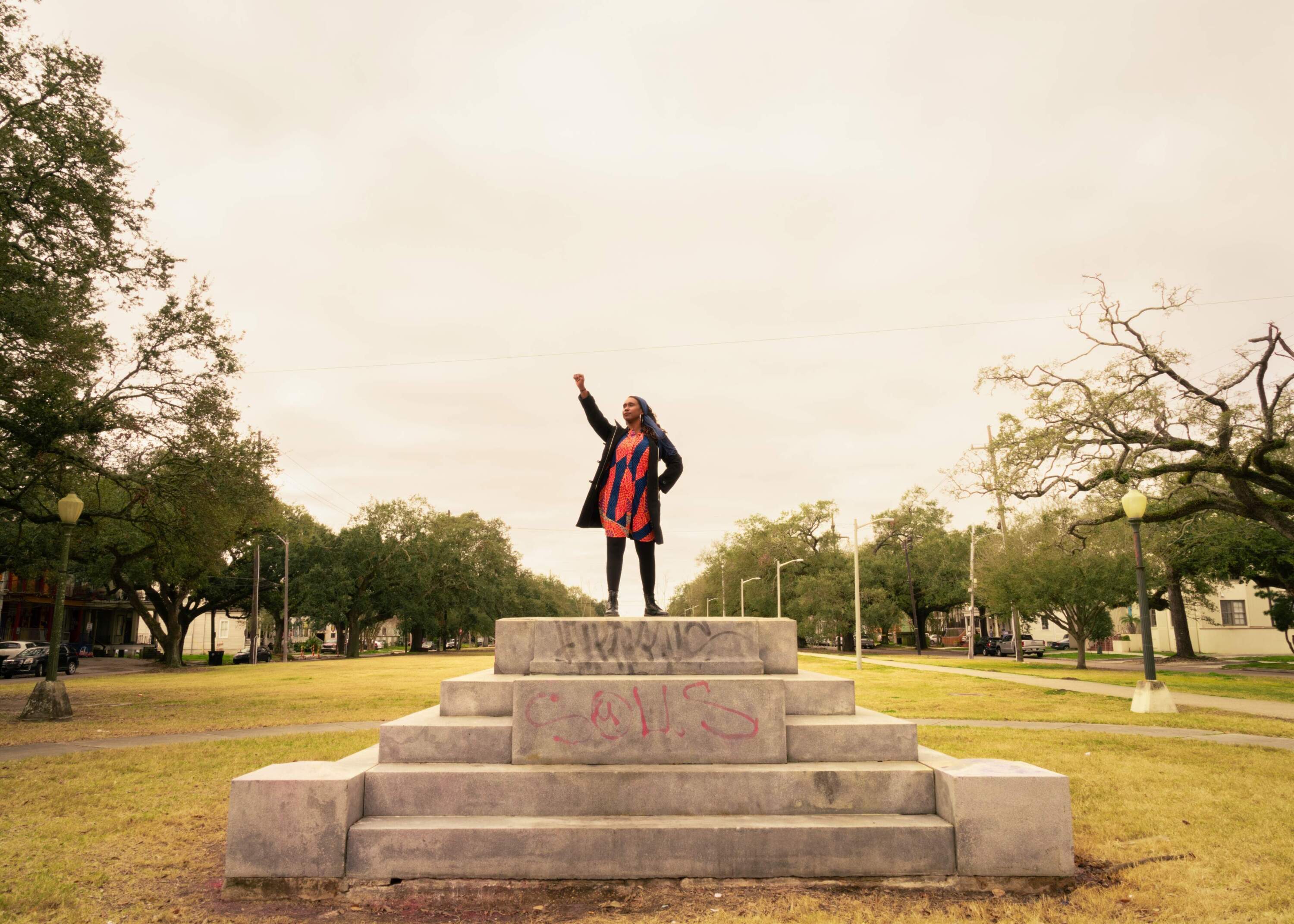
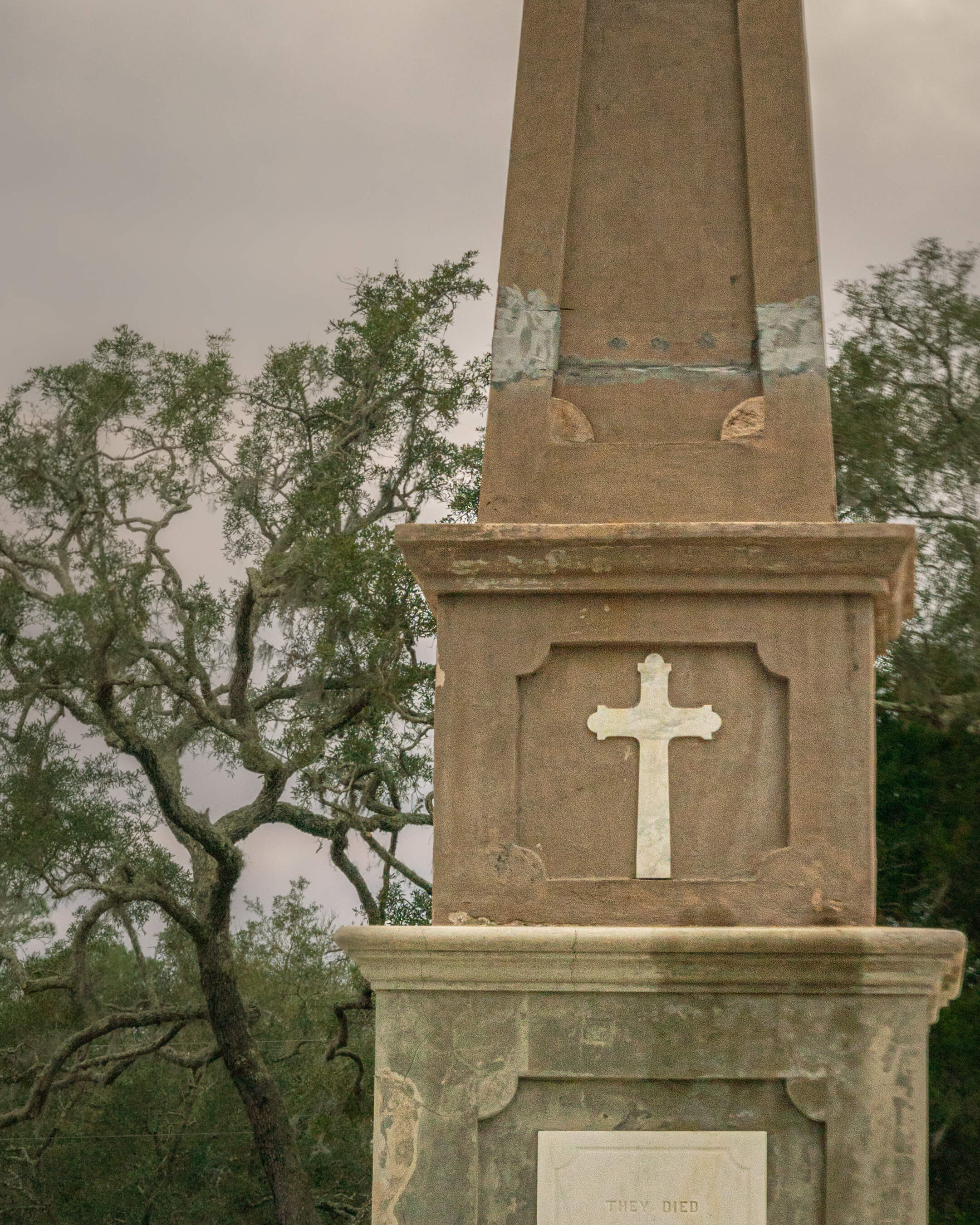
I've spent several years reporting on this nation's ever-changing commemorative landscape. I'm learning from artists that monuments can be many things. They can be activations of music and dance, they can be storytelling. They don't have to be permanent. They can heal instead of oppress. Monuments can reclaim narratives. I've seen it: From the removal of obelisks dedicated to Confederate soldiers in St. Augustine, Florida; to the creation of the Mothers of Gynecology in Montgomery, Alabama made of found metal objects collected at women's shelters; to New Orleans examining what it should do with the platforms that used to hold statues of Civil War generals. Following a reporting road trip I took through the South with photographer Jenn Ortiz in 2021, we held an event at CitySpace to discuss how each city navigated its own landscape.
Around New England, some monuments have provoked ire. The Christopher Columbus statue in the North End was decapitated. The removal of the Emancipation Memorial — the original in Washington, D.C. paid for by freed men and women — caused a massive discussion around what it means to preserve an imperfect and exclusionary account of history.
In their deconstruction, cities have a chance to reshape their meaning. Murals can be a kind of monument. Like the mural of Donna Summer in Nubian Square, which is underway as this email hits your inbox. Or Rixy's mural of Rita Hester, whose unsolved murder in 1998 birthed "Trans Day of Remembrance." The larger-than-life image is a monument to Hester's impact on the Allston-Brighton neighborhood and Boston's LGBTQ+ community as a whole.
Boston Mayor Michelle Wu's Office of Arts and Culture announced a new multi-year program this month: "Un-monument | Re-monument | De-monument: Transforming Boston." It builds on nearly a decade of the Boston community's collective work," said Karin Goodfellow, the director of public art for the city of Boston. Part of the Mellon Foundation's Monuments Project, the $3 million grant - the largest-ever investment into public art programming in Boston - includes temporary sculptural installations, murals, new media, augmented reality, theater and socially and community-engaged practices.
These projects are wide and vast. They intersect with issues that matter, from Chinatown to Nubian Square, around belonging, safety and the question of who gets to be remembered. It's an era for changing landscapes and perspectives, another opportunity for artists to do what they do best.
And to me, it's a chance to understand how public art infuses the air around it. How does it feel in communities of color when you see yourself captured in stone and song and mural? When the art installations offer a greater chance to understand each other, how does that change a community's future?
More on these projects here.