Support WBUR
REVIEW
'Nickel Boys' offers an astonishing point of view
Before he made “Creed’ and the “Black Panther” movies, writer-director Ryan Coogler came to Boston with his 2013 Sundance prizewinner “Fruitvale Station,” about the last day in the life of Oscar Grant, an unarmed, 22-year-old Oakland resident shot to death by Bay Area subway cops. During an interview promoting the film, Coogler told me about his theory of proximity. So many tragedies feel so far away from us, struggles we can compartmentalize by telling ourselves they happen to other people, somewhere else. This is why his strategy for “Fruitvale Station” was to keep the camera as close as possible to Oscar (played by Michael B. Jordan), making us feel like part of his life and his world for 80 minutes before the shooting occurs. Things register differently when they happen to someone near to us.
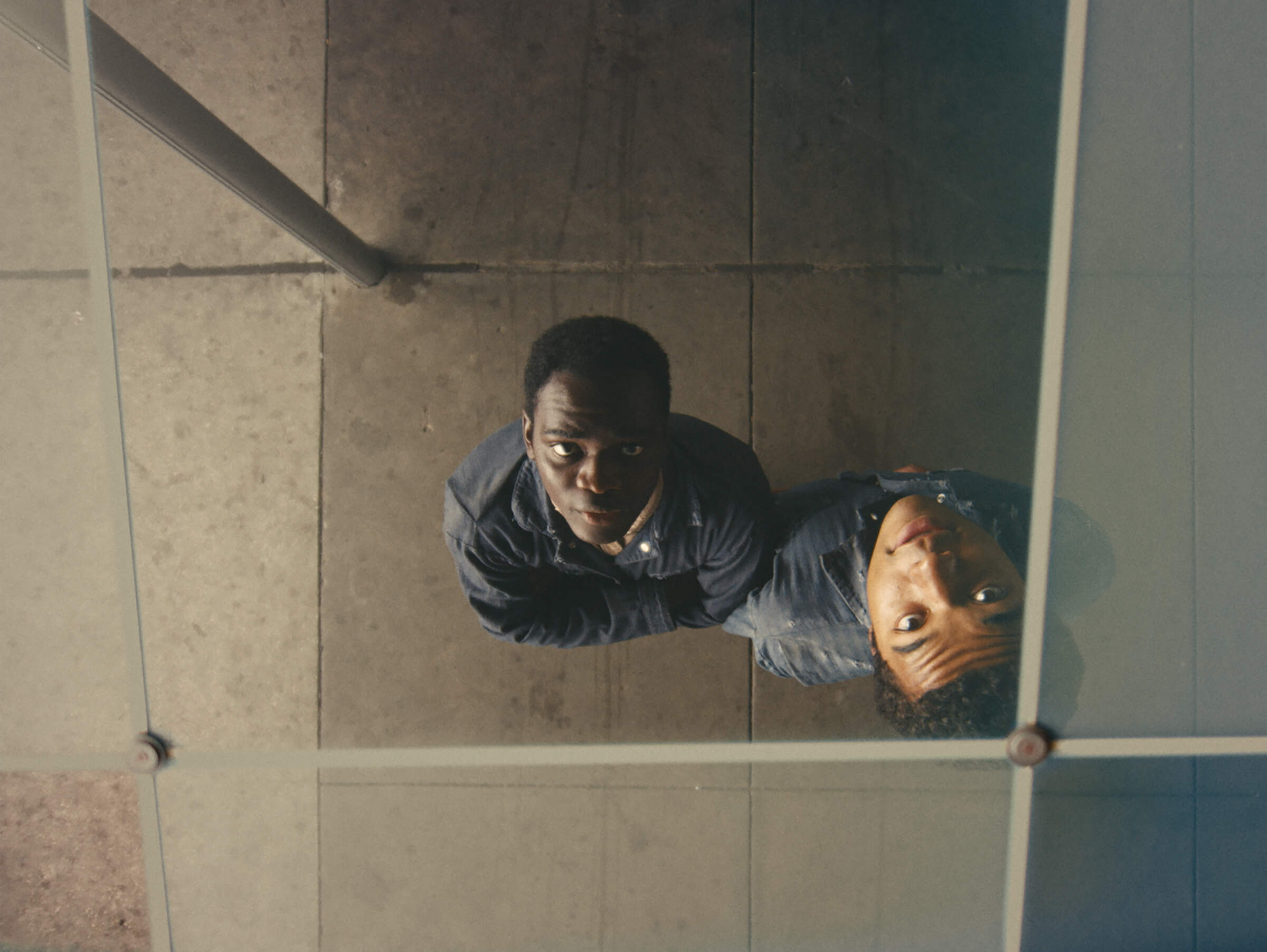
"Nickel Boys,” writer-director RaMell Ross’ astonishing adaptation of Colson Whitehead’s 2019 Pulitzer Prize-winning novel, takes Coogler’s proximity theory one step further. The entire film is shot from the perspectives of the protagonists, two teenage Black boys sent to a brutal, segregated reform school in the Jim Crow-era South. Whitehead’s book was inspired by the real-life horrors of Florida’s Dozier School for Boys, where at least 81 abused children were killed and buried in unmarked graves. But “Nickel Boys” doesn’t aspire to be a work of muckraking outrage — the material is incendiary enough on its own — instead opting for something more lyrical and experiential. You’re not just in there with the kids, you’re seeing everything through their eyes.

There are a thousand ways in which this could have gone wrong. The immersive, first person POV is a code that movies have never quite been able to crack. The most famous example is probably Robert Montgomery’s 1947 “The Lady in the Lake,” a Raymond Chandler adaptation in which the camera itself played Philip Marlowe and the rest of the characters spoke directly into the lens. Allowing the audience to play private detective is a fun gimmick that gets old awfully fast. A similar trick was used that same year by director Delmer Daves in “Dark Passage.” The first 20 minutes or so of that nifty little noir put us in the shoes of an escaped convict, until he gets plastic surgery that makes him look like Humphrey Bogart. Then Daves wisely ditches the device, because who wouldn’t rather watch Bogart? That’s always the problem with the first person perspective; we go to the movies to look at faces. It’s impossible to identify with a character when you can’t see them.
There’s a “eureka” moment about a half-hour or so into “Nickel Boys” that sent me bolt upright in my chair during the Independent Film Festival Boston’s Fall Focus screening last November. For the early part of the film, director Ross shows us the world as seen by reticent young Elwood (Ethan Cole Sharp), a promising student well cared for by his grandmother (Aunjanue Ellis-Taylor), until he makes the mistake of hitching a ride in what turns out to be a stolen car. Naturally, the courts refuse to believe that this shy, frightened child wasn’t in on the theft, and the boy is sentenced to Nickel Academy. It’s there that our terrified introvert meets Turner (Brandon Wilson), a street-smart smooth-talker who knows all the angles at the school and takes Elwood under his wing.
We watch their first meeting as we have been watching the movie so far, through Elwood’s eyes. But then Ross stops and repeats it, showing the same scene again from Turner’s perspective. From there, the movie freely cuts back and forth between both of their POVs, allowing us to see both characters’ faces in conventional shot-reverse-shot dialogue scenes, while also still keeping us confined to their eyelines, fenced in not just by the school, but by systemic oppression. (Note how the camera tilts down to the ground whenever one of our protagonists is addressed by a white character, their expected deference hard-wired into the filmmaking.)
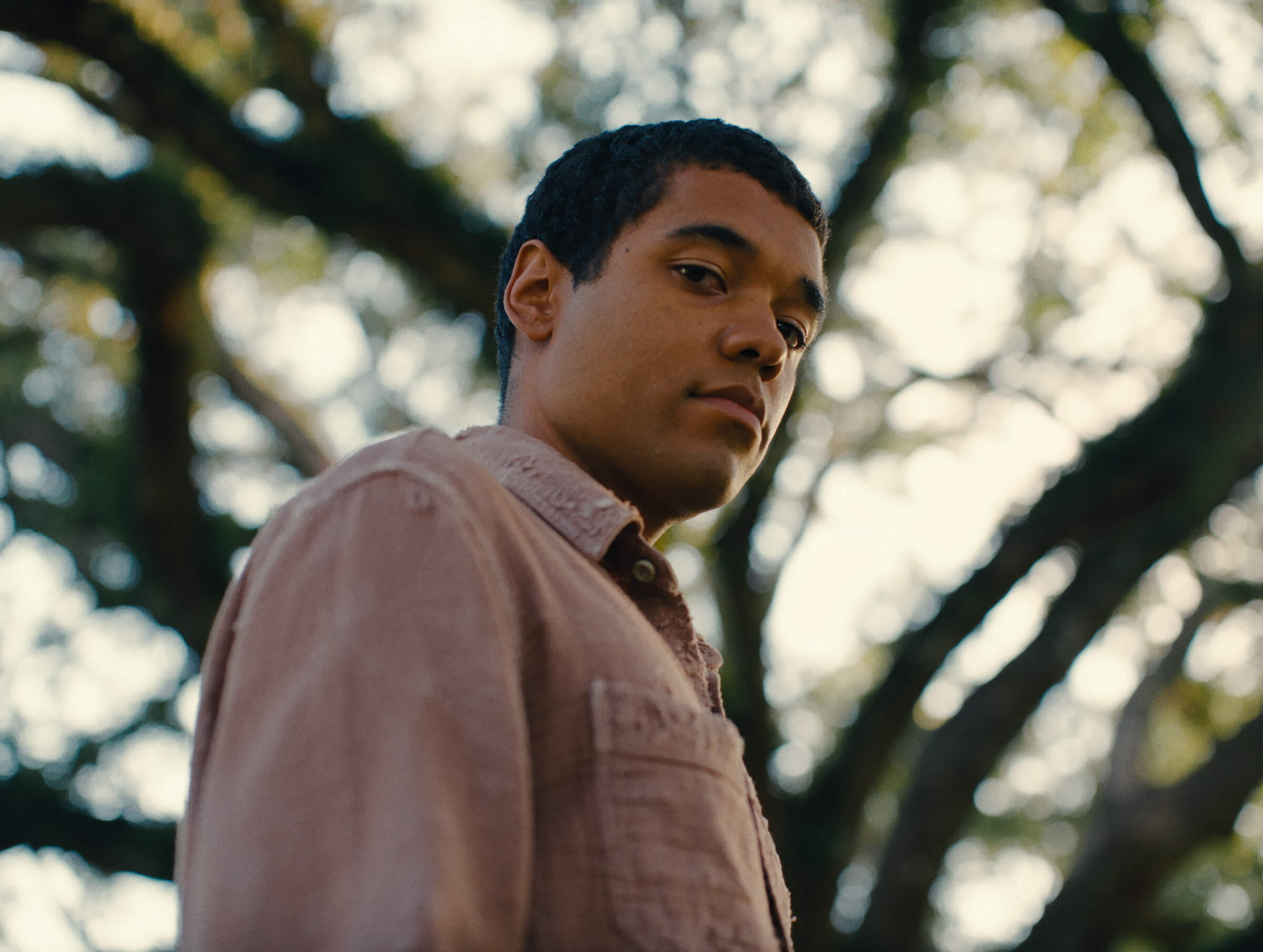
Watching “Nickel Boys,” I felt like I was seeing Ross and cinematographer Jomo Fray pull off a magic trick people have been failing at for almost 80 years. During that screening at the Brattle, I even found myself glancing around the auditorium to gauge everyone else’s reaction, like you do after witnessing an amazing stunt. I’ll admit that I’m having a tough time finding the right tone for this review, because the filmmaking is so exhilarating, yet in the service of a terrible tragedy — is it possible to be thrilled to tears?
Ross’ remarkable 2018 debut “Hale County This Morning, This Evening” threw out all the rules of documentary filmmaking for a dreamy, impressionist mosaic chronicling everyday life in the contemporary South. He finds magic and beauty in the most quotidian moments, a visual strategy that serves as a great relief while watching “Nickel Boys.” It’s easy to imagine an unbearable version of this movie — like a first person shooter videogame except on the receiving end of racism and child abuse — but Ross keeps the horrors hovering just offscreen. They’re always there in the heavy, poisonous atmosphere, the movie just doesn’t rub our noses in them. “Nickel Boys” instead lingers on the moments of compassion and tenderness, the small victories that allow our protagonists to persevere.
It’s interspersed with brief flash-forwards to the 1990s, with an adult Elwood (played by Daveed Diggs, though we only see the back of his head) watching news reports uncovering what the boys at Nickel Academy already knew. There’s also a doozy of a sequence set sometime in the ‘80s, where Elwood encounters a fellow former inmate at a bar and the two try to talk around their traumas under the guise of polite conversation. An actor named Craig Tate gives one of the great one-scene performances here. I don’t recall seeing him in anything before, but he knocked my socks off in a stunning, unbroken take.
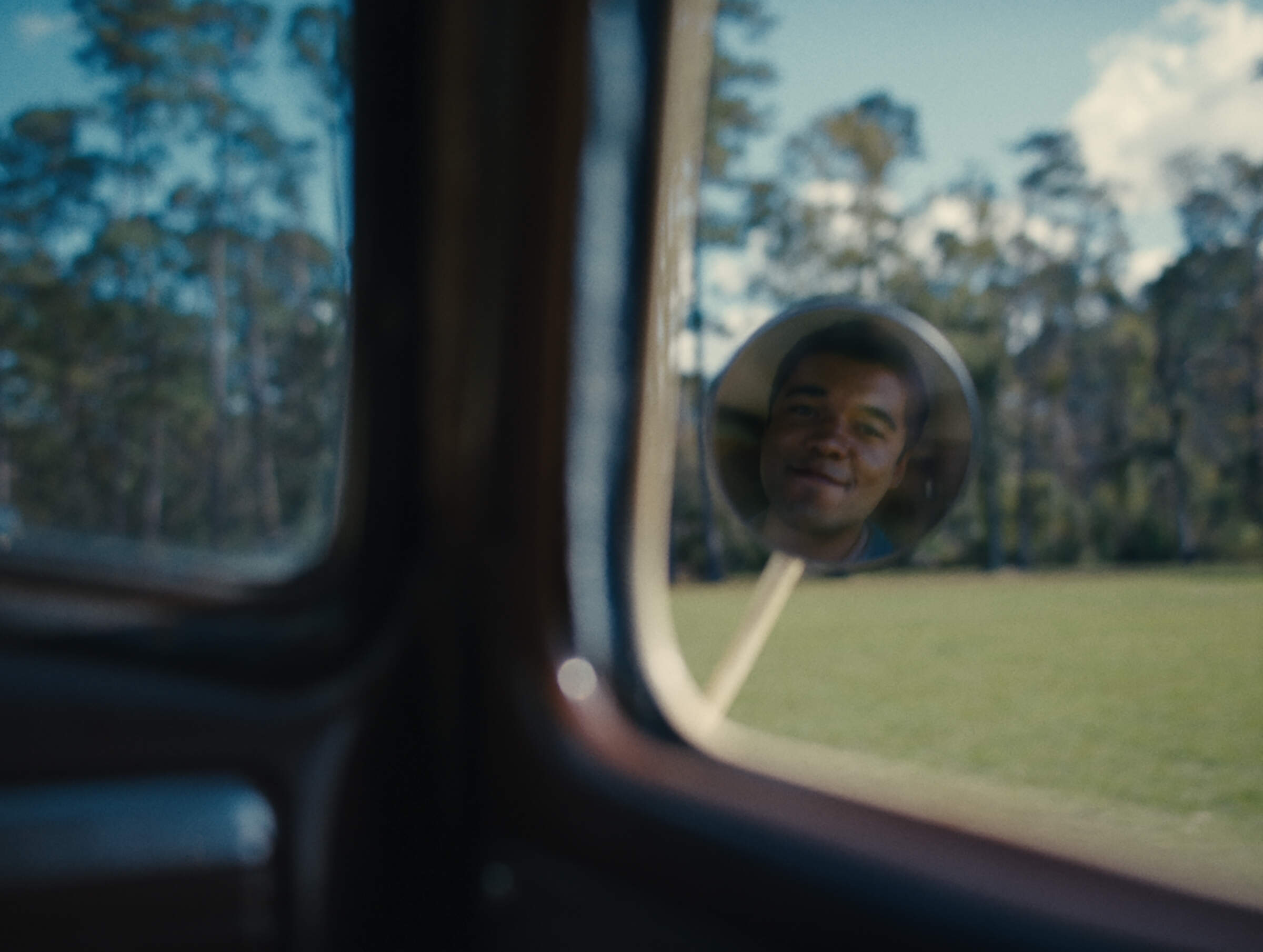
Ross also includes quick clips from the Sidney Poitier film “The Defiant Ones” for reasons that later become obvious, as well as cutaways to the moon landing for reasons I still don’t quite understand. “Nickel Boys” is the most formally audacious movie I’ve seen from a major studio in ages. The closest thing I can compare it to is a feature-length version of the opening sequence of Michael Mann’s “Ali,” which swirled around different chapters of the champ’s life trying to approximate his POV. The difference is that Mann usually parks the camera just behind his protagonist’s ear to convey their worldview. Ross takes us behind their eyes.
It’s probably impossible to watch “Nickel Boys” without thinking of Roger Ebert’s famous quote calling movies “machines that generate empathy.” The story of the Dozier School is a disgrace and a stain on American history. It’s also the kind of thing we can read about, cluck our tongues sadly, and go on with our day. “Nickel Boys” brings us inside the story and allows us to share a POV with the young men trapped there, making us feel and understand what happened more fully. That’s what art does.
“Nickel Boys” opens in Boston area theaters on Thursday, Jan. 2.