Support WBUR
Review
'Nosferatu' and 'Babygirl' are two movies unrepentantly for adults
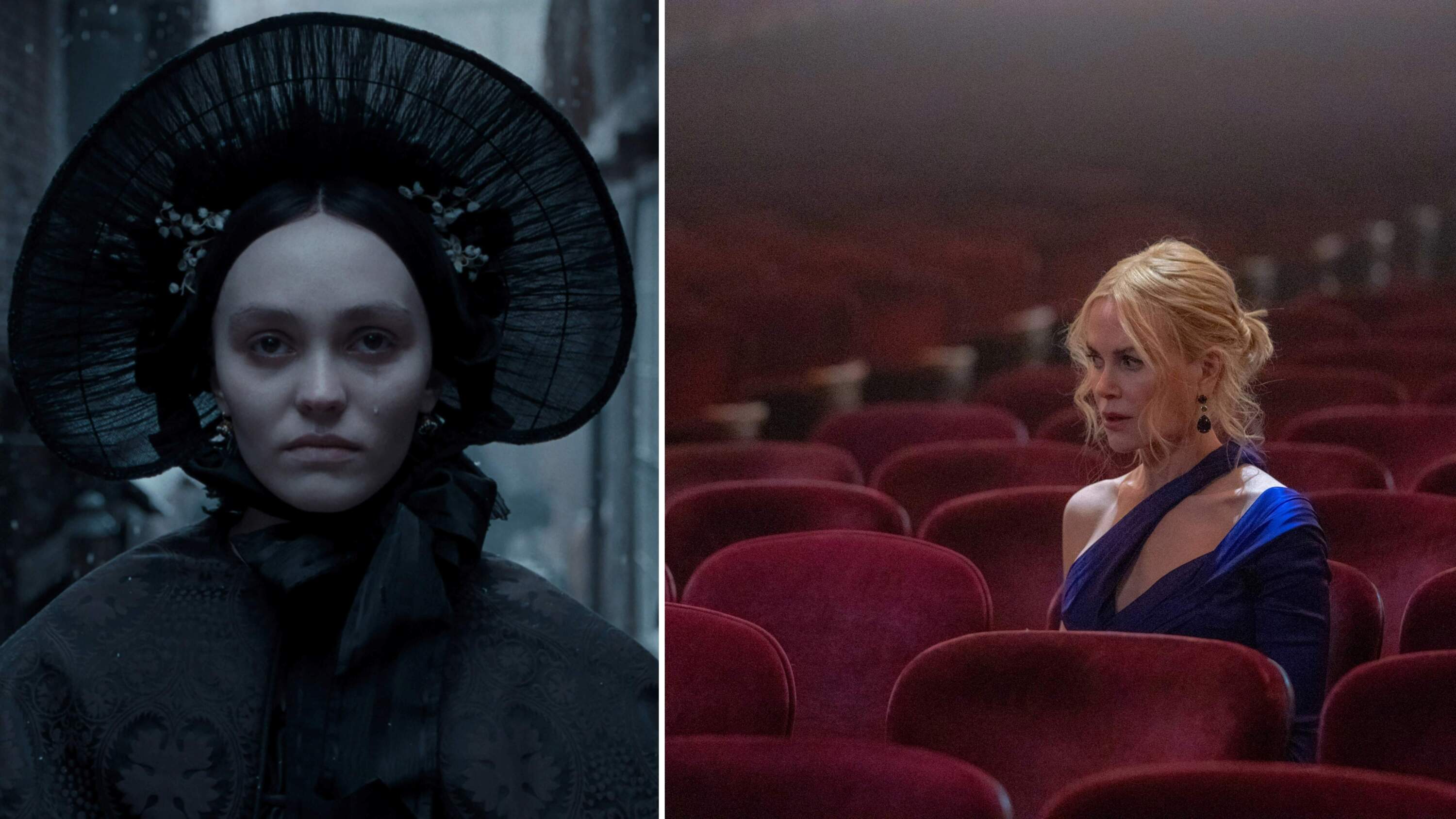
Back in April, when reviewing Luca Guadagnino’s randy tennis drama “Challengers,” I wrote that it was “my great relief to report that sexy movies are back.” Given that we’re coming out of the most celibate period for American cinema since the Legion of Decency, I’m even happier to tell you that not one, but two big Christmas Day releases begin with close-ups of movie stars moaning in ecstasy. Writer-director Halina Reijn’s “Babygirl” and Robert Eggers’ remake of “Nosferatu” don’t have much in common except for hoping that you have yourself a horny little Christmas. One’s an erotic relationship drama and the other is the umpteenth iteration of the most famous vampire story ever told, but both will make you wish you’d brought grandma and the kids to see “Mufasa: The Lion King” instead. These are movies unrepentantly for adults. What a Christmas miracle.
“Babygirl” is the naughtier provocation of the two, starring Nicole Kidman as the tightly wound CEO of a robotics company who finds herself falling into a lusty BDSM relationship with her new intern. He’s played by Harris Dickinson as a boorish, half-kidding enigma who is all effrontery, all the time. We smartly only see the young man from her perspective, as a cheeky disruption who takes shocking social liberties with his new boss that unnerve and secretly thrill her. Before long he’s got her slurping milk on his command — this movie might be the best thing to happen to the dairy industry since Lactaid — and “Babygirl” begins to suggest what “9 ½ Weeks” or “Fifty Shades of Grey” might have been like, had they not been terrible.

So much of the post #MeToo discourse about sexuality has addressed the inevitable power imbalances inherent in relationships and writer-director Reijn wants you to know she’s read it all. But desire is something messier and more mysterious than can be sorted out in a dissertation or by a human resources department. Earlier this year, the notorious French filmmaker Catherine Breillat tackled similar taboos in “Last Summer,” following a victims’ rights advocate’s destructive affair with her underage stepson. (When IFFBoston programmer Nancy Campbell booked the film for their spring festival, she warned: “It’s not just triggering, it’s the whole f---ing gun.”) Reijn is a lighter more optimistic filmmaker than Breillat, who makes shocking and unpleasant films even by the standards of the French. You could even classify “Babygirl” as a romantic comedy. Sort of.
It’s unthinkable without Kidman, who again reminds us what a fearless performer she can be when she’s not acting as the grand doyenne of lousy streaming shows. (One thing I’ve learned while flipping through my Roku: If you happen to have a terrible idea for a miniseries, you should ask Nicole Kidman to be in it because she’ll probably say yes.) Over the summer, thanks to our local indie theaters’ peerless repertory programming, I was able to revisit Kidman in Stanley Kubrick’s “Eyes Wide Shut,” Jane Campion’s “Portrait of a Lady” and Lars von Trier’s “Dogville,” appreciating all over again what nervy, edgy choices she’s been making since the start of her career. It was also impossible not to notice that she looks quite a bit different these days.
I understand that it’s uncouth to speculate about how an actress may or may not have altered her appearance, but I think we’re allowed a pass here because it’s part of the plot of “Babygirl.” Our CEO’s vigorous beauty regimen includes injectables and cryotherapy sessions smash-cut together like the pill-popping montages from “All That Jazz.” It’s depicted as an unhealthy addiction — her character’s self-fortifying way of staying young to stave off competitors at work and in life. Her daughter even asks why she does that stuff to her face, telling her she “looks like a fish.” As presented by Reijn, this all part of the hyper-pressurized, girlboss mentality that sends the CEO sneaking off to cheap motel rooms, getting kinky to George Michael music with an employee as an escape.

At heart, “Babygirl” is a tale of her liberation from such crushing expectations and toxic societal norms. The first scene finds Kidman slipping away after athletic sex with her husband of 19 years (Antonio Banderas) to finish herself off alone while watching porn on her laptop. It’s clever casting the Spanish stud who has made a career out of sending up Latin lover stereotypes to play the clueless, cuckolded husband, like when Richard Gere co-starred as a sweater-wearing, suburban schmuck in Adrian Lyne’s “Unfaithful.” Banderas does touching work here as a guy who loves his wife but can’t begin to understand her, and there’s a metatextual kick in seeing the star of “Tie Me Up! Tie Me Down!” being told that his ideas about female desire are “dated.”
It's a brave new world in “Babygirl,” a movie that admits we can’t control our desires so you might as well own them and adapt accordingly. Since this is an American film, we sit there waiting for the characters to be punished for their impure thoughts. We’re trained as audience members to expect such attractions to become fatal, but none of that happens here. To tell you the truth, I’m not sure I entirely buy Reijn’s sunny conclusion, but it made me happy for her characters, and even happier to find a smart, sexy little film like this under the Christmas tree.

Writer-director Robert Eggers’ “Nosferatu” is a gorgeously mounted remake of F. W. Murnau’s hypnotic 1922 silent film that was itself such a brazen, bootleg riff on Bram Stoker’s 1897 novel “Dracula” that the author’s widow attempted to sue it out of existence. (This new version, like Werner Herzog’s 1979 “Nosferatu the Vampyre,” is careful to credit both Murnau’s film and Stoker’s book as source material.) It is, by my rough estimate, the eleven-billionth screen interpretation of this material. But if we’ve seen it all before, you’ve never seen it looking quite like this. The movie is a triumph of period-accurate production design and silvery, moonlight cinematography.
Eggers broke through with the creepy New England horror film “The Witch,” though I much preferred his barking mad, black-and-white follow-up, “The Lighthouse,” which locked Willem Dafoe and Robert Pattinson in the haunted, titular phallic structure while they both slowly lost their minds. His work reminds me of the novelist L. P. Hartley’s line about how “the past is a foreign country: they do things differently there.” Eggers’ whole deal is meticulously researching the wildest and weirdest ancient beliefs and folklore, then making movies that play them entirely straight. His “The Northman” was like a documentary about Vikings in which Valhalla was real.
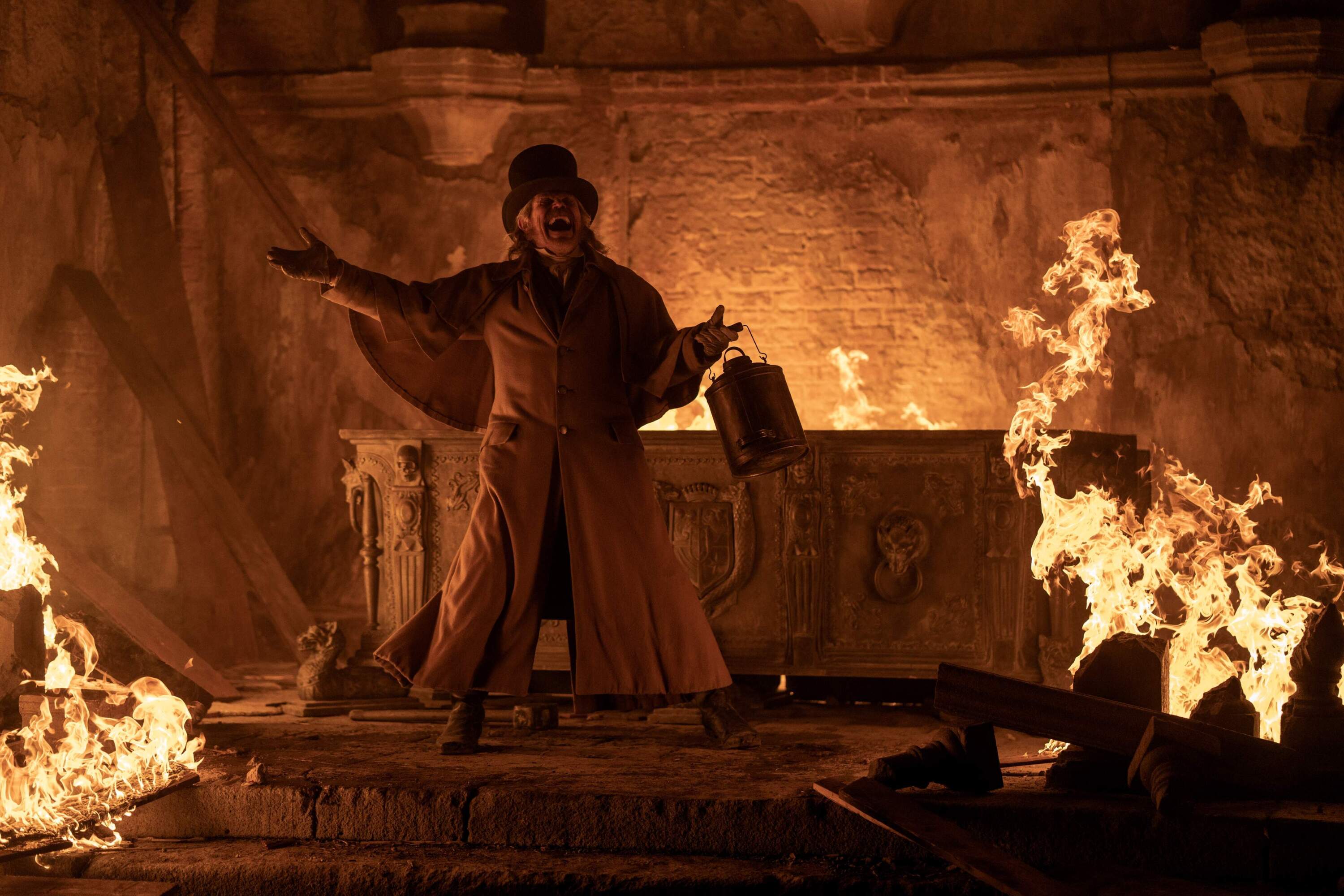
This makes him a logical, if not exactly inspired choice for the Dracula legend, with its Romani rituals and late Victorian fears of female sexuality. Lily-Rose Depp gives a bold, go-for-broke performance as the doomed bride pledged to the undead count. Like Isabelle Adjani in the Herzog version, she sometimes seems a more fearsome creature than the vampire, throwing herself into the role’s wild physicality with abandon. (More than once, Depp appears to be paying homage to Adjani’s legendary turn in “Possession,” a film which over the past few years has gone from beloved cult obscurity to the most over-memed movie on the internet, with references even washing up in franchise slop like this past spring’s “The First Omen.”)
Eggers doesn’t lean quite as hard into the heaving bosoms and bodice-ripping as Francis Ford Coppola did in his barmy 1992 “Bram Stoker’s Dracula,” though there is an amusing scene in which concerned husband Nicholas Hoult tries to literally hump the demon out of his wife. The director’s regular collaborator Dafoe is his reliable self as the slightly batty Van Helsing character. It’s funny how such a distinctive-looking performer can slip so naturally into any milieu, feeling perfectly at home in superhero sagas, indie dramas and Wes Anderson dioramas. There’s no actor alive more adept at saying lines like, “The night demon has supped from your good wife’s blood, sir.”
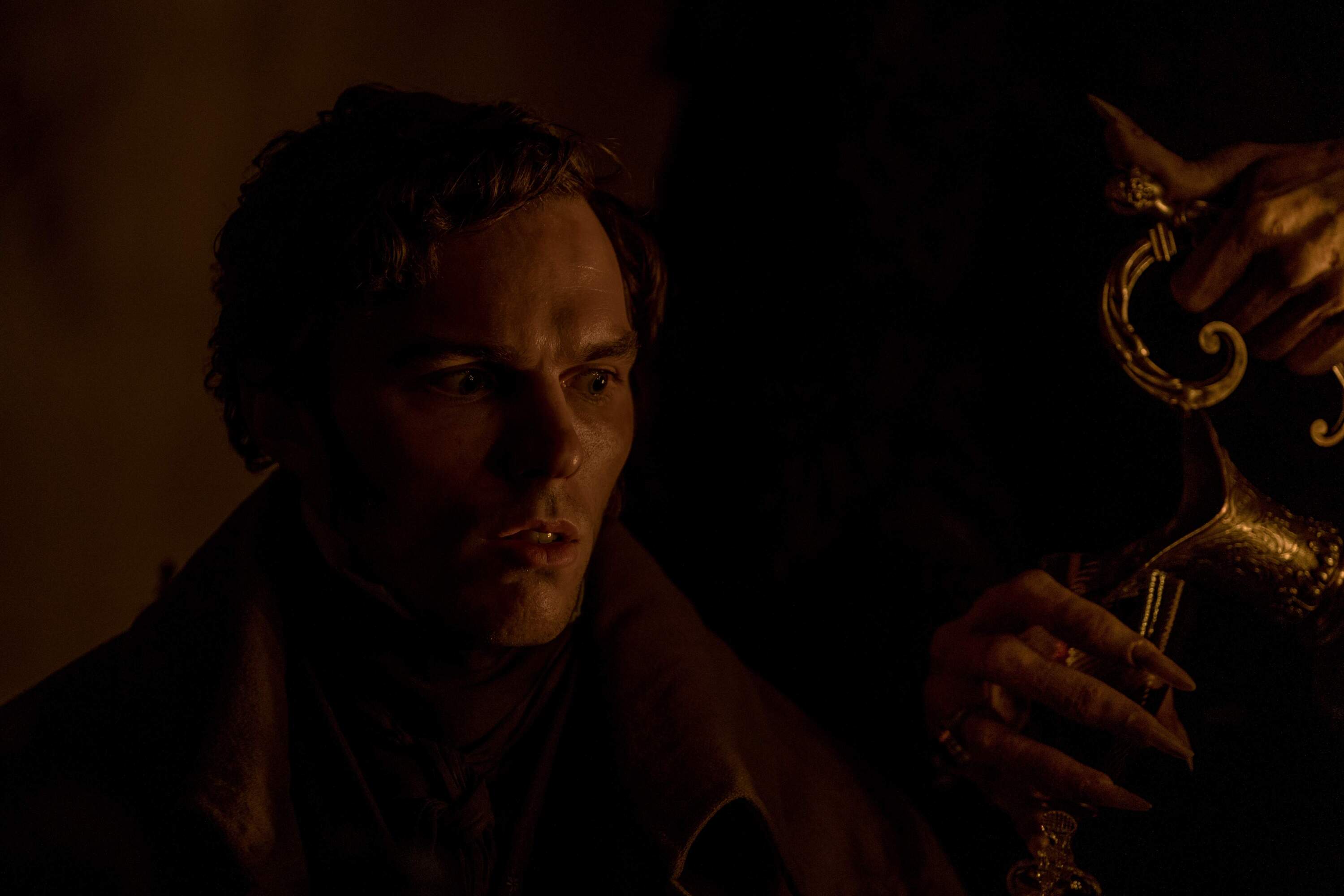
I saw “Nosferatu” about a month ago and had a blast, but I haven’t thought about it once since leaving the theater. Part of that, I think, has to do with the vampire himself, played by killer “It” clown Bill Skarsgård as hulking, skulking beast with none of the doomed romanticism of Gary Oldman or mesmeric magnetism of Klaus Kinski. He’s just a giant, brutal sex pest with a porn star moustache. No matter how much awesome surround sound reverb Eggers lays on his line readings, he’s a fitting mascot for a movie that frightens but never truly haunts.
“Babygirl” and “Nosferatu” open in theaters on Wednesday, Dec. 25.