Support WBUR
The EPA is rolling back some rules for drinking water. Here's what that means for Mass.
The Environmental Protection Agency announced Wednesday that it’s planning to roll back some drinking water regulations for a toxic group of chemicals known as PFAS. The agency will keep other rules for these so-called "forever chemicals" in place but extend the compliance deadline by two years.
While local environmental and public health advocates called the move “disappointing” and “dangerous,” Massachusetts water suppliers expressed relief for the extra compliance time.
The extended deadline is “great news,” said Jennifer Pederson, executive director of the Massachusetts Water Works Association. “We know PFAS treatment is possible, but it's very expensive, so systems need time to be able to plan and to design and construct the facilities.”
Pederson said she’s still concerned about the cost of treating water for PFAS, given President Trump's proposed budget cuts.
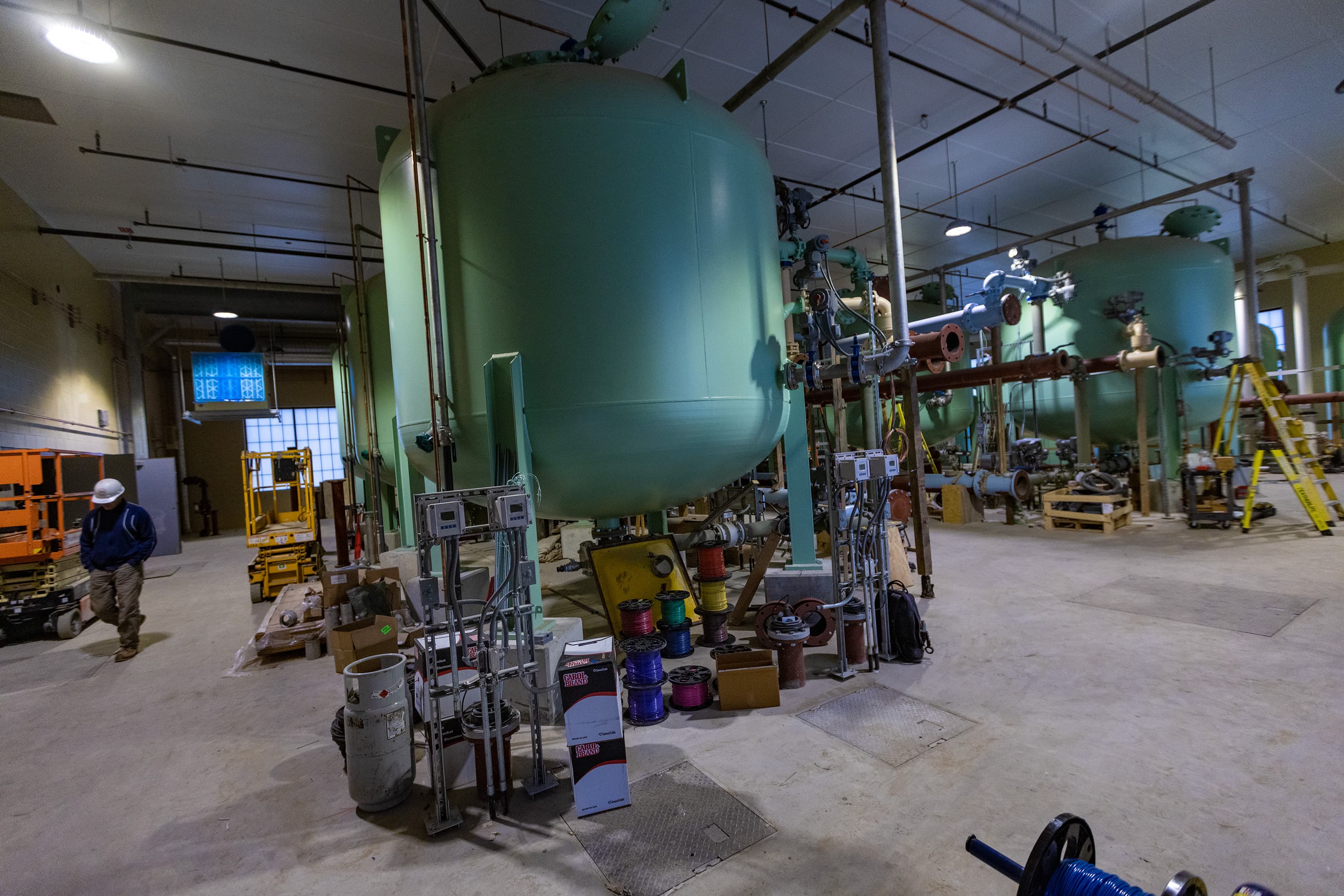
Removing PFAS from drinking water often takes years of planning and construction, and usually involves installing expensive filters that cost tens of millions of dollars. Trump’s proposed budget slashes the primary source of funding for drinking water infrastructure in the country — the State Revolving Fund programs — by nearly 90%.
In 2024, the Biden administration EPA rolled out the first federal regulations for PFAS in drinking water. The rules limited the two most common PFAS chemicals — PFOA and PFOS — to four parts per trillion, close to the lowest level at which the chemicals can be detected. The EPA also set drinking water standards for three other PFAS chemicals, and a limit for a mixture of certain PFAS chemicals.
The EPA said Wednesday that it will keep the regulations for PFOA and PFOS in place, while rescinding the rules for other PFAS chemicals in drinking water. The EPA will also extend the deadline for water systems to comply by two additional years, to 2031.
Environmental and public health advocates said they were glad the EPA will keep some regulations in place, but called the other rollbacks reckless.
“ We are disappointed to see this announcement, though it is in line with what we've been seeing from this administration and from the EPA over these last few months," said Darya Minovi, a senior analyst at the Union of Concerned Scientists. “There has been a lot of rhetoric around protecting communities’ drinking water, our food, our air, but the actions that they're taking are doing the opposite.”
Minovi also expressed concern about the EPA’s plan to create a “federal exemption framework,” for the PFAS regulations.
“It raises red flags," she said. She added that the Trump administration's EPA is already exhibiting "broad overreach" of executive power, enabling them to "bypass notice and comment processes for rolling back certain Clean Air Act regulations or other environmental regulations."

Massachusetts released its own regulations for PFAS in drinking water in 2020, and MassDEP is now reviewing the EPA’s proposed changes to understand how public water suppliers will be impacted.
In a statement, a MassDEP spokesperson said that “millions of residents in Massachusetts have access to clean, safe drinking water every day, and we intend to keep it that way.”
PFAS chemicals were invented in the early 20th century and are used in thousands of products, from food packaging to waterproof jackets and firefighting foam. Over time the chemicals wash or flake off these products into landfills, soil and water.
Because PFAS molecules don't break down easily, they are often called "forever chemicals." In Massachusetts, they're widespread in ground and surface waters, rivers and even Cape Cod ponds. Studies estimate that 98% of Americans have detectable levels of PFAS in their blood.
A 2022 report from the National Academies said there is "sufficient evidence" of association between PFAS exposure and kidney cancer in adults, decreased immune response in adults and children, high cholesterol in adults and children, and decreased infant and fetal growth.