Support WBUR
Review
Paul Thomas Anderson's 'One Battle After Another' is a rollicking chase comedy
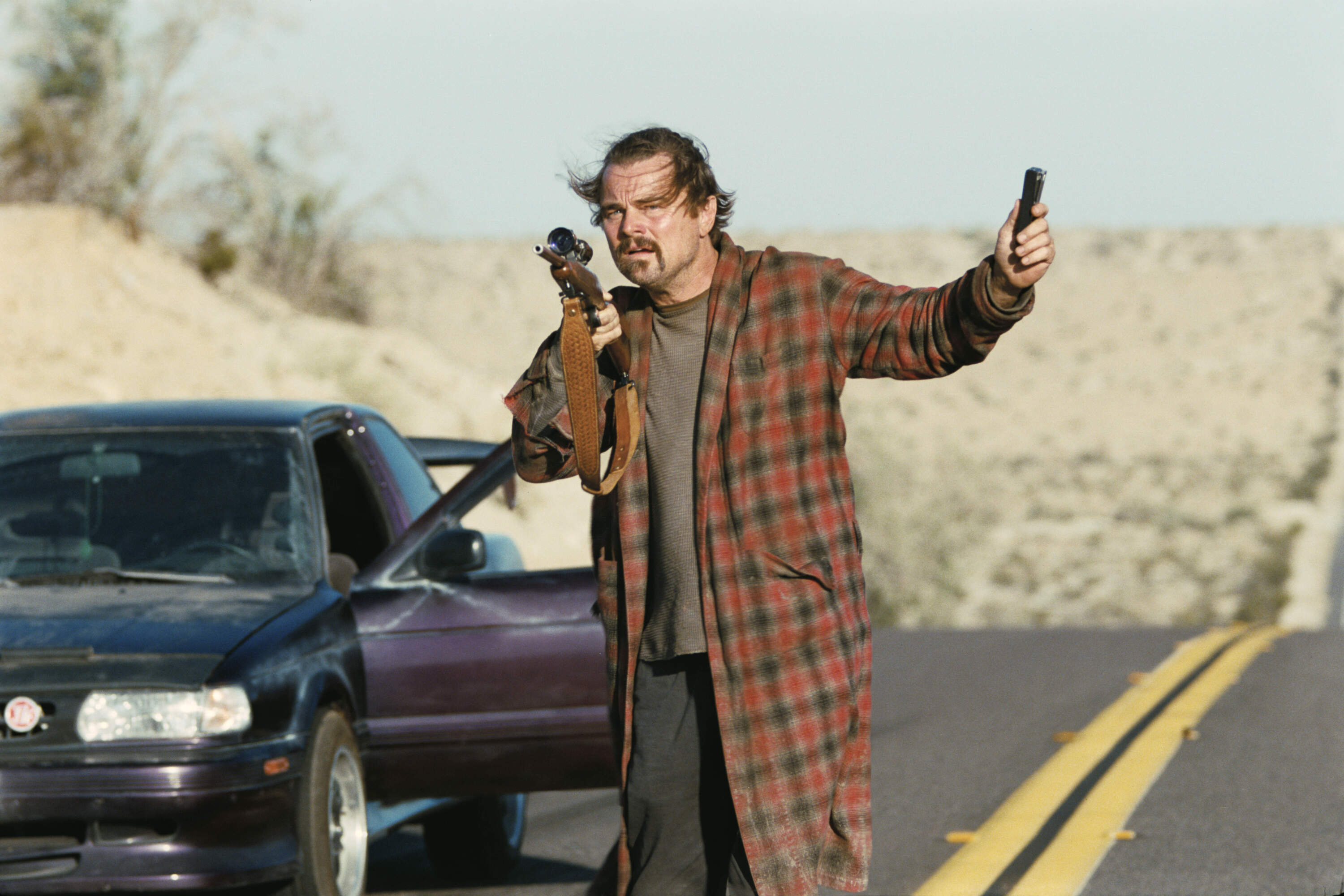
Leonardo DiCaprio has been a breathlessly acclaimed superstar for something like three decades now, so it sounds silly to call him underrated. Yet I still don’t feel like he gets enough credit as a physical comedian. In recent years, Leo’s become especially adept at hurling his body around and sputtering dialogue in staccato, nitwit bursts, dulling his quicksilver intelligence into a sublime stupidity. If you’re like me and think few things are funnier than an addled DiCaprio shouting in a bathrobe, I’ve got good news. Paul Thomas Anderson’s rollicking chase comedy “One Battle After Another” finds the Oscar-winner hilariously unfit for action movie heroics, blundering his way through a dystopian present just a few degrees off from our own, where U.S. troops surge city streets rounding up immigrants while ragtag bands of underground saboteurs blow up banks and cause chaos at chain-link and razor-wire detention centers.
DiCaprio stars as Bob Ferguson, a retired revolutionary who’s been hiding out for the past 15 years, getting blitzed. Bob used to be an explosives expert for a notoriously violent outfit known as the French 75. (They aren’t French, and there aren’t 75 of them.) He’s thrust back into the fray upon discovering that his teenage daughter Willa (Chase Infiniti) is being hunted by hard-nosed jarhead Col. Steven J. Lockjaw, played by Sean Penn with posture so rigid it becomes a sight gag unto itself. They had some messy business together back in the day, when Willa’s mother, Perfidia (Teyana Taylor, all sharp angles and dangerous curves), was ratting out the crew to save her own skin while sleeping with the secretly submissive, sex-crazed military man. Might Willa actually be his daughter and not Bob’s?
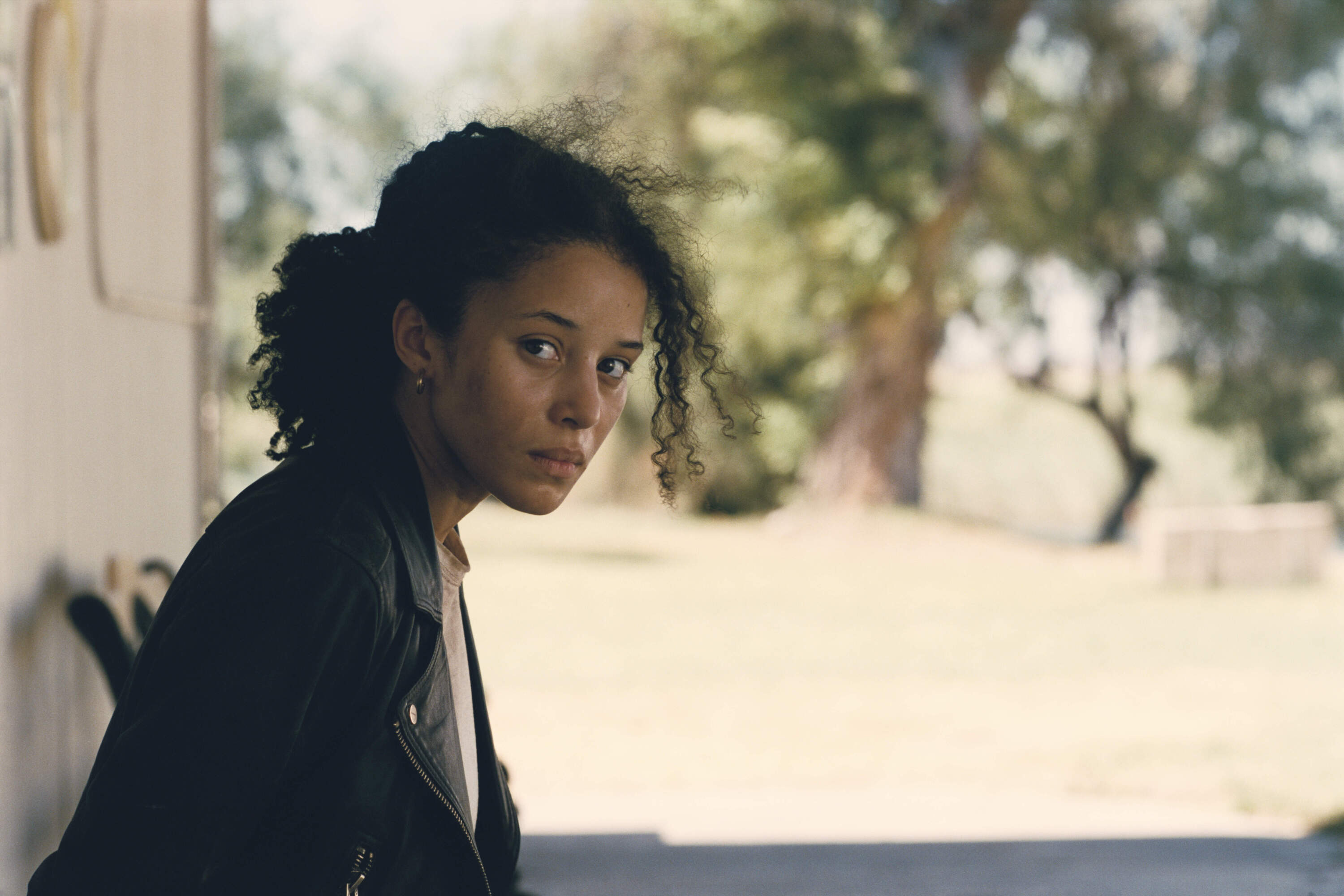
Now Lockjaw is up for a plum position in a powerful white supremacist organization that covertly runs the country. Led by “Scandal” president Tony Goldwyn and longtime “Saturday Night Live” writer James Downey, they’re called the Christmas Adventurers and their new recruit needs to clean up his past indiscretions before they find out he might have a mixed-race daughter on the lam somewhere. Lockjaw puts the full force of the U.S. military machine to the task of finding Willa, necessitating a rescue operation for which DiCaprio’s Bob is spectacularly ill-suited. He stumbles from one kinetically crazed set-piece to the next, crisply shot on large format film by cinematographer Michael Bauman at vertiginous angles unusual for action films. It’s exhilarating.
We’re pulled along by the propulsive percussion of Jonny Greenwood’s score and a camera that careens from scene to scene. Arthouse auteur Anderson’s last two pictures were “Licorice Pizza” and “Phantom Thread,” so he’s not the kind of guy you’d expect to be helming a megabudget action movie for a major studio. But then you also probably didn’t ever expect to see a $140 million blockbuster from Warner Bros. Discovery based on Thomas Pynchon’s “Vineland.” Anderson borrows some themes and situations from the reclusive writer’s 1990 novel about washed-out idealism in the Reagan era, but “One Battle After Another” is very much its own thing, full of the filmmaker’s pet preoccupations concerning fatherhood and found families versus biological beginnings.
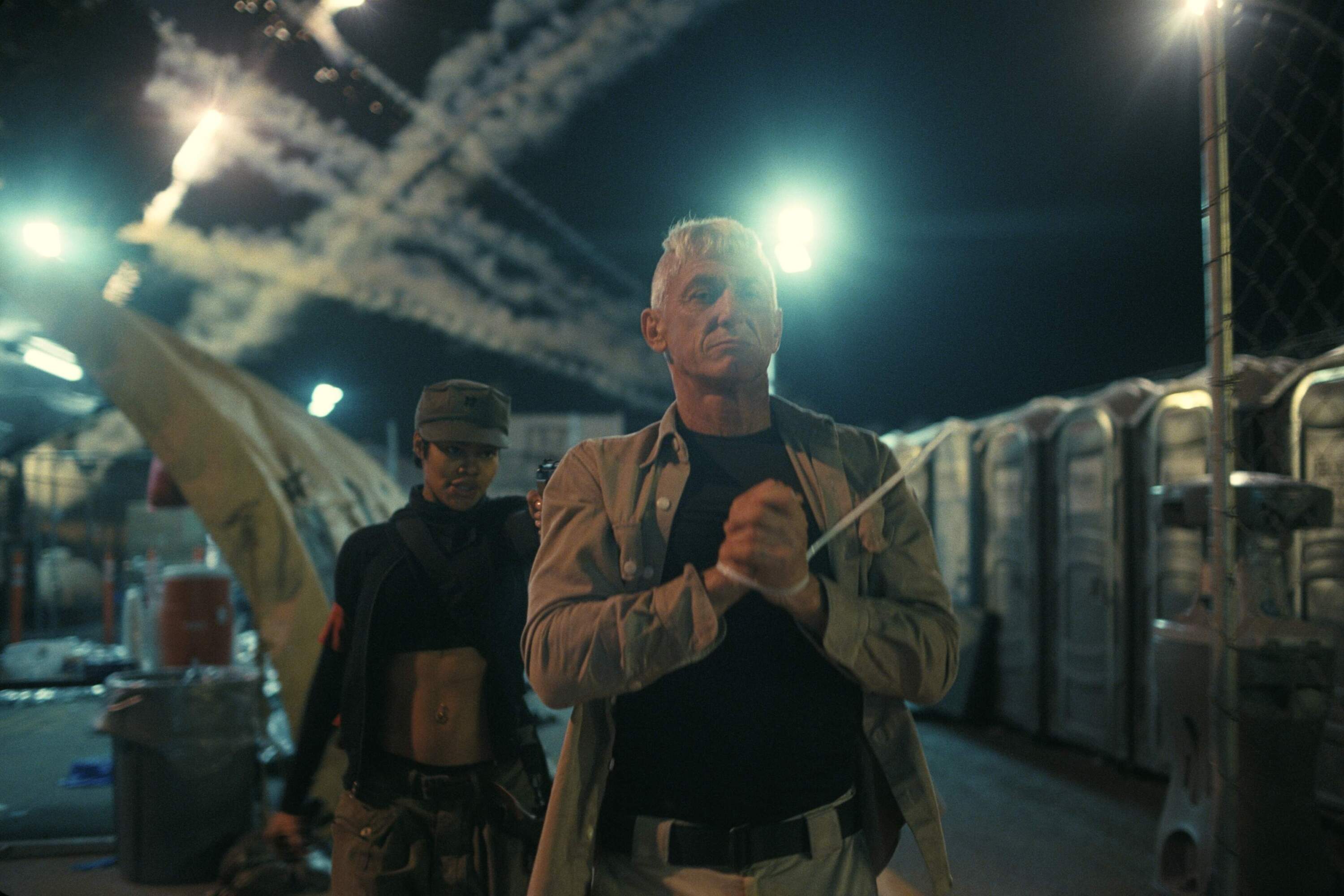
Having left the sprawling ensembles of his “Boogie Nights” and “Magnolia” back in the ‘90s, Anderson’s films have since zoomed in on dyads, studying the fluctuating power dynamics in male-female or master-servant relationships, sometimes letting bitter rivals vie for control of the film’s narrative. In this regard, “One Battle” perhaps inevitably resembles the director’s madcap, melancholic 2014 Pynchon adaptation “Inherent Vice,” which had Josh Brolin’s browbeating cop hounding Joaquin Phoenix’s freewheeling hippie. Here, DiCaprio’s Bob is the fretting maternal figure while Penn’s Lockjaw is pure ramrod alpha energy turned terrifyingly inward. In some scenes, he looks like he may very well implode.
This is all screamingly funny in that blustery, inarticulate way Anderson’s characters tend to express themselves. What’s especially entertaining is how out of touch Bob is with his daughter and the young revolutionaries he’s forced to rejoin, flummoxed by safe spaces and they/them pronouns. You can be a literal bomb-throwing radical and still wake up one morning to discover you’ve become a crabby old conservative. DiCaprio’s consternation is a howl, and sometimes “One Battle After Another” feels like a whole movie made out of that scene near the end of “Once Upon a Time… in Hollywood” when Leo’s Rick Dalton is screaming at the Manson family and slurping margaritas out of the blender. (Like that Tarantino film, this joins “The Big Lebowski” and “Wonder Boys” in the annals of great bathrobe cinema.)
Reviewing the lamentably little-seen “Daddio” last year, I complained about how hard it was to explain to the younger generation why folks my age grew up idolizing Sean Penn. This should no longer be a problem. Lockjaw is easily the actor’s best work since his 1990s heyday. (“He’s ‘Carlito’s Way’ great in this,” I texted a friend after the film.) Gnarled and contorted as if attempting to physically clench his wayward desires, Lockjaw’s walk is a wondrous bit of comic invention. He’s got a sneer that doesn’t issue words so much as they somehow manage to escape. With his absurdly jacked musculature — Willa asks him why he wears such tight T-shirts — he sometimes reminded me of a live-action Popeye the Sailor Man. But Penn is too soulful an actor to play a cartoon. Behind Lockjaw’s eyes, he’s frightening and pathetic in equal measure, laughable yet terribly sad.
You might find yourself wishing that the film’s female characters were as clearly defined. Newcomer Infiniti has some excellent moments holding her own opposite Penn, though the film may have had a bit more emotional ballast if she’d shared another scene or two with DiCaprio at the outset. Others get lost altogether in the headlong rush of incident. Regina Hall plays a former comrade in arms whom the film seems to forget about during the final stretch, and poor Alana Haim, we hardly knew ye. I’m still not quite sure what to make of a late-game realignment of the movie’s attitude toward Perfidia, but Anderson’s films have always deepened and expanded on repeat viewings, so there’s no reason to expect that won’t be the case here, despite the more overtly commercial, crowd-pleasing mode he’s working in this time.
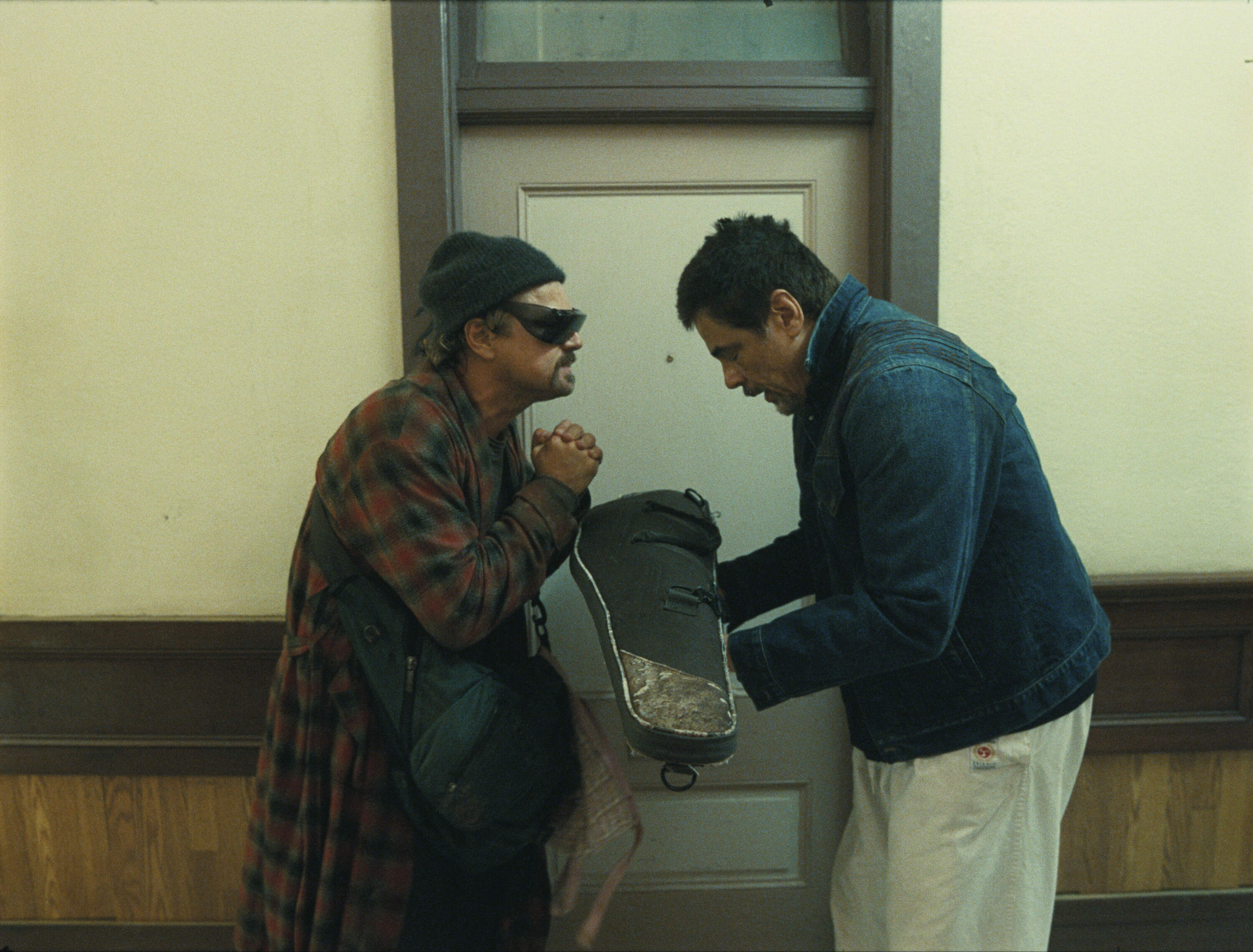
Besides, there’s so much here to savor that a second viewing was a foregone conclusion. Probably this week. I’m already looking forward to spending more time with the breezy charm of Benicio Del Toro’s Sensei Sergio St. Carlos, a soft-spoken karate instructor blithely supervising a mass evacuation of his “Latino Harriet Tubman operation” during an ICE raid while sipping cans of Modelo. Like the kids we see skateboarding through riots in the burning neighborhoods, he’s so accustomed to this chaos it’s become blasé. That’s how fascism works. You get used to it.
“One Battle After Another” was photographed in VistaVision, a format developed by Paramount Pictures in the 1950s to compete with 20th Century Fox’s CinemaScope. It runs 35mm film through the camera horizontally instead of vertically, doubling the amount of picture information in the frame, yielding an image of astonishing clarity. Director Brady Corbet and cinematographer Lol Crawley revived the long-dormant process last year for “The Brutalist,” with beautifully detailed 70mm blowups of the film released to theaters nationwide. A 70mm presentation of “One Battle After Another” will be screening at the Somerville Theatre, as well as IMAX and regular digital engagements around the city and suburbs.
Additionally, original 1953 VistaVision projectors provided by the George Eastman Museum and restored by Boston Light & Sound have been installed at the Coolidge Corner Theatre, where “One Battle After Another” will be the first film to play commercially in VistaVision since Marlon Brando’s “One-Eyed Jacks” in 1961. Only four movie theaters in the world are currently equipped to screen it this way: in New York, Los Angeles, London and right here in Brookline.
“One Battle After Another” is now in theaters.