Support WBUR
A hidden vintage mecca in New Bedford
Editor's note: This story is an excerpt from WBUR's weekly arts and culture newsletter, The ARTery. If you like what you read and want it in your inbox, sign up here.
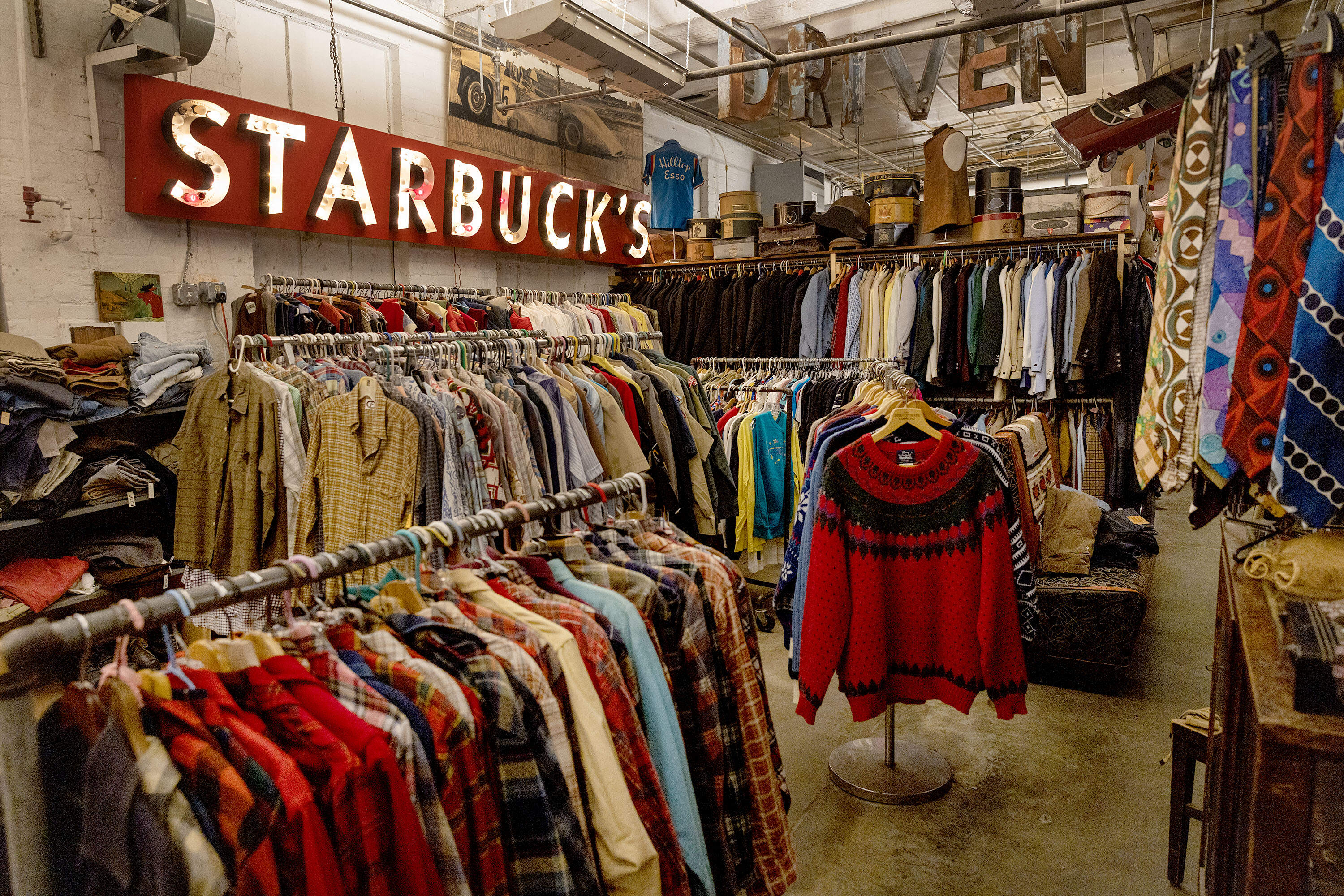
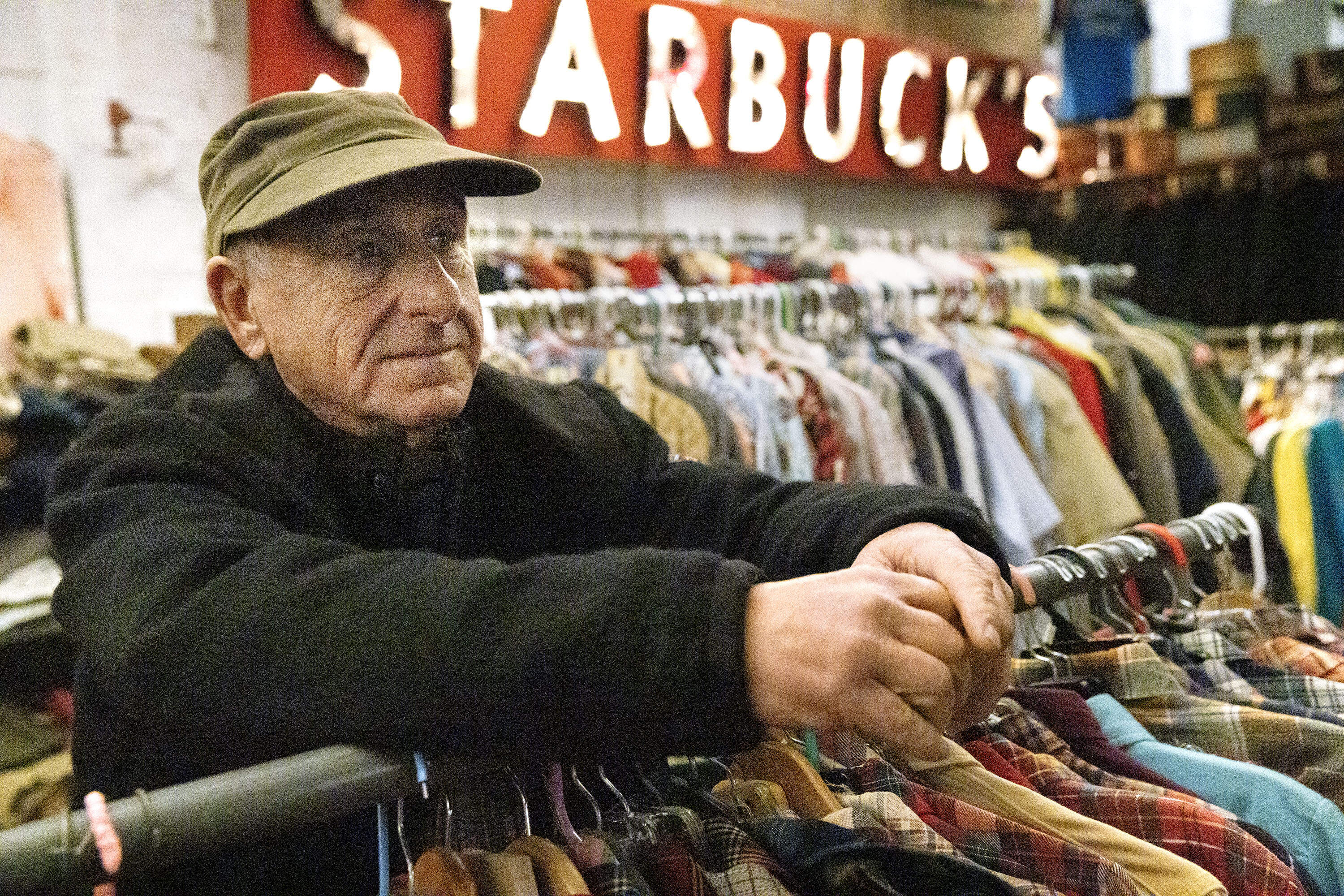
There is approximately 7,000 square feet of retail space inside Circa Vintage Wear, but you would never guess it. The thrift shop is tucked away in a low-slung building on a quiet residential street in New Bedford. There is no sign on the outside, and the door is often locked.
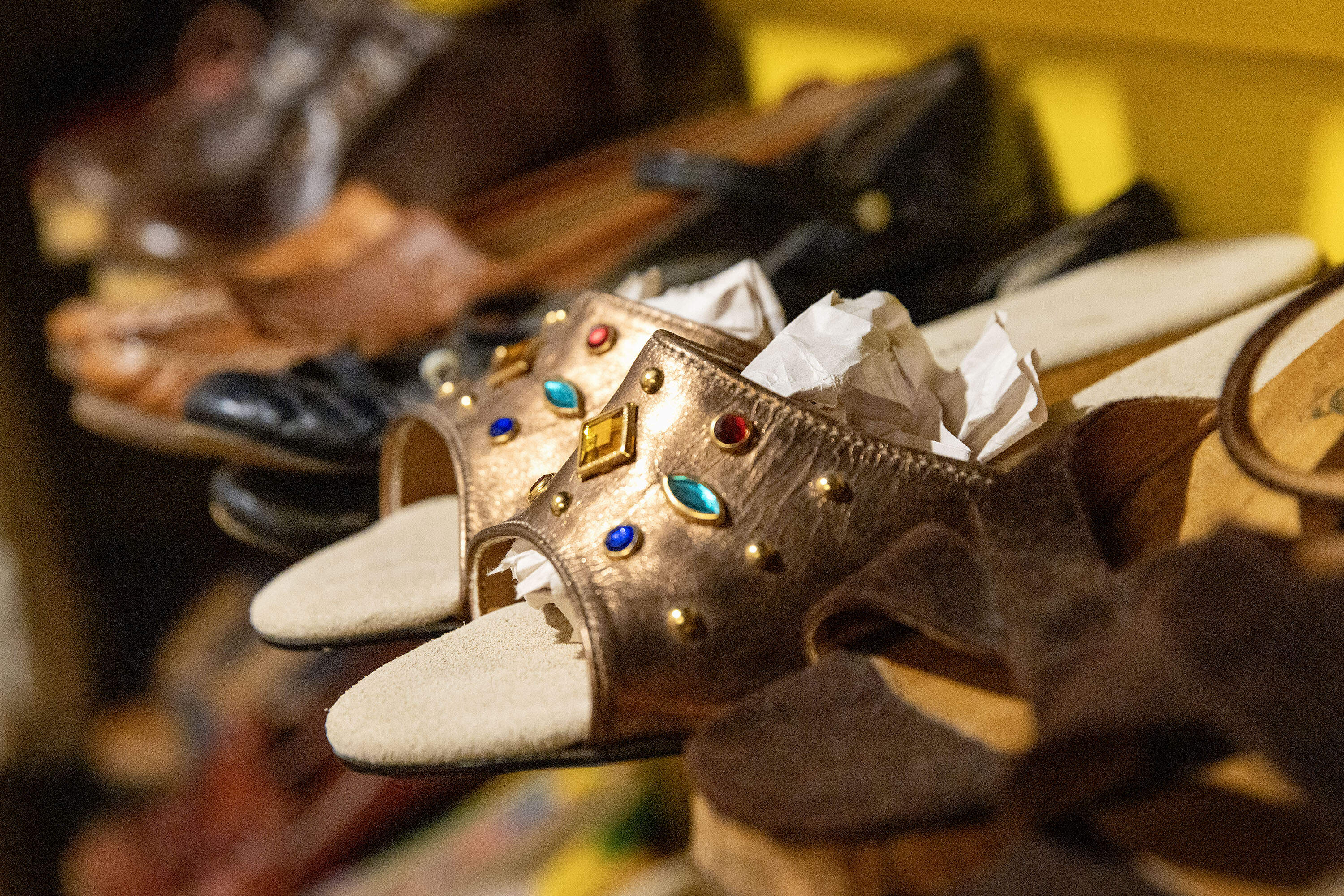
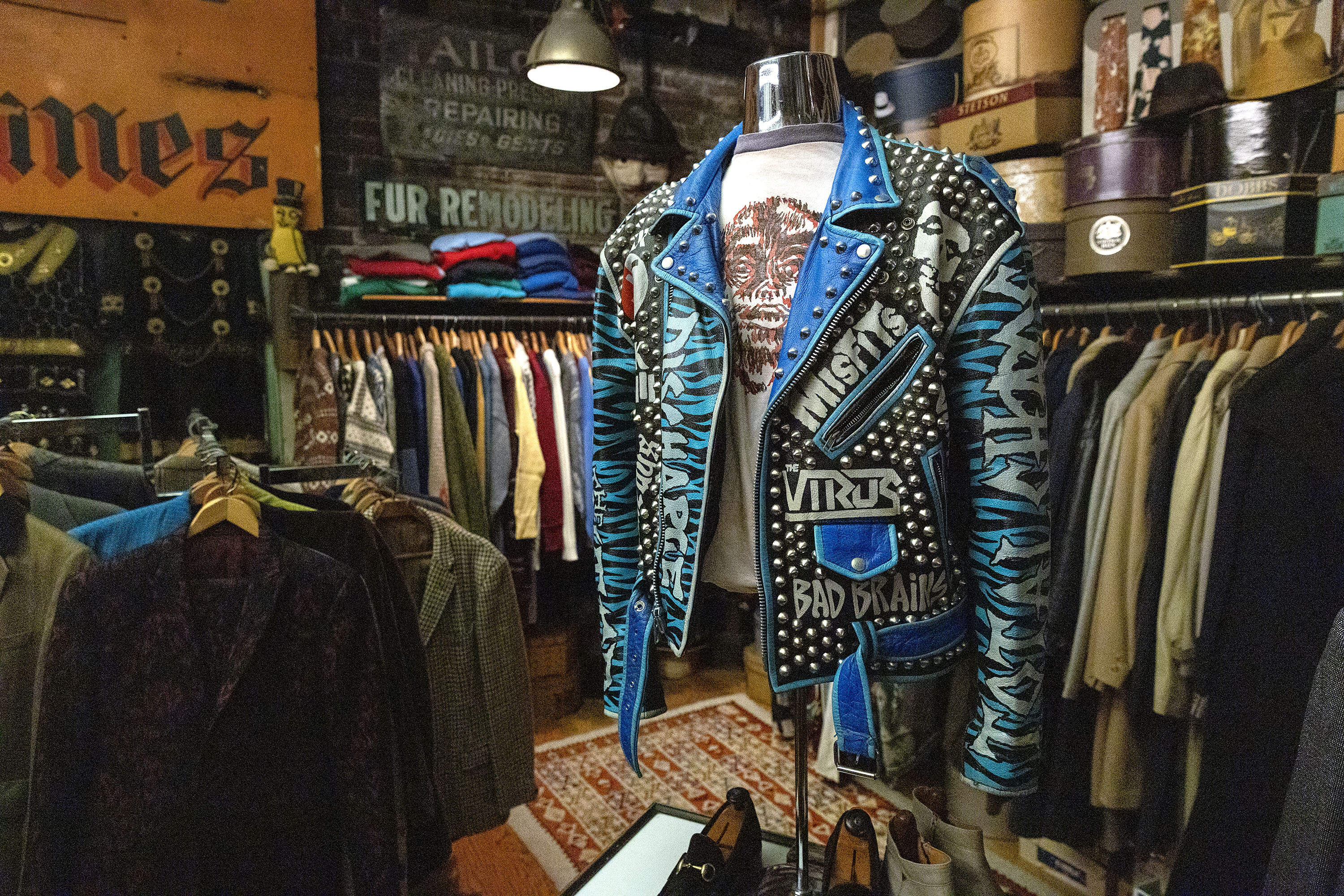
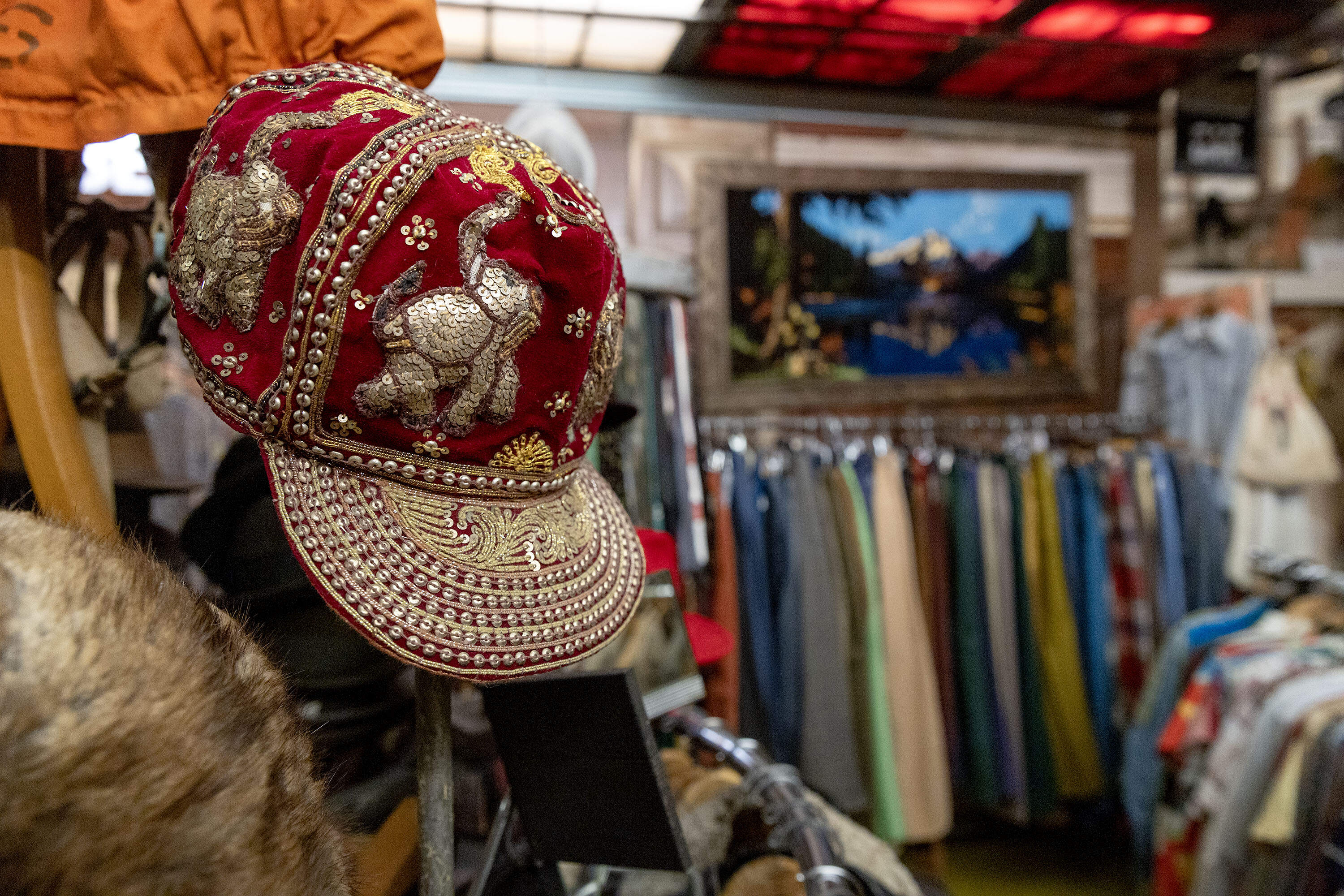
On a frigid December day, Circa’s owner, Chris Duval, ushered me inside. Every wall of the rambling warehouse was plastered with ephemera: a sign advertising cold beer, a taxidermied deer head, a pair of antique snowshoes. But mostly, there were clothes. Amid the visual cacophony, it was possible to pick out a blue studded leather jacket, a pair of bejeweled wedge shoes and a wool houndstooth blazer. There were racks of jackets and T-shirts, piles of pants and a dense display of neckties. Hat stands sprouted from the walls, sporting jaunty fedoras.
Behind the sales counter, a large display shoe – leather and intricately stitched, but big enough to shod a giant – beckoned. Duval remembered spotting it at a junk shop in the early 1980s. Decades later, the story still excited him.
“I go running over, trying to play it cool. I'm like, ‘Oh, what are you getting for the shoe?’ The guy goes, ‘Ah, gimme three bucks,’” Duval said, pitching his voice into a growl. “I couldn't pull the money out of my pocket fast enough.”
Duval, 67, founded Circa Vintage with his first wife in 1986, well before thrifting and vintage fashion were all the rage. The shop has ridden the tides of public disdain and interest for four decades. Now, Circa is a destination for costume designers and international dealers. Duval's clothes have appeared in television shows and feature films. The shop was recently included on a New York Times roundup of the “50 Best Clothing Stores in America” – the only business from Massachusetts to make the list.
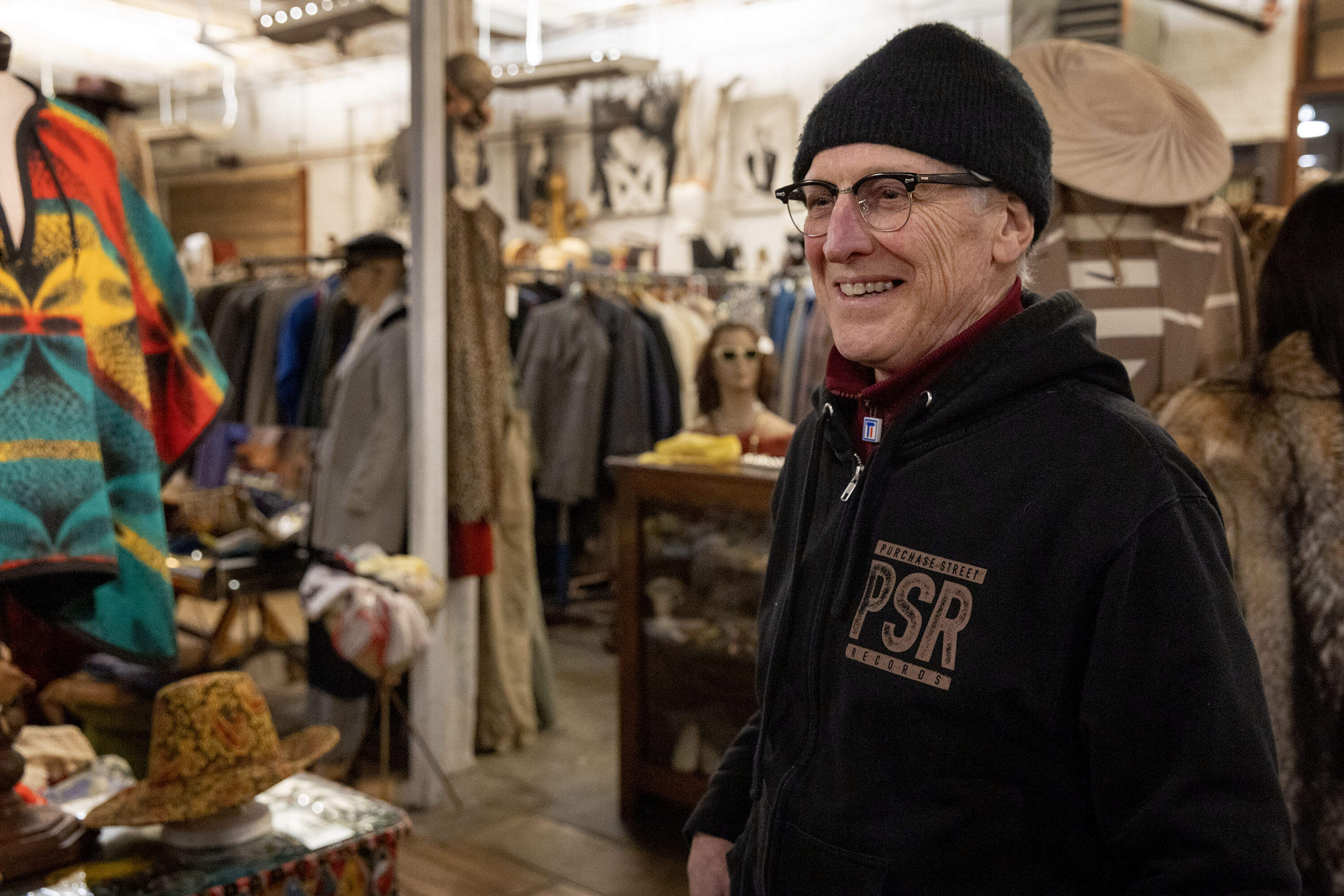
Duval’s passion for vintage began one summer day in 1974, when he was walking down the street in Provincetown. He wandered into a thrift shop called Uptown Strutters Ball, an early enterprise of the respected Boston clothier Bobby Garnett. Duval had always been a bit of a fashion maverick, the kind of guy who hated the mall and would cut the alligator logo off of his Lacoste polo shirts. But what he found that day opened his eyes to a new world.
“Back in the day, the thrift stores, you could go in and find a crazy brocade ‘60s dinner jacket for like five bucks, and a cashmere coat for like $8,” Duval recalled. “Amazing stuff. And it was just discarded.”
The original Circa was a small storefront in Fairhaven, Massachusetts. It wasn’t a hit right away. Vintage, Duval said, was regarded as “pretty fringy” in those days. The shop survived by renting out Halloween costumes, and Duval started supplying clothes to film and TV productions. His clothes have appeared in the HBO show “Julia” and the Will Ferrell comedy “Talladega Nights.” After moving locations several times, Duval bought a restored factory building in New Bedford. He originally planned to do most of his business on eBay and use the warehouse for storage and as an appointment-only showroom. (Hence the lack of signage.) But a friend convinced him to open the store to the public on weekends, and he now operates a popular retail business.
Duval led me through a short passageway into an even larger room, with even more clothes. A lacy Victorian dress with a bustle stood primly by some couches. High on the wall hung a paper Campbell Soup dress from the 1960s, identical to ones held in collections at The Met and the MoMA.
“Hey, Ritchie,” Duval called. A distant “Yeah!” emanated from somewhere beyond the racks of clothes.
Duval’s friend Richard Viens emerged, wearing a huge fur parka from the 1960s.
“Check this baby out,” he marveled.
Viens, 69, reckoned he came into the shop about once a month. He said Duval’s approach to vintage reminded him of the way his own mother, a tailor, handled clothes.
“He would use his fingers to feel the material. He could pick up the quality of the wool, what type of wool,” Viens said. “He educated himself. He knows clothing.”
Admiration for Duval’s expertise has earned him a loyal following. He hosts events at the shop, cultivating an eccentric community of thrifters. Young vintage enthusiasts flock to his store, and he takes them under his wing.
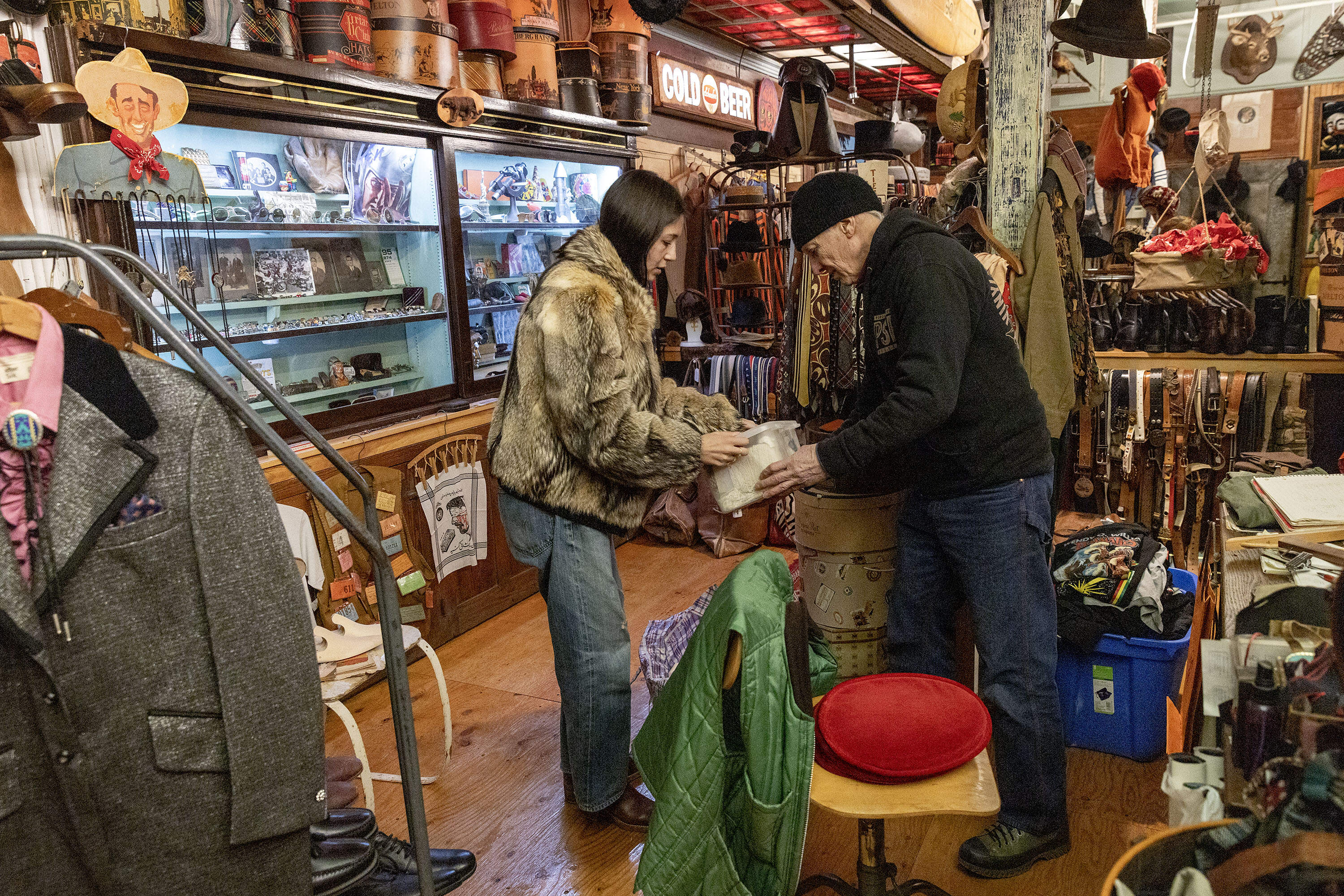
“ I just come in here all the time now because Chris is great,” said 23-year-old Orly Gonsalves, a vintage dealer who considers Duval a mentor. “ He will give me good tips or bring me along to a house call if he knows that it's stuff that I'll really want, too.”
“She’s got a really good work ethic,” Duval said proudly.
But an obsession with vintage can lead to some unsettling discoveries. At the shop, Duval pointed out a denim biker jacket with the arms cut off and a roadrunner embroidered on the back.
“The unfortunate thing about these things is they have a lot of homemade patches on them,” Duval said.
He pulled back a studded belt, which had been cinched tightly around the base of the jacket, to reveal a patch with a swastika. The jacket was part of a trove of similar items from a New Bedford motorcycle gang. Duval had sold off the rest but hung onto this one, careful not to display the offensive patch. He acknowledged that the piece was controversial. It wasn’t unusual, he said, to find such things when rummaging through the detritus of America’s past.
“I had friends that used to collect World War II stuff and a lot of German stuff would turn up and it's creepy, no doubt about it,” Duval said. “But it exists, and I guess it's how we handle it now, and how we treat it.”
Duval gravitates toward all things local. He pulled out a set of overalls by the original Madewell, which was founded in New Bedford in the ‘30s. Now it’s a heritage trademark owned by J. Crew, but the first incarnation of the company supplied workwear to local fishermen and factory workers.
“There's so much history in New Bedford,” Duval said. “There's so much stuff that was manufactured here and there's so many great stores that were here.”
In December, Duval was bracing himself for an onslaught of new customers driven by the publication of the New York Times article. His shop was already packed on the weekends, even though he didn’t advertise and hardly answered the phone. He regarded his success with ambivalence.
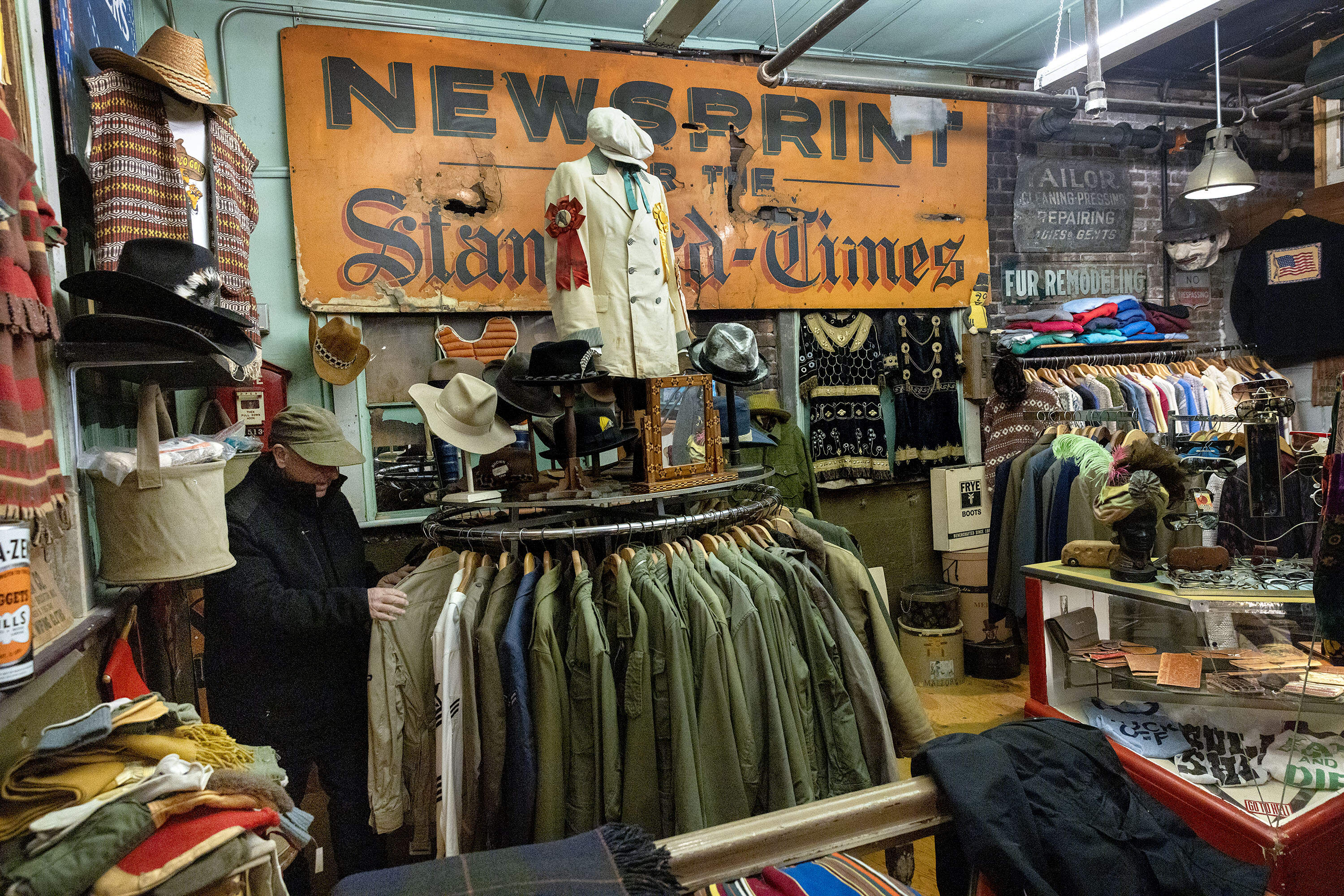
“People say, ‘Is this second hand?’ I'm like, ‘Try fifth hand,’” Duval joked. “I don't want to sound snobby about it, but you're into it, or you're not. And vintage got so popular, everybody's suddenly into it.”
The prospect of new customers did not excite him so much as the possibility of new leads.
“Honestly,” he said, “ all I can think of is maybe I'll get some amazing calls and get to buy some crazy stuff.”
In a text update this month, Duval confirmed that the response to the article had been “wild.” Sales increased, and he had met so many positive and enthusiastic people. Best of all, he had gotten his wish: people called him up with offers to rummage through their collections of old clothes, and he has bought some crazy stuff.