Support WBUR
Tips for creating a creative life
Editor's note: This story is an excerpt from WBUR's weekly arts and culture newsletter, The ARTery. If you like what you read and want it in your inbox, sign up here.
It’s official. Art can help you live longer. Sort of.
A new study found that both art creators and art consumers “were about a year younger, biologically” than those who rarely engaged with the arts. Researchers from the University College London say this is about the same “reduction in biological aging” that they’ve seen for physical activity. Biological age essentially measures how "old" your cells act, which is impacted by things like lifestyle and stress.
In NPR’s reporting, a Northwestern University cardiologist pointed out the connection between stress and inflammation. Using art to temper stress levels could be one of the reasons the study found a link between creative expression and slower biological aging.
Are we suggesting you swap your morning run for a spur-of-the-moment paint session in your backyard? Not exactly. But we’re also not surprised to see scientific evidence suggesting art can have a physical impact on the body. I’ve reported on numerous organizations, like the daytime shelter Women’s Lunch Place that uses art for its cognitive benefits.
A 2023 study from the National Alliance on Mental Health and the Adobe Foundation suggests a positive correlation between creative expression and mental health.
Then, there’s the emerging field of study called neuroaesthetics. Some research shows that when an individual is exposed to something they consider beautiful — whether it's visual art, music or philosophy — a certain area of the brain shows an increase in activity. Neuroaesthetics has its critics, predominantly because it’s hard to quantify what individuals find beautiful.
As an arts reporter and an artist, these scientific endeavors exploring the mental and physical impacts of the arts are reaffirming. It’s a reminder that art is not just fluff. For many of us, art is a necessity that has benefits beyond just creative expression.
But, if you’re like me and have a million other responsibilities, sometimes engaging in art or creative expression can fall to the wayside. We start to treat it as a luxury instead of incorporating it into our lives as something concrete and consistent. I think to myself, “Oh, I’ll start that project once I get some free time on the weekend.” And guess what? That “free time” never comes.
Here are some things I’m implementing to rework creativity back into my life.
Block time on your calendar
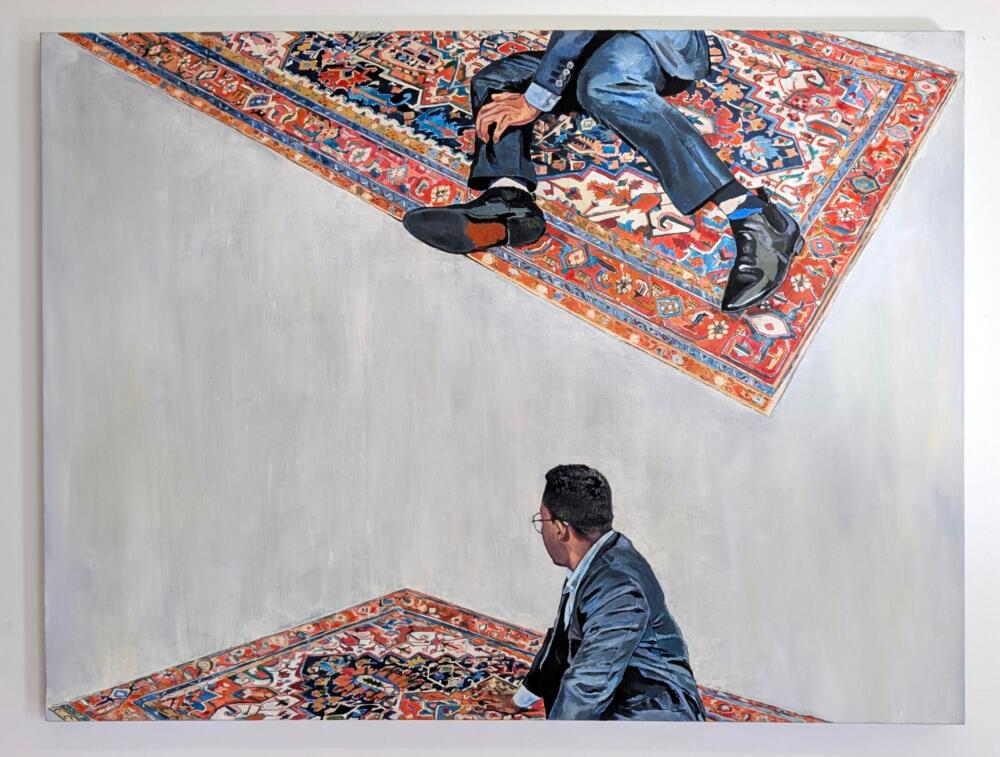
This was actually a suggestion from my therapist and I’ve been doing this for the past few months. Each week, I find a day where I block off an hour or two to just use my hands and make things. I can work on old projects or start new ones. Or, I can visit a nearby museum or gallery to take in exhibitions, like “Attaché” at the Boston Center for the Arts. This group show inspired me in so many different ways, especially seeing the works of so many artists tied together through themes like migration and memory.
Anything I feel like doing related to art is done during this period. When this time is blocked on my calendar, I treat it as more of an appointment or class I have to attend rather than something that’s optional. And speaking of class…
Sign up for a class or workshop
Whether it's online or in-person, having an actual class or workshop structure can change how you view engaging with art. This is especially true if creative expression at home is hard because of distractions, lack of materials or other factors.
Not interested in making art? There are plenty of groups that meet to do things like museum tours or go to a play. Attending meetups, classes and workshops can help provide direction and stability, particularly if you’re trying your hand at a new medium.
If you’re in the Boston area, places like Artisans Asylum, JP Clay and the Eliot School of Fine & Applied Arts have plenty of different classes and workshops for all ages.
Rebuild curiosity
One of the things I noticed as I got further into adulthood was that I stopped being curious about things. When I was a kid, a simple glance out of the window would generate questions like why are dandelions yellow? Can trees talk to each other? I find myself doing this less, mainly because there doesn’t seem to be a direct benefit or outcome to being curious, and I have a million other things to worry about.
What I’m learning is that curiosity comes back when you stop demanding usefulness from every moment. Part of what makes engaging with art so valuable is that there’s no guarantee of a result or an end product. When you listen to music, there’s no nicely wrapped gift as a reward. When you knit, you may spend hours on a piece, just to realize you have to unravel the whole thing.
Get curious about making mistakes. Get curious about learning something new. Let go of the need to make every moment productive and instead focus on making every moment an opportunity to wonder.
Capture your ideas and inspirations
Executive function isn’t my strong suit as someone with ADHD. However, one thing is true for all of us — our short-term memory is only able to juggle a couple of things at a time. This is called “working memory,” and it can be impaired by things like stress, depression or exhaustion (you know, all the things that come with being an adult?).
Ideas are fleeting. So is inspiration. But over time, those partially-finished fragments become raw material. Creativity rarely ever emerges fully-formed and is often built through observations and curiosities collected over time. You can help your brain and your creative output by designating a place to write down half-formed ideas or to capture things that pique your interest.
What works for me is that I have one notebook dedicated to writing down ideas and another where I messily capture visual stimuli that speak to me. Both have been immensely helpful when trying to think of new projects or when I need ideas for changing old art pieces.
Some of these tips may seem simple enough, but putting them into practice has made a big impact on my own creative process. And I’m always interested in creatively engaging with art, especially if it means I can (sometimes) swap my gym sessions with crafting.