Support WBUR
How the fall of the coal industry changed politics in eastern Kentucky
This story is part of our series Asking Appalachia: Coal, Trump and the politics of eastern Kentucky.
Ahead of the 2024 election, Republicans enjoy overwhelming support in rural, white America. But it wasn’t always that way.
Eastern Kentucky was once a solid Democratic stronghold. But now, it’s 80% MAGA red. So what happened in a single generation? Much of the story is about coal.
Coal is the heartbeat here, something many Kentucky musicians like Merle Travis sing about. In this region, just about everyone’s family story includes miners. Listen closely to people talking about their fathers and grandfathers who worked in the mines and you hear a pride, like that of old steel mill workers in Pittsburgh and autoworkers in Detroit.
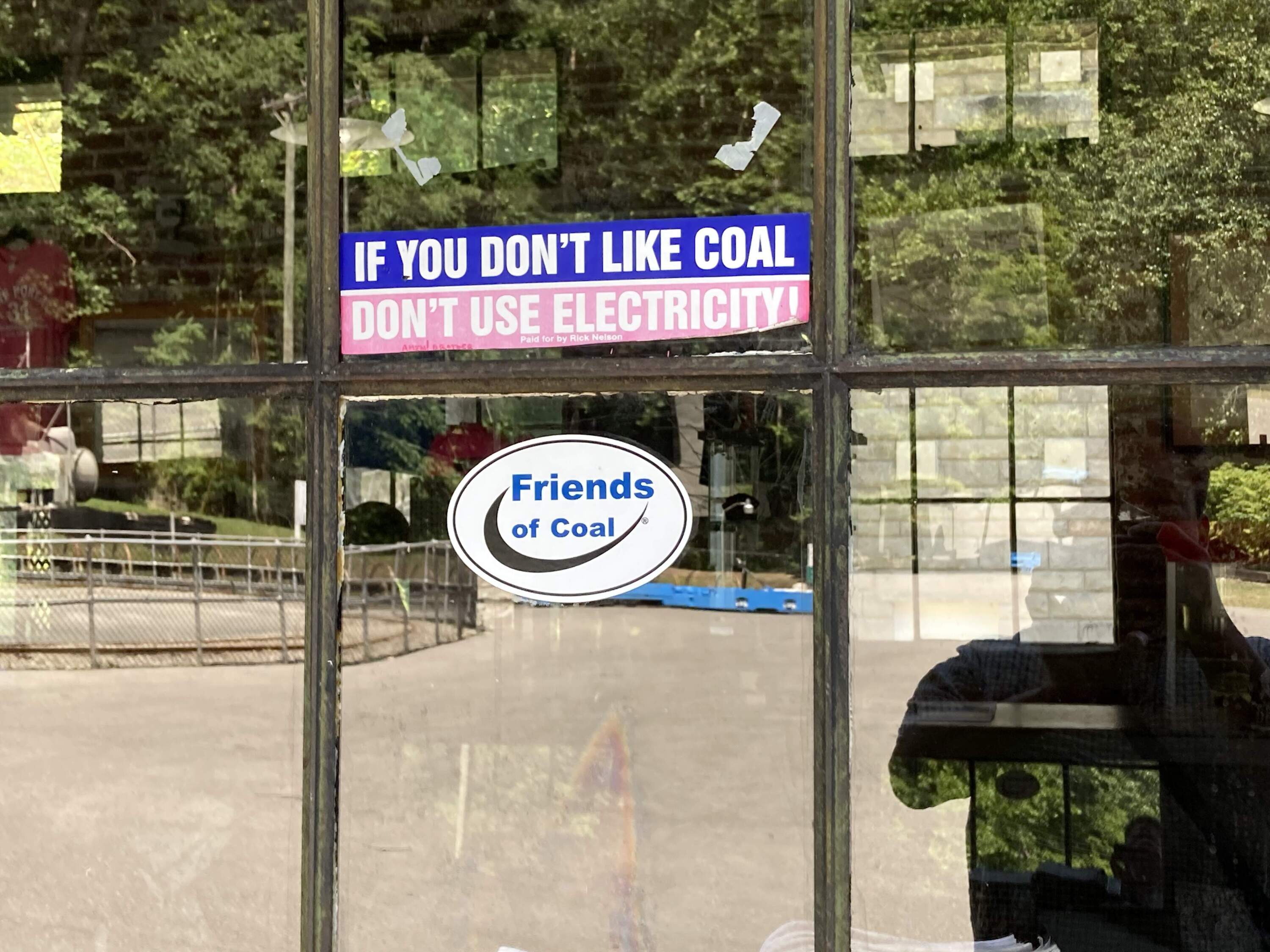
Outside an underground mine tour in Harlan County, a big sign in the parking lot declares: “If you don’t like coal, don’t use electricity.”
For $8, you can buy a seat on an orange rail car that runs underground, through an entrance called Portal 31. Inside, a polished video on a supersized screen gives off a spiritual vibe.
A booming narrator says Kentucky coal mining began when the country began — in the late 1700s. The search for coal would lead here, to this place in the Cumberland Valley.
Kentucky coal burned to make electricity across the country, to heat steel smelters that helped America win world wars. But then came the Depression in the 1930s and machines that took over the work.
The next stop on the tour is 1960, three years before Portal 31 was shut down forever thanks to one machine that does the work that an entire crew did before.
Sociologist and author Arlie Hochschild of the University of California, Berkeley spent seven years here — on and off — researching a book on social and political change in Appalachian Kentucky, “Stolen Pride: Loss, Shame, and the Rise of the Right.”
Hochschild says in coal’s heyday, miners joined politically powerful unions allied with the Democratic Party. They wore special uniforms underground.
“The uniforms involved wearing a red kerchief,” Hochschild says. “And they were called rednecks.”
At the heart of the coal story are the risks miners take, the bravery and sacrifice captured by the 1937 song “Come All You Coal Miners” by Sarah Ogan Gunning, the wife of a miner dying of lung disease: “Coal mining is the most dangerous work in our land today, with plenty of dirty, slaving labor and very little pay.”
These risks were largely undertaken by men, such as Mack Compton. At 72, he works underground at an open mine about an hour away. His father and grandfather were miners, as were his uncles and father-in-law.
“It's a dangerous occupation. And you get so nasty and dirty,” Compton says. “I just felt like it shouldn't be a place for a woman. I hope that don't make me sound chauvinist, but I’ve worked where people’s been killed. I had a good friend of mine and the roof fell and killed him and his partner.”
Now a boss, Compton began his career shoveling coal by hand. Then he became an electrician, keeping the underground machines going.
Having lost friends in the mines, he warns his own workers not to cut safety corners.
“I always tried to tell my underground people, if they ever get hurt taking a shortcut, I said, ‘I will make sure that I personally try to help your wife find her a smart new husband.’ You know, give them something to think about,” Compton says. “Because you take a shortcut, a lot of times a shortcut gets you killed.”
Compton is a coal believer in many ways. Like many here, he’s a lifelong churchgoer who’s thankful for coal — a blessing that he believes the elites want to shut down. But he says he cares about the environment as much as anyone else.
“God provided this for us. I want to be a good steward of that,” Compton says, referring to the environment. “But when you say the green people — I'll call them that because most people refer to them as that. The green people, they would love to shut down any kind of fossil fuel production.”
That production saved the American economy in the 1970s when the country faced an oil embargo and a huge need for energy. The mines of Appalachian Kentucky thrived, creating overnight millionaires not far from Compton’s mine.
Mine owners got rich. Miners got raises. Suppliers got contracts.
Andrew Scott is the Republican mayor of the aptly named town of Coal Run.
“That was not uncommon at all to see someone coming to public school and their father landing his helicopter on the football field and the student getting out of the helicopter, walking into class,” Scott says. “One time the football field was a little too wet. And they had the three ore four helicopters hovering over the field to make it dry, because our team wasn’t playing very well in the mud.”
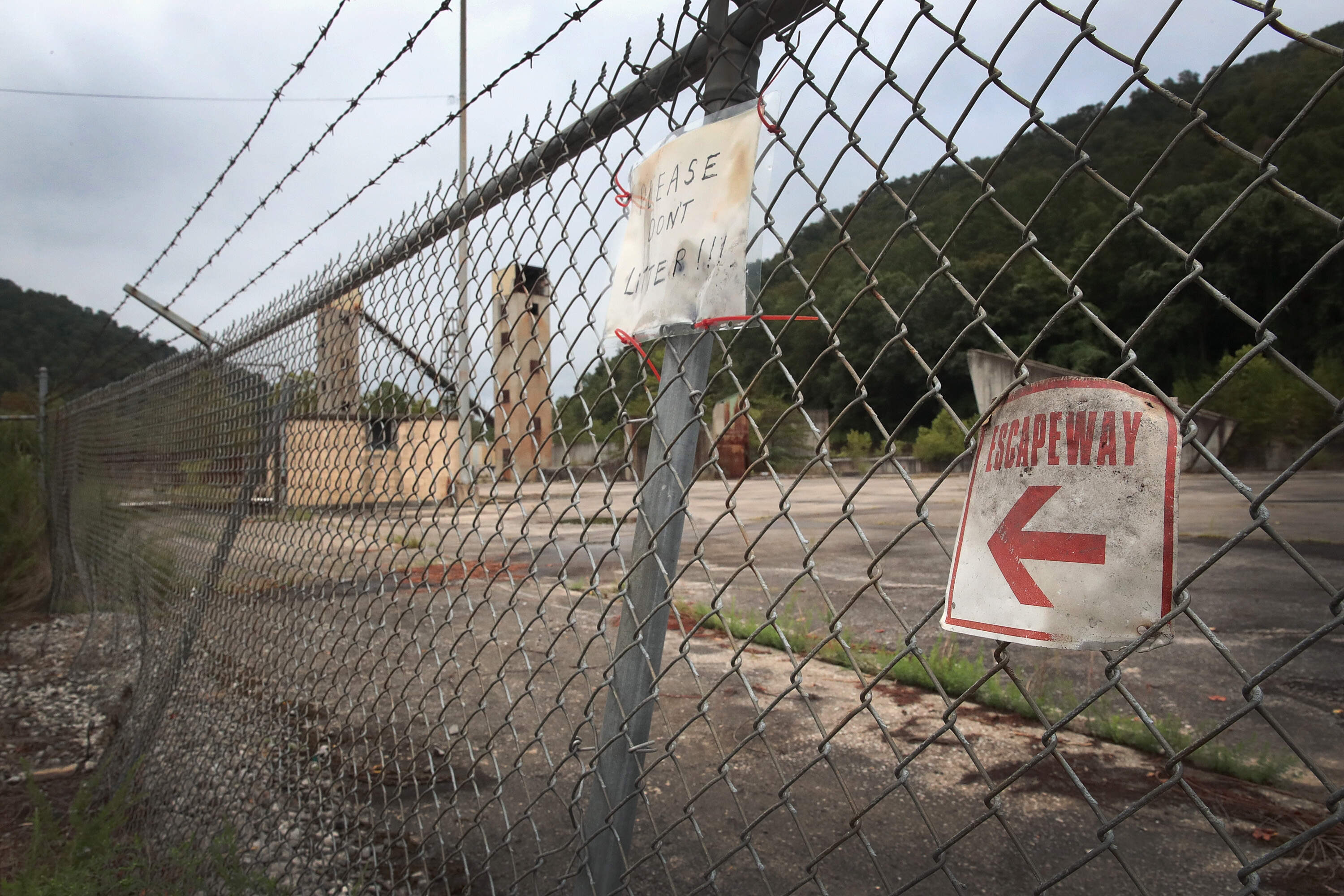
Appalachian coal jobs peaked in the ‘80s and ‘90s. They’ve been plummeting ever since.
As the story goes here, a war on coal was declared by former President Barack Obama.
“If somebody wants to build a coal-powered plant, they can,” then-candidate Obama said during his 2008 campaign. “It’s just that it’ll bankrupt them, because they’ll be charged a huge sum because of all that greenhouse gas that’s being emitted.”
To be clear, Obama’s plan to punish coal-fired power plants was never realized. And eastern Kentucky lost coal jobs for many reasons: Machines took over lots of the work; coal plants got hurt by clean air rules passed in the 90s; and Appalachian coal struggled to compete against cheap natural gas in Pennsylvania and cheap coal in Wyoming.
It’s a complicated history. But to Scott, the narrative here is clear.
“What they're hearing is coal is dirty,” Scott says. “‘Well, I work in coal all day,’ would say one coal miner. Does that mean he's dirty too? Does that mean his family's dirty? Does that mean his money's dirty? Does that mean what's putting his children through college is dirty?”
Politics, he says, is what people perceive: being abandoned by Obama, then embraced by former President Donald Trump.
In 2016, candidate Trump came to Appalachia, pledging to bring mining jobs back: “For those miners, get ready,” Trump said, “because you’re going to be working your a**** off, alright?”
To be clear, most coal jobs have not come back. But Trump delivered hope in a place with no backups to coal jobs.
Gary Bentley was laid off from a local mine. Both of his grandfathers and one of his great-grandfathers were coal miners.
“I chased the industry myself in 2012. I moved to western Kentucky, did job interviews in New Mexico because I thought mining was the only job I would ever do for the rest of my life,” Bentley says. “I actually know a few people and they went from, driving 20 minutes to a local coal mine, to driving three, four hours one way just to have the bare minimum coal job.”
Like many, Bentley eventually left the industry for factory work. Then he opened a heating and cooling company in another part of the state. He’s part of the Appalachian brain drain.
Bentley is a Democrat. But he agrees with Republican Mayor Scott that the coal crisis in eastern Kentucky became an opportunity for the GOP.
And in his mind, local Democrats lost the plot, focusing on abortion, LGBTQ rights and gender identity.
“Conservative Christian people, they definitely don't want to publicly come out and support it or vote for it,” Bentley says. “Now all of those things are important and should be addressed. So I would not want the Democratic Party to shy away from it. But I do think they're going to have to find other issues and be like, ‘Is it more important to have a gender-neutral bathroom, or is it more important for you to have a job?’”
Many people here echo what Ronald Reagan famously said in the ‘60s, “I didn’t leave the Democratic Party. The Democratic Party left me.”
The question is, why the fervor for Donald Trump, a New York City developer with zero blue-collar roots?
Mayor Scott sees Trump as a good kind of bully.
“You could very much argue that from the perspective of the coal miners that Barack Obama was the bully, right?” Scott says. “Then you have Trump coming around the corner and be like, ‘Hey, what are you doing to these people? I want to protect them.’ ”
There’s a sense of being bullied and shamed across rural America, sociologist Hochschild argues. Trump taps into a feeling among conservatives that their American dream has stalled — that others are cutting in front of them to achieve the dream, she says.
“There was a cultural populism that really has lit a fire. And one man I talked to said, ‘Oh, Donald Trump, he's like lightning in a jar,’ ” Hochschild says. “What, what happened? Good people. downtimes, shame, and I believe in a certain way that Donald Trump has managed to speak to that feeling.”
People here echo a feeling of being ignored, forgotten. To Hoschchild, Trump is hearing them — and they’re responding with their loyalty and votes.
Find part two here.
Scott Tong produced and edited this interview for broadcast with Catherine Welch and Michael Scotto. Allison Hagan adapted it for the web.
This segment aired on September 9, 2024.