Support WBUR
Pride, shame and understanding why the white working-class vote supports Trump
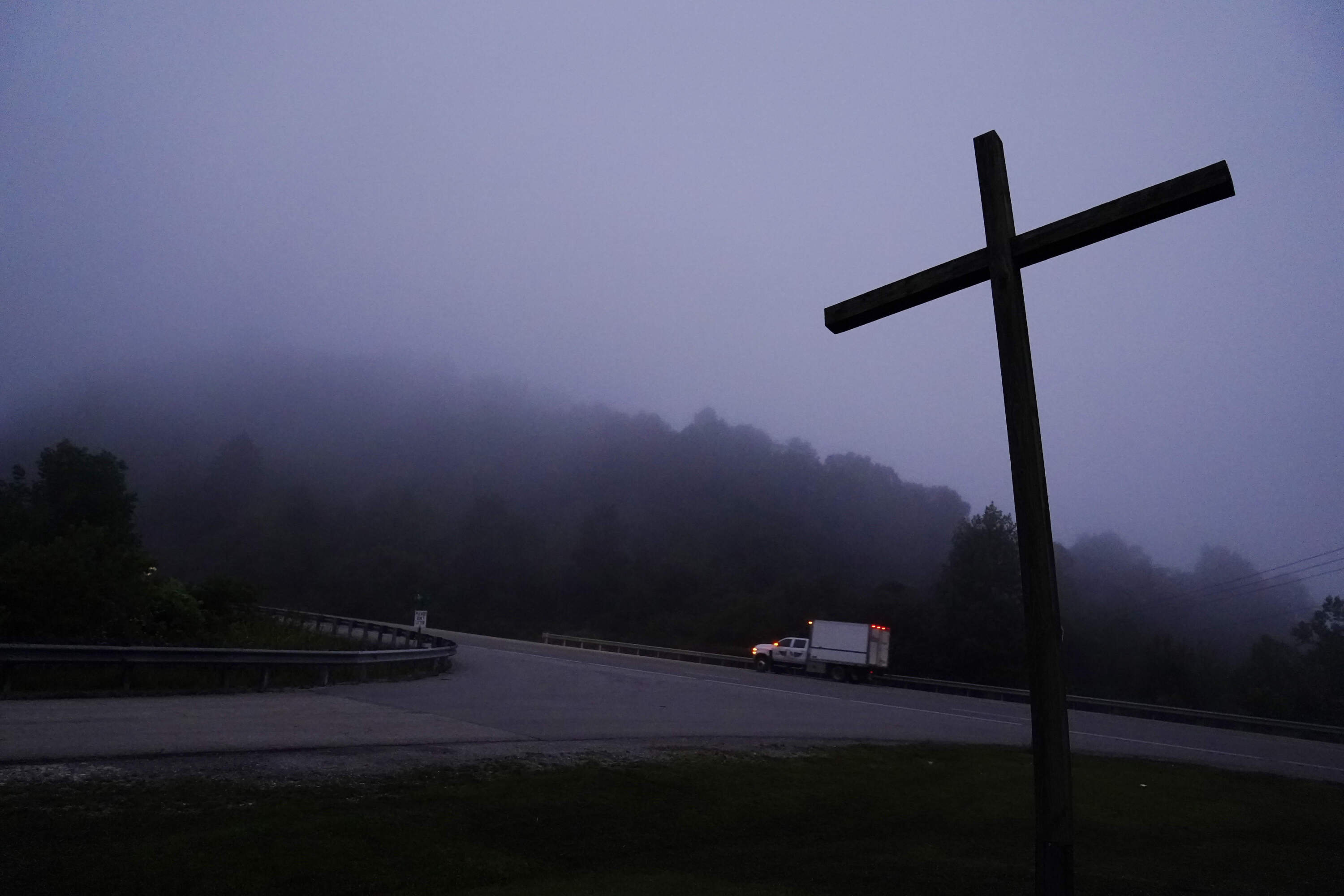
This story is part of our series Asking Appalachia: Coal, Trump and the politics of eastern Kentucky. Find part one here.
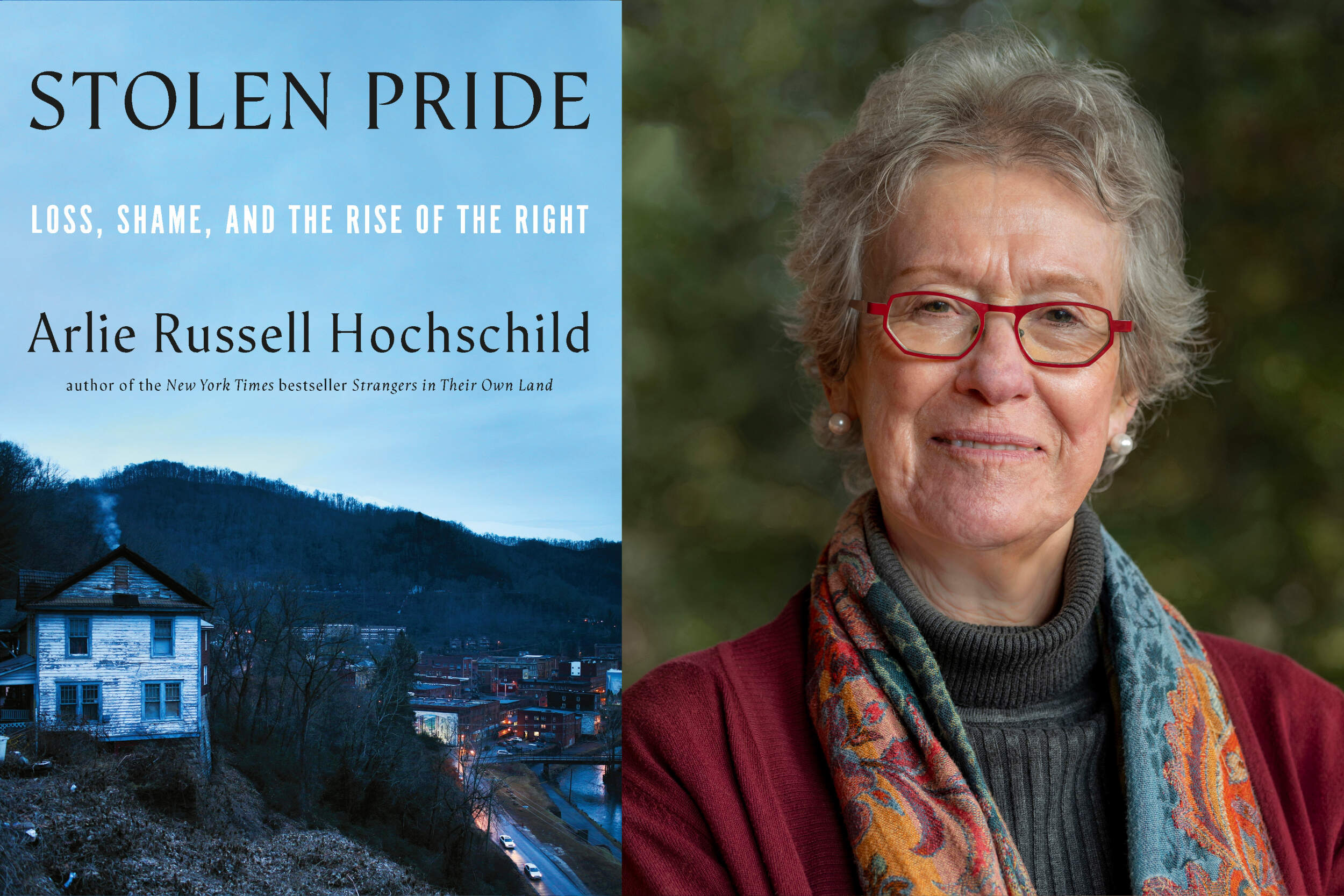
In her new book, author and sociologist Arlie Hochschild goes to the heart of Appalachia in Eastern Kentucky to share stories of people facing poverty, the loss of jobs and the rise of the opioid epidemic.
"Stolen Pride: Loss, Shame and the Rise of the Right" explores what led to their allegiance to former President Donald Trump. Hochschild says she wrote the book to help Democrats understand how Republicans see things.
“Not because you agree with them — you never will — but because it's really important. It's nearly half of the country. It's grown ever more consequential with the upcoming elections,” she says. “We haven't been listening to what's been happening to the white working class. It's been sinking both absolutely and relatively, and it's turned away from the Democratic Party and to the Republican Party. We need to know how to talk to these people.”
6 questions with Arlie Hochschild
In your earlier book “Strangers in Their Own Land,” you constructed what you call a “deep story” for how these conservatives see the world. What is that deep story?
“Deep story is what the world feels like to you. It's not a matter of what you believe in, your moral precepts. It's not cognitive. It's just how it feels and it's told by a story.
“That a man is standing in a long line leading up to the American dream, which is on the other side of a mountain. And he feels his feet are tired. He, one guy said, ‘I haven't had a raise in a decade.’ And he's been patient, feels about himself he's a good person. But he's kind of stalled. He's stalled. And he's looking at the guy ahead of him, not the people behind.
“Suddenly, there are line cutters. Well, who are they? What right do they have? And who are the line cutters in this right wing team story? They are women. They are Blacks. They are immigrants. They are refugees They are overpaid, as they see it, public officials. Even the lame and oil-soaked Louisiana pelican, it kind of limps ahead. ‘Oh, these environmentalists.’”
You spent seven years off and on in eastern Kentucky, a very poor part of the country. And along the way, you run this deep story of people stuck in line, people are cutting in front of them, by a Republican mayor of this town Coal Run. What does he tell you about former President Donald Trump?
“He said, ‘Oh, yeah, sure. But you don't have it quite right in this line. All that's true. But there's a bully. In line ahead of the waiting man, and then there's a second bully, and he's our bully. He's the good bully. We know he's not a real Christian. You know, he may cheat on the side, but that's okay. He's our bully because he protects us from the bad bully.’”
You and I spoke to Mayor Andrew Scott. He says people feel wounded by this phrase “dirty coal.” What did he tell you?
“Well, and I heard it elsewhere, too, that somehow a blackened face is a mark of pride. It's like being a brave soldier, you know? It's having a decoration on you.
“You have done a dangerous job. And you may be suffering black lung, but you did it for your family. You worked hard. And you've gotten automated out or, you know, the campus closed. So not only a job is lost, but a whole source of pride and pride in how you are as a person, your whole identity. But it goes along with a whole string of losses, coal jobs out, new opportunities not coming in, opiate crisis coming in. There's a lot of hits that they've had to take.”
In your book, you profile recovering addict James Browning. He says he was sexually abused very young, and drugs allowed him to escape this constant shame.
“It's a hard story to hear. Yes, he's very honest about all the pain he came from. And we need politicians to speak to that. Donald Trump is speaking to the shame of that.”
For people in eastern Kentucky, do they think of Donald Trump speaking to their lost pride and their shame?
“Well, this is how I think all of us have to learn to become bilingual about understanding a good half of the whole half of the country that doesn't agree with us.
“I think Donald Trump runs us through an anti-shaming ritual routinely. And it's got four moments. Moment one, he says something outrageous, something transgressive. You know, ‘All migrants poison the blood of America.’ Okay. Moment two, the punditry shames Donald Trump. They say, ‘You can't say that! We're an immigrant society. Shame on you.’
“And moment three, Donald Trump becomes the victim of the shame. ‘Look what they're talking about. They're making me feel bad. Have you been made to feel bad yet? You and me, we're the same. I'll protect you.’ He's shamed. Moment four is the Donald Trump roar back, first the Democratic Party, now it's the whole government. It's the deep state.
“And the left listens to moment one and two. And the right listens to moment three and four. And if we're bilingual, we can speak the language of emotion. And we can kind of see, tune in differently. Democrats will say, ‘Oh, he's rambling. He's saying nothing. He's irrational. How could these people be duped?’
“And what we need to do is say, when he's rambling, he's going through one, two, three, and four. And they're hearing it. He’s their good bully So there's another language we aren't tuned into, and the point of the book is to get that across.”
You began these two books, for which you spent more than a decade, right, in very conservative parts of the country, by writing, “I don't understand this worldview very well. I don't understand these parts of the country very well. And I myself, Arlie Hochschild, sociologist and author, want to understand it better.” As you think about the appeal of Donald Trump to so many people, how do you explain it to yourself?
“I think people have given up on the federal government. They've turned to a charismatic leader. A charismatic leader is talking to his followers in a language the rest of us are tuned out to, and they are that afraid and desperate and shamed that they want to hear that punchback. They want a bully, what they consider a good bully.
“And we've got to tune into that and speak to them in a way they can hear about the real solutions, some of which [President] Biden has offered, that they're tuning out on. It's a long term thing, but we've got to get started right now. The consequences are too serious not to.”
Shirley Jahad produced and edited this interview for broadcast with Catherine Welch. Allison Hagan adapted it for the web.
This segment aired on September 13, 2024.