Support WBUR
Once a Baker-style Republican, Brian Shortsleeve tacks right in his run for governor
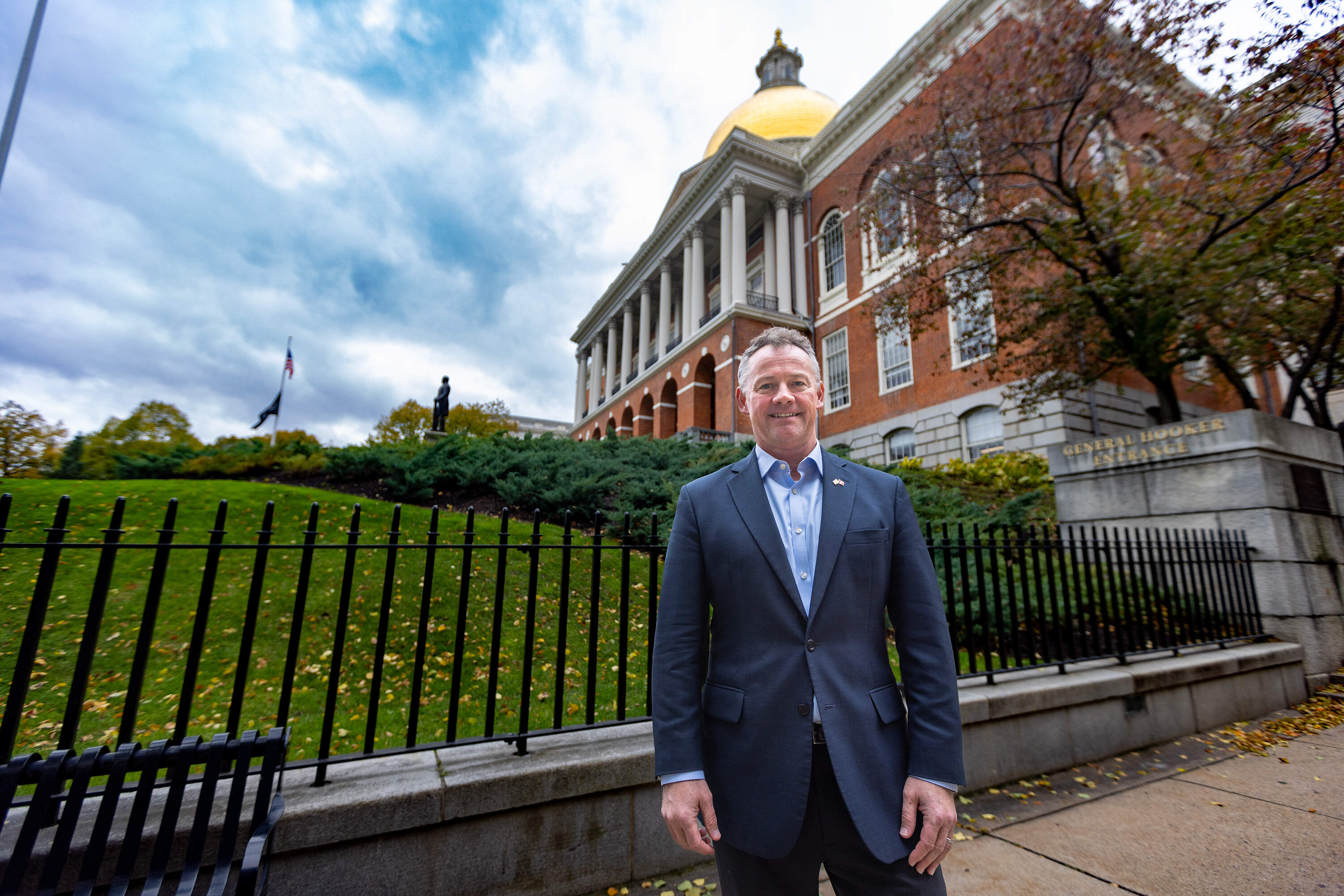
Brian Shortsleeve left venture capital more than a decade ago to overhaul the MBTA’s troubled finances at the request of then-Gov. Charlie Baker, a moderate Republican of the classic Massachusetts style who often split from President Trump.
But as he runs for governor himself now, Shortsleeve is waging an aggressive campaign that’s tacked to the right of Baker’s Republican Party.
Shortsleeve has embraced a familiar GOP stance on state finances, and is keeping up a drumbeat of attacks on Gov. Maura Healey. He’s taking a hard line on immigration enforcement, blames Healey for people leaving the state and vows to roll back green energy efforts in order to lower utility bills.
In his bid for a spot on the ticket, Shortsleeve appears to be betting the political roadmap for a Republican in Massachusetts has changed since his old boss left office.
“In general, Brian Shortsleeve is a moderate kind of guy. He is somebody who comes out of the Romney faction of the party. That's a very liberal faction of the party,” said Wendy Wakeman, a local Republican political strategist.
But as he faces two rivals in this year’s Republican primary, Wakeman said, Shortsleeve needs “to be the most Republican of the Republican” candidates to advance to the general election this fall.
"It should be no surprise that he's coming out looking a little more Republican, a little more right, than the Brian Shortsleeve that has been in and out of politics for the last 30 years," Wakeman said.
In an interview with WBUR, Shortsleeve said he has always been a “real fiscal conservative,” and argued he is his “own man” when pressed on whether his politics line up with the moderate Baker or former Gov. Mitt Romney.
Shortsleeve's start in Massachusetts politics
Shortsleeve, 53, is a Marine veteran who attended Harvard College on a ROTC scholarship. He was deployed to Bosnia and the Persian Gulf and later earned an MBA at Harvard.
His venture capital and former state government colleagues know him as a numbers guy who’s wielded a sharp pencil in business and at the MBTA, which was running a big deficit when he took over and was disastrously behind in maintenance.
Ryan Kubacki, a friend of Shortsleeve’s from Harvard who keeps in regular touch with him, said Shortsleeve has been “very consistent” across his life, both in the world views he holds and in the way he approaches tough tasks.
“There’s nothing I’m seeing him do now that I haven’t seen him do since he was an 18-year-old kid,” Kubacki said in an interview. “He’s always been attracted to service, and he hasn’t started to adapt his views just to try to get favor. I think he is who he is, and he’s proud of that.”
Well before the Trump era, Shortsleeve traced his political roots to Romney, another moderate Republican.
For Romney’s 2002 gubernatorial campaign, Shortsleeve served as a political director. And he fundraised for Romney’s 2008 and 2012 unsuccessful presidential runs. Shortsleeve also raised cash for Baker, in his 2010 and 2014 gubernatorial campaigns.
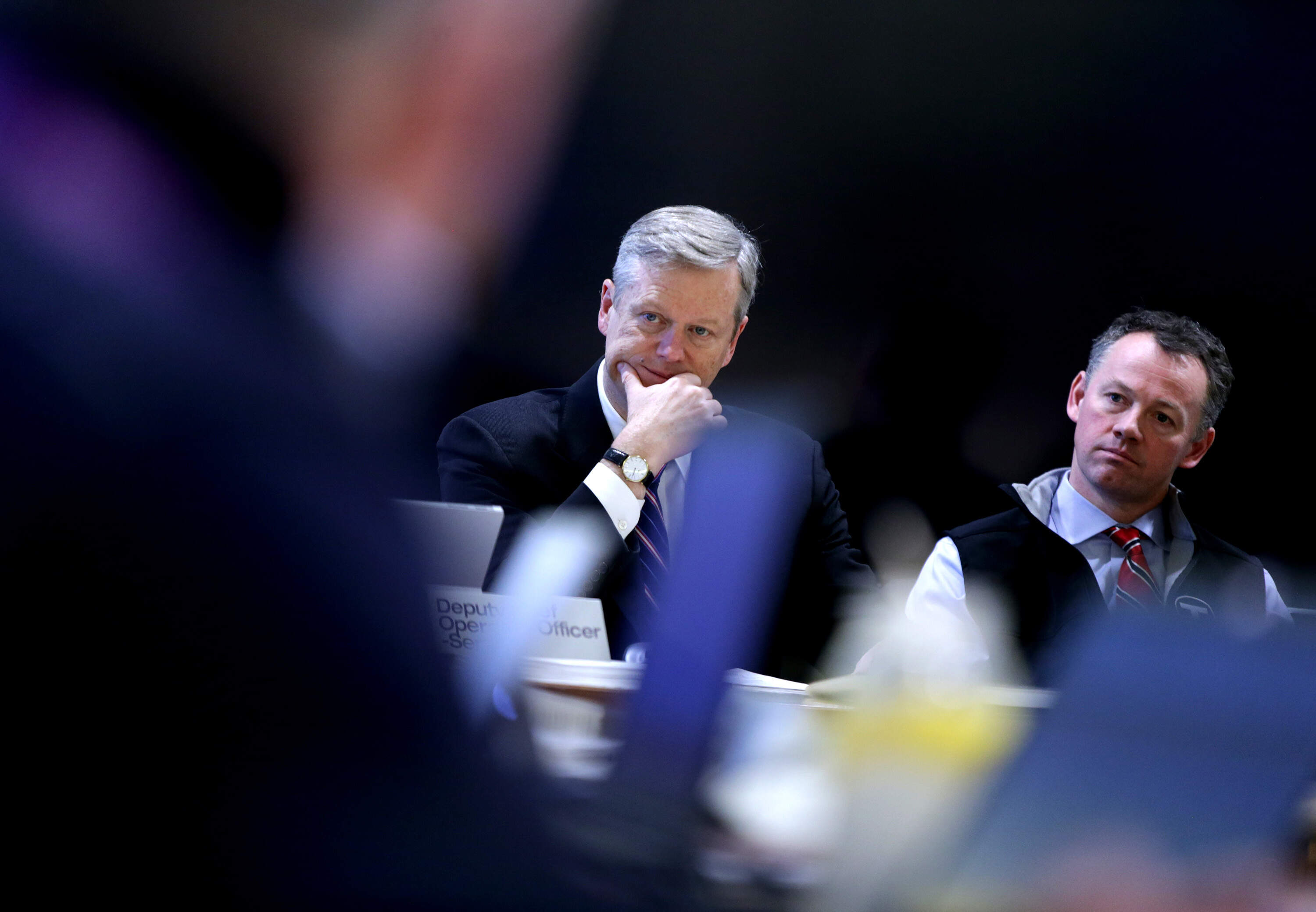
Shortsleeve’s public persona in the past has never been as a conservative firebrand. In fact, he's had an evolution of sorts. He first registered as a Democrat in September 1990 after turning 18. Later, he’d switch between "unenrolled" (Massachusetts' version of independent) and Republican multiple times over two decades, according to voter registration records reviewed by WBUR.
The last time he switched to unenrolled was in 2021— two weeks after the Jan. 6 insurrection by Trump supporters at the U.S. Capitol.
Shortsleeve’s campaign strategist, Holly Robichaud, did not address the 2021 party change in response to a WBUR question. In a statement, she said no one in this race "has stronger Republican credentials than Brian Shortsleeve."
“This state is in a very different place than it was when either Mitt Romney or Charlie Baker was governor.”
Brian Shortsleeve
By August 2023, Shortsleeve switched back to the Republican Party, according to election records from Barnstable, where he owns a nearly $12 million home on the water in Osterville. That's the address he lists as his primary one on campaign finance records.
Shortsleeve describes himself as a “Cape Cod voter,” but he and his family also have a home in Wellesley, where he was honored last year as a grand marshal in the town’s veterans’ parade and near where his wife is a trustee of a private day school.
The office of the venture capital firm Shortsleeve helped found, M33 Growth, is in Boston's Back Bay. There and at prior firms, he did deals in software and tech. He said his favorite deal ever was software for convenience stores trying to comply with environmental regulations.
In an interview with WBUR, Shortsleeve said he views politics through a business lens. He said the most pressing problems facing Massachusetts are a shrinking private sector, high taxes and sky-high energy bills.
“This state is in a very different place than it was when either Mitt Romney or Charlie Baker was governor,” Shortsleeve said. “I'm not sure when I look back at Baker or Romney, how relevant it is to today, other than to say, more than ever we need a chief executive of this state that understands how to get costs under control, provide tax and regulatory relief and get jobs growing.”
More than 36% of the state backed Trump in the last presidential election, up from 33% in 2016 when Baker led Massachusetts.

Tasked with turning around the T
The public best knows Shortsleeve for his time as acting general manager and chief administrator of the MBTA after a series of disruptive snowstorms in 2015 that brought the transit system to its knees.
Baker brought Shortsleeve into the agency to overhaul its budget. He also battled with the Boston Carmen's Union Local 589 and Machinists' Union Local 264 as he sought to move some agency functions to private companies, including the T's troubled "money room."
Former government officials who worked with Shortsleeve when he was at the T say they believed him to hold broadly moderate political views, similar to Baker's. He was known chiefly for drilling into finances and tackling complex problems.
Jim Stergios, executive director of the Pioneer Institute, a right-leaning think tank, calls Shortsleeve a "prove it and move it kind of person." He said he often pitched policy ideas to Shortsleeve at the T, and the two also worked together when Shortsleeve served on Pioneer's board.
“He very much sees himself as a turnaround guy. He's someone who likes to jump right in the middle of something and try it out,” Stergios said in an interview.

In the years since Shortsleeve worked for the Baker administration, he has publicly fundraised for Florida Gov. Ron DeSantis’ failed presidential campaign. And he has indicated he voted for Trump in the 2024 election, saying he supported "the entire Republican ticket."
But he also has a long history of donating to Democrats, including U.S. Reps. Jake Auchincloss in 2023, Seth Moulton in 2024 (fellow Marine veterans) and Richard Neal in 2021, according to federal data. He gave money to Attorney General Andrea Campbell in 2022 and 2021, state records show.
Shortsleeve's campaign has previously defended his donations to Democrats as a cost of doing business as a venture capitalist in Massachusetts.
A sharp tone on Healey
Since launching his campaign for governor in May, Shortsleeve has taken regular swipes at Healey — including in a controversial ad last month featuring fake, AI-generated comments by the governor. He’s been focused on her handling of the state budget and the emergency shelter system during an influx of migrants to Massachusetts in 2023 and 2024.
An independent no-limit Super PAC backing his bid has taken an even sharper tone on the governor. In one instance, Shortsleeve’s campaign distanced itself from the fundraising group after it released an ad placing Healey in a sombrero and a poncho holding a bag of money.
Shortsleeve also has echoed national Republican talking points on immigration, describing Massachusetts under Healey as a “sanctuary state” for immigrants in the country illegally and pledging to stand up for the “rule of law.”
Wakeman, the political consultant, said Shortsleeve’s campaign staff isn’t “your typical establishment candidate campaign staff,” and his strategist, Robichaud, is likely playing a big role in his campaign messaging.
“Holly's somebody who's a red meat conservative communicator, and I do believe that that's coming through in Brian's communiques,” Wakeman said. “A red meat conservative is somebody who talks about those far-right issues, who really goes after the law and order, the low taxes, the bang, bang, bang on the populist issues.”
“For me, personally, politically, I've always been a strong fiscal conservative.”
Brian Shortsleeve
It’s tough to pin Shortsleeve down on whether he aligns with Trump’s conservative base of followers in the “Make America Great Again” movement.
In the interview with WBUR, Shortsleeve redirected questions about MAGA to his views on business and managing state resources, people moving out of Massachusetts, and reducing the cost of living and cutting taxes.
“I think that's a broad message that appeals to people across the spectrum,” he said. “It's not just Republicans, because I got plenty of independents and Democrats that show up to my events because they're paying 400 bucks a month for their electricity bill.”
He also doubled down on being a “private sector guy.”
“I'm very passionate about small companies and helping them grow and helping them scale, and that's really my focus,” he said. “For me, personally, politically, I've always been a strong fiscal conservative.”
A competitive Republican primary
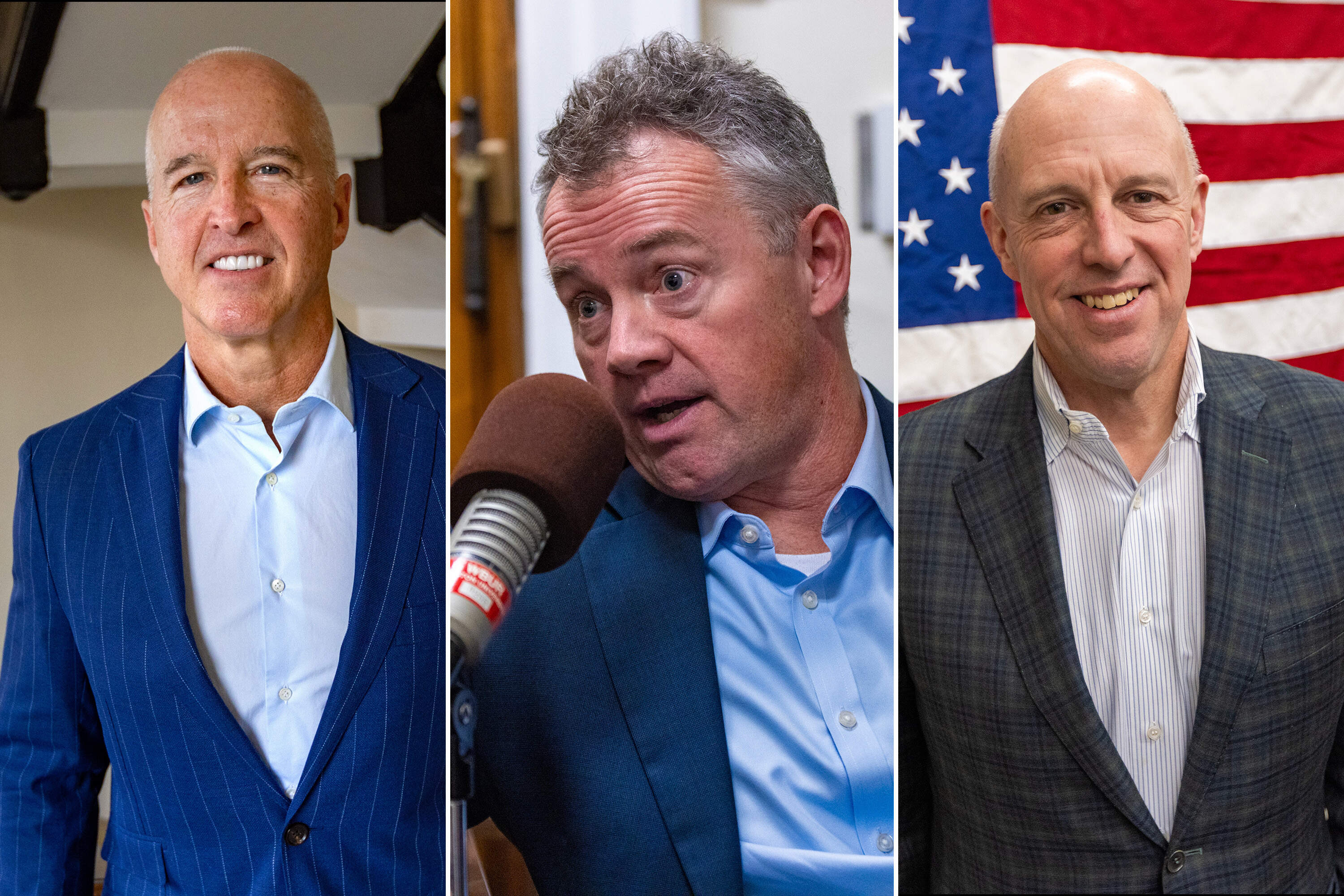
Shortsleeve’s Republican opponents are Michael Minogue, a former biotechnology executive, and Mike Kennealy, a former cabinet secretary who also served in the Baker administration when Shortsleeve was there.
All three are looking to differentiate themselves in an era of Republican politics defined by Trump, in a state where the winner of the Republican primary will need to appeal to center- and left-leaning independents in the general election.
Minogue has openly embraced and financially backed Trump, while Kennealy has sought to distance himself from Trump, at one point telling supporters he did not vote for the president in the 2024 election.
These three wealthy, well-funded candidates are all competing to win the vote of at least 15% of their party’s delegates at the Mass GOP’s April convention to secure ballot access for the September Republican primary.
Beth Lindstrom, a former Romney administration official who unsuccessfully ran for U.S. Senate in 2018, worked with Shortsleeve on Romney’s 2002 campaign. She said Shortsleeve’s connection to Romney could lead people to believe he holds more moderate positions.
“But as we know in Massachusetts politics, that in primaries, some people might pick a strategy to go a little bit more right,” Lindstrom said in an interview. “Maybe that's what Brian's doing.”
This segment aired on February 19, 2026.